


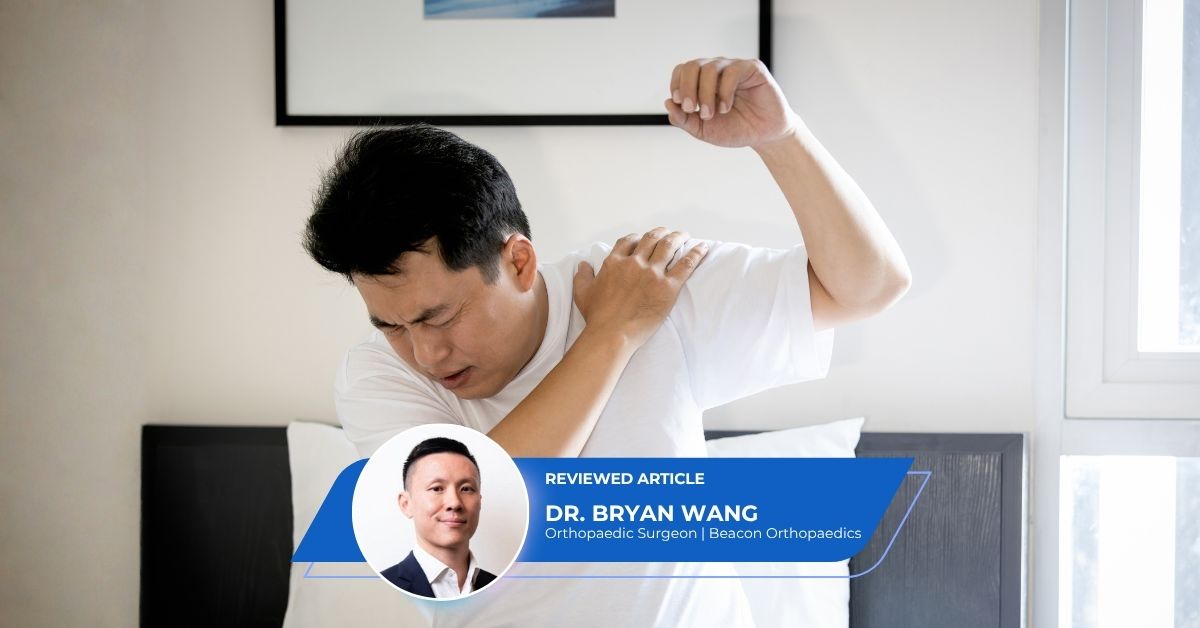
Shoulder pain and limited mobility may be caused by frozen shoulder. There are however, many other reasons for limited shoulder mobility. This article provides a self-check method and explains the treatment path for frozen shoulder.
Get A Consultation With An Orthopaedic Specialist For Your Shoulder Condition
Contact UsBack To: Orthopaedic Care In Singapore: Upper Limbs Main Page
What Is frozen shoulder? (Adhesive Capsulitis)
Frozen shoulder, medically known as “adhesive capsulitis,” is a condition characterised by inflammation, thickening, and tightening of the shoulder joint capsule. Its main features are:
- Limited mobility in all directions of the shoulder joint
- Noticeable nighttime pain affecting sleep
- Slow progression, usually lasting 1-3 years
- Symptoms most commonly occur in people aged 40-60.
Other Possible Reasons For Limited Shoulder Mobility
In addition to frozen shoulder, the following conditions may also lead to a limited range of motion:
Rotator Cuff Injuries
- The most common sports injury in the shoulder
- Pain at specific angles, rather than a full range of restriction
- Noticeable strength loss
- Subacromial impingement syndrome
- Increased pain when lifting the arm overhead
- Severe pain at specific angles
Osteoarthritis Of The Shoulder Joint
- Common in older adults
- Accompanied by a grinding noise during movement
- Cervical spine issues causing referred pain
- Radiating pain due to neck problems
- Often associated with numbness in the arms
Frozen Shoulder Self-Check Guide
If the follow applies, it may be frozen shoulder:
- General limited mobility of the shoulder, affecting not only forward elevation but also abduction and extension
- Persistent pain that worsens at night, affecting sleep
- Progression of the condition follows the “freezing phase – frozen phase – thawing phase” pattern
- No significant history of trauma
Simple Self-Check Actions:
- Contralateral assist test: Use the healthy arm to help lift the affected arm; if it still cannot be raised, it may indicate frozen shoulder.
- External rotation test: Attempt to rotate the forearm outward; patients with frozen shoulder will show significant limitations in this movement.
- Daily activity observation: Are everyday tasks like dressing, combing hair, or scratching the back becoming difficult?
Important note: These self-check methods are for reference only and should not replace professional medical diagnosis.
What Is The Typical Treatment Protocol For Frozen Shoulder?
Non-Surgical Treatments
Physical therapy
- Joint mobilisation
- Stretching exercises
- Strength training
Medication
- Non-steroidal anti-inflammatory drugs
- Local steroid injection
Joint distension therapy
- Injection of saline into the joint capsule to stretch the contracted joint capsule
Frozen Shoulder Surgery
When non-surgical treatment is ineffective, surgical intervention may be considered:
- Manipulation under anaesthesia: The doctor assists in moving the stiff shoulder joint under general anaesthesia.
- Arthroscopic minimally invasive surgery: The contracted joint capsule is released through small incisions, with minimal trauma and quick recovery.
Factors To Consider Before Undergoing Frozen Shoulder Surgery
Timing for surgery:
- It is usually recommended to consider surgical intervention after 6 months of ineffective conservative treatment.
Cost reference:
- The cost of frozen shoulder surgery in Singapore varies depending on the type of hospital (public/private) and the surgical method. It may cost about S$20,000 in private hospitals.
Recovery period:
- Post-surgery, it requires a systematic physical therapy plan, and full recovery typically takes 3-6 months.
When Should You Seek Medical Attention?
It is recommended to consult an orthopaedic specialist if:
- Shoulder pain and mobility limitations persist for 2 weeks without improvement
- Night pain affects sleep quality
- Daily activities are significantly limited
- Conservative treatment does not show significant effects after 3 months
Consultation With An Orthopaedic Specialist
Not being able to lift the shoulder high does not necessarily mean frozen shoulder. An accurate diagnosis is the first step to effective treatment. Patients are encouraged to seek a precise diagnosis from an orthopaedic specialist for a proper evaluation and a treatment plan that best fits them.
Contact Us
This medical content has been reviewed by Dr Bryan Wang, an experienced orthopaedic surgeon in Singapore known for his patient-centred approach, advanced minimally invasive techniques, and comprehensive management of complex shoulder conditions.
Back To: Orthopaedic Care In Singapore: Upper Limbs Main Page
All content on this site is informative only and is not intended to be a substitute for professional medical advice, diagnosis, or treatment, and should never be relied upon for specific medical advice. If you are experiencing a medical emergency, call 995 immediately or go to the nearest Accident & Emergency department.
health365.sg is a member of Group 365Asia.