

Diabetic Eye Disease: When Does Surgery Become Necessary?
Diabetic eye disease is a concern for people living with diabetes as they can occur silently. Learn about when surgery.
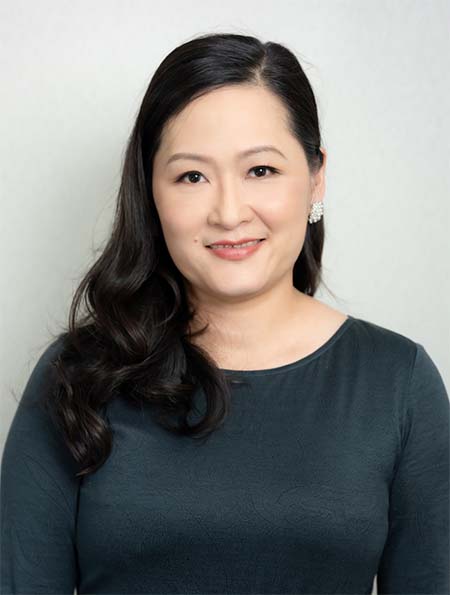
Dr Lee Shu Yen is a senior consultant ophthalmologist and vitreoretinal surgeon at Advanced Eye Clinic and Surgery. She previously served as the Head of the Surgical Retina department at the Singapore National Eye Centre, leading the team that provided the majority of surgical retina coverage in Singapore.

Dr Lee Shu Yen led an illustrious career in SNEC before bringing this wealth of experience with her to private practice. She was appointed Clinical Associate Professor with the Duke NUS Graduate Medical School for her key role in setting up the ophthalmology programme for the medical school. Her strong interest in nurturing the next generation of ophthalmologist led her to serve as a core faculty member for the SNEC Residency Program and also was actively involved in the teaching of local as well as international fellows in the Surgical Retina programme. Dr Lee has been frequently invited to participate at local, regional as well as international ophthalmology and Retinal conferences, to speak on topics ranging from retinal disease management, imaging and surgical techniques. She was the first lady ophthalmologist who served as the President of the Singapore Society of Ophthalmology (SSO) for 10 years and was also Vice
Dr Lee is active in retina research with publications in the fields of retinal complications of pathologic myopia, retinal detachments, giant retinal tears, diabetic retinopathy, age-related macula degeneration (AMD) as well as in gene therapy. She also chaired the SNEC Research and Innovation Committee which provided pilot grant funding at the Singapore Eye Research Institute (SERI).
As the Clinical Director of the Retina Clinic and the Diabetes and Metabolism Centre, Singapore General Hospital, she coordinated the setup of a one stop centre to manage the eye complications of diabetes and other metabolic diseases, namely diabetic retinopathy. She then took on the role as the first Director of Operating Theaters and Inpatient Services at SNEC, managing the operational workflow of more than 10 operating theaters at SNEC and its branches.
Dr Lee has also actively participated in volunteer work and philanthropy. Community eye health screenings were conducted via the SSO, as well as overseas mission trips. She helped in the creation of the Eyeball, a fundraiser to support Research in visual sciences as well as to support needy patients and SNEC and SERI. She also chaired the Singhealth-Duke NUS gala, a successful regular philanthropic event to raise funds to support the works at the various Academic Centres at SingHealth.
MBBS, FRCSEd(Ophth), FAMS
Dr Lee Shu Yen graduated from the National University of Singapore and completed her training in ophthalmology at the Singapore National Eye Centre. She then underwent fellowship training in Surgical and Medical retina at SNEC as well as at the Lions Eye Institute, Perth, Western Australia.
Dr Lee Shu Yen is a fellowship trained vitreoretinal specialist. In surgical retina, she has a special interest in retinal detachment surgery, retinal complications of high myopia (eg. Myopic traction maculopathy, myopic macula holes and detachments), tractional diabetic retinopathy, and macula surgeries (eg. Macula holes, epiretinal membranes, vitreomacular traction). With regard to medical retina, she manages retinal vascular disorders, age related macula degeneration (eg choroidal neovascularisation, polypoidal choroidal vasculopathy) amongst other conditions.
She also has an interest in ophthalmic imaging, particularly wide field angiography, optical coherence tomography (OCT) and OCT angiography (OCTA).
Dr Lee is also a skilled cataract surgeon who is comfortable with the various types of intraocular lens corrections to help patients achieve their desired visual outcomes. She has skills and experience in managing complex cataract issues, including sclera fix IOLs and post cataract surgery complications.
Dr Lee believes that all patients should be treated kindly and well. It is important to hear the patient’s story to accurately understand the patient’s problems. Whilst good clinical examination is essential, it should also be important to use appropriate tools such as imaging to confirm diagnosis and monitor disease developments as well as treatment response.
…to see Dr Lee enjoying family time with her three teenage sons. Outdoor activities and racket games such as tennis and padel are well liked. She also enjoys long walks and can be seen on various park connectors and parks.
Dr Lee also enjoys music and the theatre, and may be seen attending concerts and plays.
I found the world of Ophthalmology to be an interesting one with a nice blend of surgeries, lasers and a whole range of new technological toys for diagnostics as well as therapeutics.
Training and working in SNEC provided opportunities to grow and explore as the environment was nurturing with a good mix of excellent clinical work, surgeries, academics as well as research. I enjoyed the high clinical volume as well as research output.
This would really depend on the patient’s symptoms, though all new visual symptoms, such as blurring of vision and acute onset of floaters, should not be ignored.
Certain systemic conditions necessitated regular ophthalmic reviews. For example, all diabetics need annual screening for diabetic retinopathy and all patients on long term medications with potential eye complications should also regularly be checked eg Plaquenil (hydroxychloroquine) or steroid therapy.
It is important to be kept abreast of the latest advances so as to continually benefit and improve our care and treatment options for patients. I read ophthalmic journals and other publications. I also try to attend conferences every year to learn as well as to share what’s new and what’s coming up on the horizon.
I believe that all patients should receive the best appropriate care for their condition. But patient care is always evolving with new medical options and surgical techniques. It is important to be kept up to date so as to be able to provide what’s best for the patient.
There must also be considerations in cost efficiency in selecting the most suitable treatment for the patient.
Restoration of vision for a patient is a very fulfilling experience. Be it enabling a patient to see more clearly with lovely bright colours after cataract surgery; repairing a retinal detachment and reestablishing retinal anatomy and function or reducing central visual blockage caused by age related macula degeneration. Sometimes it is a quick and fast recovery but sometimes it is a long and slow treatment journey with the patient.
Often patients think that they are fine and in the busyness of life, forget to make time for themselves and their health, Certain conditions require regular reviews such as those with diabetes, high myopes, those with a family history of glaucoma. When detected and diagnosed early, some conditions can be reversed, others can be controlled and loss of vision can be prevented.
It is important to spend time explaining the eye condition as well as the disease to the patient. This should be done in the first or second consultation.
As it is commonly said that a picture tells a thousand words, I like to use ophthalmic imaging to assist me in this process such as retinal photographs and OCT scans. These imaging techniques can be acquired serially and enable the patients to track their treatment response or disease progress.
Work hard, play hard is a good maxim to adopt. When at work, I like to be focused on the patient in clinic or the retina to be fixed in surgery. After work, I focus on the family and the self. Of course short holidays are also good to rest and reset.
Ophthalmology is a field in which there are always new technologies being innovated. In the horizon are newer intraocular lenses for better restoration of vision, newer drugs to control age-related macula degeneration, newer surgical devices to make operations faster and more efficient as well as imaging systems to enable better disease understanding and monitoring.
Several approaches should be considered
“All patients should receive the best appropriate care for their condition. It is important to be kept up to date so as to be able to provide what’s best and cost efficient for the patient.”
– Dr Lee Shu Yen


Diabetic eye disease is a concern for people living with diabetes as they can occur silently. Learn about when surgery.

Have you recently noticed blurred vision, dark shadows, or flashes of light? These may indicate retinal detachment, a serious eye.

Learn about Multifocal IOL disadvantages and advantages, and they are the IOL of choice for many cataract patients.

During cataract surgery, the cloudy natural lens is replaced with an artificial intraocular lens (IOL). EDOF IOL may be the.
Dr Lee Shu Yen explains common retinal conditions, how to recognise early symptoms, and ways to protect your eye health.
All content on this site is informative only and is not intended to be a substitute for professional medical advice, diagnosis, or treatment, and should never be relied upon for specific medical advice. If you are experiencing a medical emergency, call 995 immediately or go to the nearest Accident & Emergency department.
health365.sg is a member of Group 365Asia.
We noticed you are visiting from .
Please select the language in which you would like to see the content.