

Heart Blockage-The Big Story

Heart Blockage (Coronary Artery Disease) - The Disease That May Be Silently Endangering You
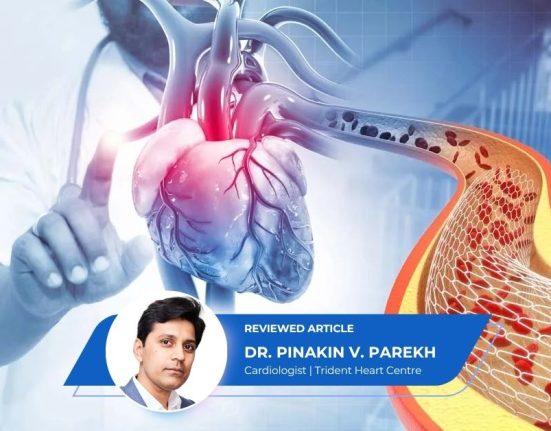
A person has a heart blockage (a condition called Coronary Artery Disease)when the coronary arteries become narrowed or blocked due to the buildup of fatty deposits called plaque. Coronary arteries supply blood to the heart muscle. Blockage of these arteries can lead to reduced blood flow to the heart, resulting in chest pain (angina), heart attacks, and other serious complications. Understanding CAD, its causes, symptoms, and treatment options is crucial for managing the condition effectively. CAD is also known as coronary heart disease, or ischaemic heart disease.
The Symptoms Of A Heart Blockage?
The symptoms of heart blockage or Coronary Artery Disease, may vary from person to person. Critically, symptoms may not appear initially. With continued narrowing of the coronary arteries, symptoms can become more severe. Common symptoms include:
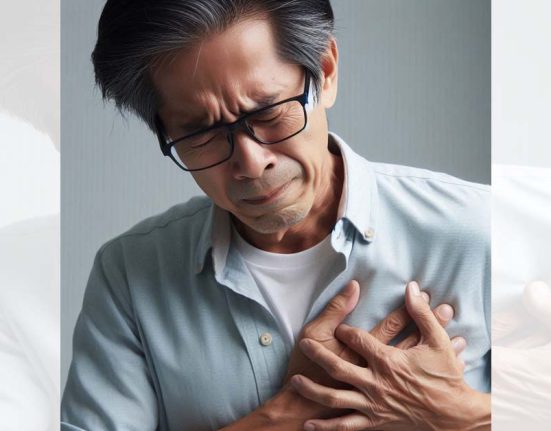
- Chest pain (angina). This is sensation of squeezing, pressure, heaviness, tightness or pain in the chest. Usually, this is felt in the middle or left side of the chest.
- Shortness of breath. You may feel like you can’t catch your breath.
- Fatigue. If the heart can’t pump enough blood to meet your body’s needs, you may feel unusually tired.
If a blocked coronary artery causes a heart attack, heart attack symptoms may be noticed, including:
- Chest pain (feels like pressure, tightness, squeezing or aching of the chest).
- Pain that spreads to the shoulder, arm, back, neck, or jaw.
- Cold sweat.
- Shortness of breath.
- Lightheadedness / dizziness.
- Fatigue.
- Heartburn.
- Nausea.
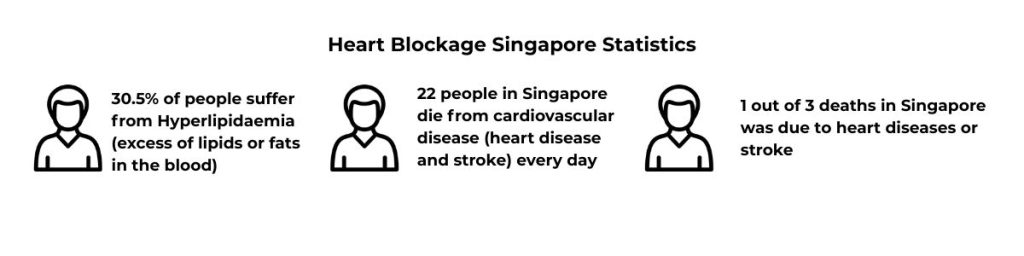
Singapore Statistics For Heart Blockage / Coronary Artery Disease
According to the Singapore Heart Foundation, about 22 people in Singapore die from cardiovascular disease (heart disease and stroke) every day. Cardiovascular disease is a leading cause of death, accounted for 30.5% of all deaths in 2024. This means that almost 1 out of 3 deaths in Singapore was due to heart diseases or stroke.
Who Is At Risk For Heart Blockage?
Heart blockages are primarily caused by when fatty deposits (plaque) build up in the coronary arteries. Several risk factors contribute to the development of CAD, including:
- Smoking: Damages the blood vessels and accelerates the buildup of plaque.
- High Blood Pressure: Hypertension can damage the artery walls and promote plaque formation.
- High Cholesterol: Elevated levels of cholesterol, particularly LDL cholesterol, contribute to plaque buildup.
- Diabetes: High blood sugar levels can damage the blood vessels and increase the risk of CAD.
- Obesity: Excess weight is associated with increased cholesterol levels, high blood pressure, and diabetes.
- Sedentary Lifestyle: Lack of physical activity contributes to the development of CAD.
- Family History: A family history of heart disease increases the risk of CAD.
- Age: The risk of CAD increases with age, particularly after 45 for men and 55 for women.
- Unhealthy Diet: Diets high in saturated fats, trans fats, and cholesterol can lead to plaque buildup in the arteries.
Learn More About Heart Blockage
How To Find The Best Cardiologist In Singapore
When it comes to your heart health, you naturally would like to find the best cardiologist in Singapore. How would you identify such a doctor? Find out from our Guide To Finding The Best Cardiologist In Singapore.
Comment: The row below to be moved to article for healthcare professionals article
Find A Doctor
Verified Healthcare Professionals
We connect you with a network of qualified and experienced doctors who specialise in chronic health conditions, health screening, and longevity.
Trusted Information Source
We pride ourselves on providing accurate, up-to-date, and evidence-based information about each disease, its prevention, and treatment.
Privacy and Security
Your health information and personal data are paramount to us. We will protect your privacy throughout the booking process and beyond.
Convenience at Your Fingertips
Our user-friendly platform allows you to find and book appointments 24/7 from the comfort of your home.
Our Preferred Doctors You Can Consider For Heart Blockage Diagnosis And Treatment:



Chest pain is only one of the many symptom descriptions for someone with blockages in the heart arteries. Chest pressure, discomfort, uneasiness and dullness are all part of the spectrum. If you feel any of these, you should consult a cardiologist for a thorough evaluation.
Dr Pinakin Parekh
Book An Appointment
Take a proactive step for your health and peace of mind today. If you need to see a doctor about heart health, your health risks, or heart blockage treatments, our team is here to assist.
Financials
[findDoctor category="financial consultants" countries="Singapore" " limit="15"]
Related Content
FAQs - Test Your Knowledge About Heart Blockages
Doctors use several tests to detect heart blockages, such as:
- Electrocardiogram (ECG) – to assess heart rhythm and damage.
- Echocardiogram – ultrasound imaging of the heart.
- Stress test – measures heart performance during exercise.
- Coronary angiogram – a special X-ray that shows narrowed or blocked arteries.
- CT coronary angiography – a non-invasive scan for detecting plaque build-up.
Yes, mild to moderate blockages can often be managed with lifestyle changes and medication. Treatments may include:
- Cholesterol-lowering drugs (statins).
- Blood pressure medications.
- Antiplatelet drugs (aspirin or clopidogrel) to prevent clots.
- Healthy diet, regular exercise, stress management, and smoking cessation.
However, more severe blockages may require procedures like angioplasty or bypass surgery.
Angioplasty is a minimally invasive procedure used to open blocked arteries. A small balloon is inserted and inflated inside the artery to widen it, and a stent (a tiny mesh tube) is placed to keep it open. This helps restore normal blood flow to the heart and relieve symptoms such as chest pain.
Yes, heart blockages can often be prevented through a heart-healthy lifestyle:
- Eat a balanced diet low in saturated fats and refined sugars.
- Exercise regularly (at least 150 minutes of moderate activity weekly).
- Maintain a healthy weight.
- Control blood pressure, cholesterol, and blood sugar levels.
- Avoid smoking and limit alcohol consumption.
- Manage stress effectively.
You should seek medical attention immediately if you experience:
- Persistent chest pain or pressure, especially if it radiates to your arm or jaw.
- Sudden shortness of breath, sweating, or nausea.
- Fainting or severe fatigue.
These may be early warning signs of a heart attack. Early diagnosis and treatment greatly reduce the risk of life-threatening complications.
Additional Resources
- Heart Treatments | Trident Heart Centre
- Heart Health | Singapore Heart Foundation
- Get Assistance | Singapore Heart Foundation
- Heart Disease: Screening and Diagnostics | Gleneagles Hospital
- Coronary Artery Disease | National heart Centre
- Diagnostic Tests | American Heart Association
- Heart Failure: Symptoms, Causes, Risk Factors and Diagnosis | HealthXchange
- Chest Pain: When to Seek Help | HealthXchange
.