


Trigger finger is a condition where one or more fingers become stiff, painful, and may lock in a bent position. It occurs when the tendons that control finger movement become inflamed, preventing them from gliding smoothly through their protective sheaths. For many people, this condition starts mildly but can worsen over time, affecting grip strength and daily hand function. Fortunately, there are several effective treatments available, ranging from simple lifestyle adjustments to medical interventions. Among these, the trigger finger splint is often one of the first treatment options recommended for mild to moderate cases.
This article explores the different treatment approaches for trigger finger, with a detailed look at how splinting works, when it is effective, and when patients might need to move on to other options in Singapore.
Consult An Orthopaedic Specialist
Contact UsBack To: Orthopaedic Care In Singapore: Upper Limbs Main Page
What Are The Treatment Options For Trigger Finger In Singapore?
Treatment for trigger finger depends on the severity of symptoms and how long the condition has been present. The primary goals are to reduce inflammation, relieve pain, and restore normal movement of the affected finger.
1. Rest And Activity Modification
In early stages, resting the affected hand and avoiding repetitive or forceful gripping can help reduce strain on the tendons. Using ergonomic tools or padded gloves may prevent further irritation.
2. Medications
Over-the-counter nonsteroidal anti-inflammatory drugs (NSAIDs) such as ibuprofen or naproxen can help manage pain and swelling. These are typically used alongside other non-surgical treatments like splinting or exercises.
3. Trigger Finger Splint
Splinting is a conservative and effective first-line treatment for many patients. It helps immobilise the affected finger to reduce movement and allow the inflamed tendon to rest and heal.
4. Corticosteroid Injections
If symptoms persist despite splinting and rest, a corticosteroid injection into the tendon sheath may help reduce inflammation. Many patients experience improvement after one injection, though some may need a second dose.
5. Hand Therapy And Exercises
A physiotherapist or hand therapist may recommend gentle stretching and strengthening exercises to maintain flexibility, improve tendon movement, and prevent stiffness.
6. Surgery (Trigger Finger Release)
For severe or persistent cases, surgical intervention may be needed. The procedure, known as trigger finger release, involves making a small incision to widen the tendon sheath, allowing the tendon to glide smoothly again.
What Is A Trigger Finger Splint?
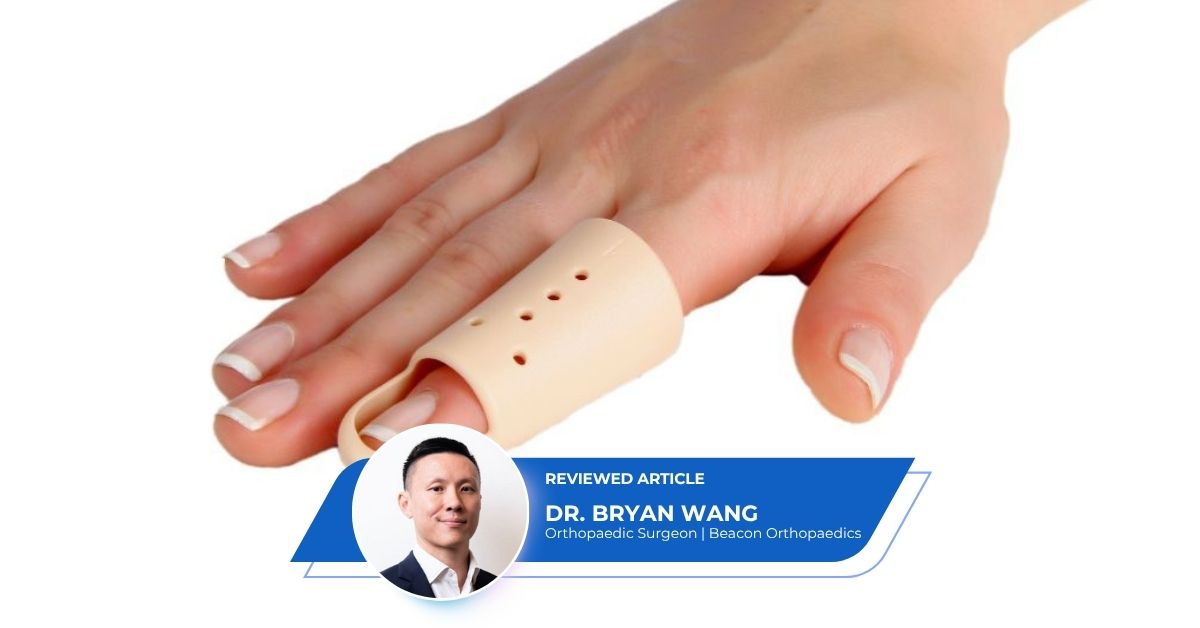
A trigger finger splint is a small device designed to keep the affected finger in a straight position, limiting its movement to prevent further irritation of the inflamed tendon. By immobilising the finger, the splint helps the tendon rest and promotes healing of the surrounding sheath.
Splints come in different designs, such as rigid plastic types, adjustable fabric wraps, or custom-moulded orthoses. They are usually worn on the affected finger, extending from the base to just below the fingertip. Some splints are designed to immobilise the finger fully, while others allow limited movement depending on the severity of symptoms.
Typically, a splint is worn at night to prevent involuntary finger bending during sleep, although some patients may need to wear it during the day if symptoms are severe.
When Is A Trigger Finger Splint Used?
A trigger finger splint is most effective in mild to moderate cases, particularly when symptoms are recent. Doctors often recommend splinting as an early intervention before moving to injections or surgery. It may also be prescribed for:
- Patients who cannot take steroid injections due to medical conditions or allergies.
- Those who prefer a non-invasive, drug-free treatment option.
- Individuals with early morning stiffness or occasional locking.
- Post-treatment support after injections or surgery to stabilise healing.
By preventing the tendon from catching in the narrowed sheath, splints can significantly reduce pain and clicking sensations while restoring function over time.
Limitations Of Trigger Finger Splinting
While splinting is often helpful, it has several limitations. It may not be suitable or effective for every patient, particularly in advanced cases.
1. Limited Relief In Severe Cases
If the finger is already locking or unable to straighten fully, splinting may not resolve the issue since the underlying narrowing of the tendon sheath is too tight.
2. Compliance Issues
Some patients find wearing a splint uncomfortable, especially during daily activities, and may remove it prematurely, reducing effectiveness.
3. Temporary Relief Only
In some cases, symptoms may return after discontinuing the splint, especially if underlying causes such as repetitive strain are not addressed.
4. Slower Response Compared To Injections
While splints help rest the tendon, improvement may take several weeks, whereas corticosteroid injections can provide faster relief in certain cases.
When Splinting Is Not Effective: Next Treatment Steps
If splinting does not lead to improvement after 6 to 8 weeks, it may be time to consider the next level of treatment. Persistent pain, stiffness, or locking usually indicates that the inflammation has not subsided sufficiently.
The next recommended treatment is often a corticosteroid injection, which can provide targeted anti-inflammatory relief. If symptoms continue despite injections, surgical release may be necessary. This minor procedure has a high success rate and offers lasting resolution for most patients.
Can A Trigger Finger Splint Be Used With Other Treatments?
Yes. Splints are often used in conjunction with other treatments for better outcomes. For instance, wearing a splint after a corticosteroid injection can help maintain the tendon’s resting position, allowing the medication to work more effectively. Splinting may also be combined with hand therapy exercises and anti-inflammatory medication as part of a holistic approach to recovery.
Our Preferred Doctors (Orthopaedic Specialist) For Trigger Finger Treatment



[SG] Featured Doctor- Dr Kevin Koo
Frequently Asked Questions (FAQs)
Most people are advised to wear the splint for 6 to 8 weeks, often at night or during activities that trigger pain. Your doctor may adjust this duration based on symptom improvement and comfort.
Depending on the splint type, you may have limited movement. The goal is to rest the affected tendon, so most splints restrict bending while allowing light daily use.
Splinting can be very effective for early cases, but it may not permanently cure severe or chronic trigger finger. If symptoms persist, corticosteroid injections or surgery may be needed for long-term relief.
Get An Appointment With An Orthopaedic Specialist For Trigger Finger Treatment
If you are experiencing trigger finger symptoms, consult an orthopaedic specialist to explore your treatment options today.
Contact Us
This medical content has been reviewed by Dr Bryan Wang, an experienced orthopaedic surgeon in Singapore known for his patient-centred approach, advanced minimally invasive techniques, and comprehensive management of complex shoulder conditions.
Back To: Orthopaedic Care In Singapore: Upper Limbs Main Page
All content on this site is informative only and is not intended to be a substitute for professional medical advice, diagnosis, or treatment, and should never be relied upon for specific medical advice. If you are experiencing a medical emergency, call 995 immediately or go to the nearest Accident & Emergency department.
health365.sg is a member of Group 365Asia.