

Dr Daniel Lee – General Surgeon (Colorectal)
Find By 365Asia Preferred Doctor Partner Programme
Dr. Daniel Lee – Colorectal Surgeon in Singapore
Specialist in advanced colorectal surgery and minimally invasive GI and anorectal treatments.
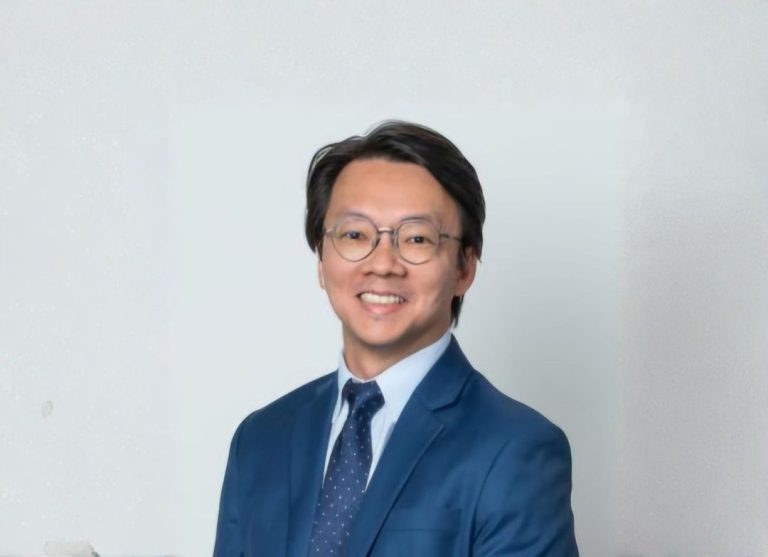
At-a-Glance
Dr Daniel Lee is a Senior Consultant Colorectal Surgeon at Colorectal Clinic Associates, Singapore. UK fellowship-trained, specialising in complex rectal cancers, geriatric surgery, colonoscopy, and minimally invasive procedures for colorectal and anorectal conditions.
✔ Areas of Expertise: Advanced rectal cancer surgery, laparoscopic and robotic colorectal resections, Transanal Minimally Invasive Surgery (TAMIS), laser hemorrhoidoplasty, VAAFT, and EPSIT, diagnostic and therapeutic endoscopy, and specialised geriatric colorectal surgery.
✔ Clinic: Colorectal Clinic Associates (Google Map)
✔ Language: Bahasa, English, Mandarin
✔ Insurance Panels: AIA, Alliance Healthcare, Cigna, DA ADEPT, Fullerton Healthcare, Great Eastern, HSBC Life, IHP (Integrated Health Plans), Make Health Connect (MHC), Income, Prudential, Singlife
✔ Practicing At: Mount Elizabeth Novena Specialist Centre,
Mount Alvernia Medical Centre, Parkway East Medical Centre, Gleneagles
Medical Centre, Connexion (Farrer Park)
Know Before You Go: Emphasises attentive, personalised care for colorectal conditions, screening, and minimally invasive procedures.
the vision
Surgical precision, bespoke treatment
“Every patient deserves to be treated with dignity, respect, and empathy. For maximum effectiveness, treatments should be customised based on their individual circumstances and requirements.”
– Dr Daniel Lee
Get To Know Dr Daniel Lee
Dr Daniel Lee Jin Keat is a Senior Consultant General Surgeon in Singapore practicing at Colorectal Clinic Associates. He specialises in colorectal surgery and has particular expertise in treating complex and advanced rectal cancers. Over the years, he has also developed a strong focus on geriatric surgery, working to improve surgical care and recovery for older patients.
Dr Lee graduated from the University of Putra Malaysia in 2004. He then became a Member of the Royal College of Surgeons of Edinburgh in 2009. Having completed his advanced surgical training, Dr Lee was awarded a Fellowship from the same college in 2015. His international training includes two prestigious fellowships in the United Kingdom: one in advanced colorectal surgery at St James’s University Hospital in Leeds, and another in trauma surgery at the Royal London Hospital.
In his previous role as Head of Colorectal Surgery and Surgical Lead for Geriatric Surgery at Khoo Teck Puat Hospital, Dr Lee led efforts to enhance patient outcomes, particularly for the elderly, by improving surgical processes and introducing new screening and prehabilitation practices.
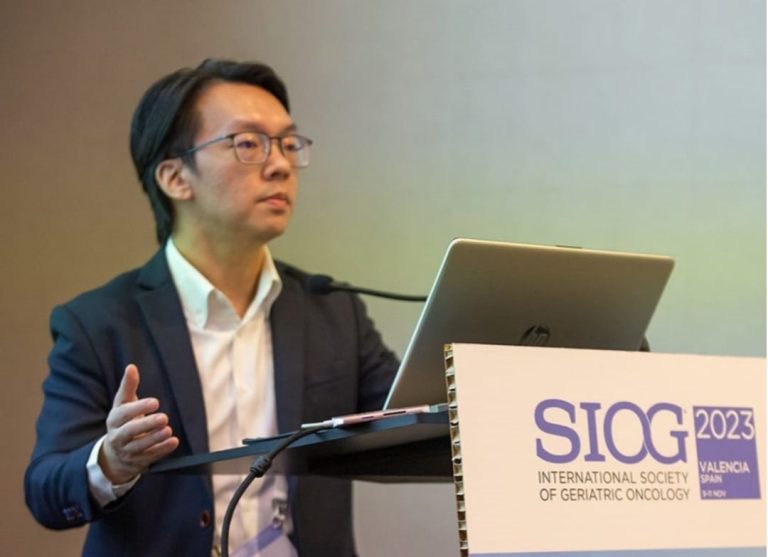
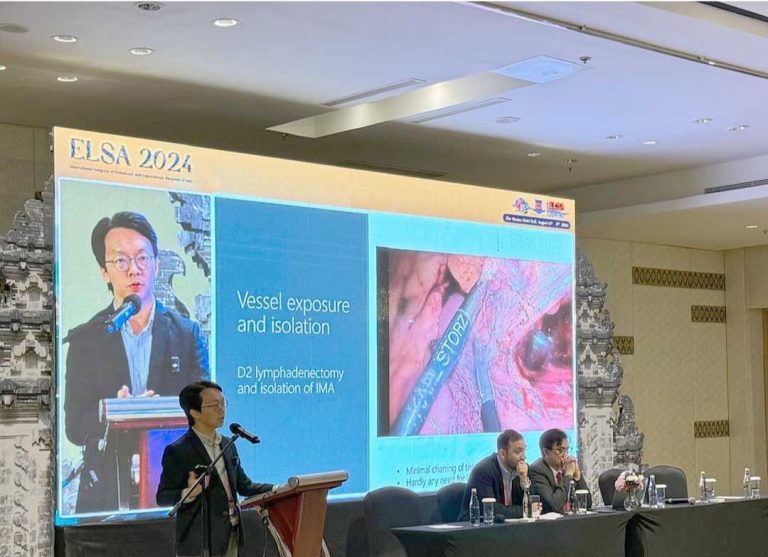
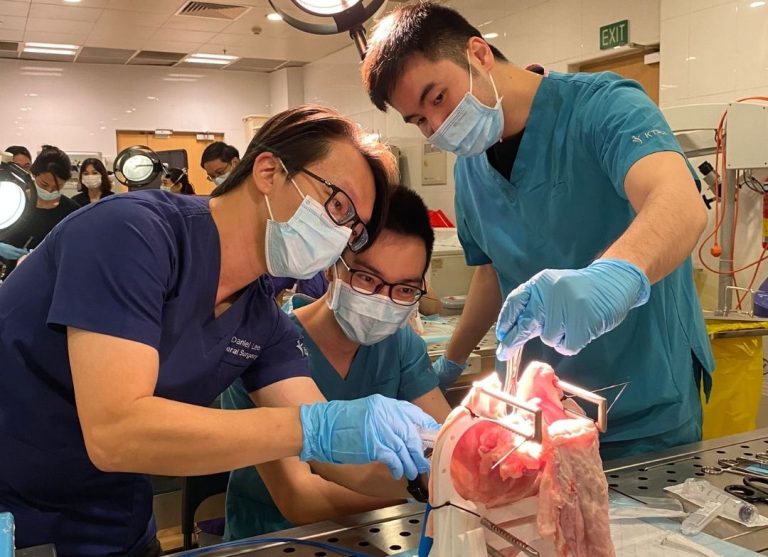
Alongside his clinical work, Dr Lee remains active in research and teaching, contributing to international conferences and mentoring the next generation of surgeons as a senior lecturer at two leading medical schools in Singapore.
Clinical Expertise
Dr Daniel Lee is a strong proponent of minimally invasive surgery for the treatment of a wide range of colorectal conditions. Advanced surgical techniques performed by Dr Lee include laparoscopic colorectal resection and Transanal Minimally Invasive Surgery (TAMIS). Dr Lee is also an expert in minimally invasive treatment for proctological conditions. His proficiency in this area extends to cutting-edge procedures such as laser hemorrhoidoplasty (for piles / hemorrhoids), VAAFT (for anal fistulas), and EPSIT (for pilonidal sinus disease).
In the field of cancer surgery, Dr Daniel Lee has extensive experience managing complex and recurrent rectal cancer cases, including those requiring exenterative procedures.
Dr Lee also has expertise in screening and diagnostic procedure such as gastroscopy, colonoscopy, and endorectal ultrasound.
What Is His Ethos In Medicine?
Dr Daniel Lee is an advocate for the adage that prevention is better than cure. He encourages healthy lifestyles, regular screening, and timely treatment of health conditions before they become advanced.
In the area of patient care, Dr Lee is a champion for multi-disciplinary and bespoke approaches. He works as a team with other medical professionals to ensure that patients’ needs are looked after holistically, such as in the areas of nutrition, physiotherapy, psycho-social support, and more. Furthermore, patients have their unique circumstances. Dr Lee ensures that treatment plans are bespoke and customised to each patient’s requirements.
If You Run Into Him Outside Work, You Are Likely To…
… see him keeping an active lifestyle, staying fit with activities such as swimming, cycling and tennis.
Academic Qualifications
- Medical Degree from the University of Putra Malaysia (2004)
- Membership of the Royal College of Surgeons of Edinburgh (MRCS) – awarded in 2009
- Fellowship of the Royal College of Surgeons of Edinburgh (FRCS) – awarded in 2015 after completing advanced surgical training
- Fellowship in Advanced Colorectal Surgery at St James’s University Hospital, Leeds, UK
- Fellowship in Surgical Trauma Care at the Royal London Hospital, UK
Publications
- Endoscopic Surgery – Exploring the Modalities
- Advances in surgical management for locally recurrent rectal cancer: How far have we come
- Perforated diverticulitis: is the right and left difference present S1 Sacrectomy for Re-Recurrent Rectal Cancer: Our Experience with Reconstruction Using an Expandable Vertebral Body Replacement Device”
- Frailty in Surgical Preoperative Evaluation and Postoperative Recovery
- Trends and Clinical Outcomes in Young-onset Colorectal Cancer Patients
10 Questions & Answers
I’ve always been intrigued by medical technology — and it’s no surprise that many innovations, from minimally invasive techniques to advanced energy devices, have taken root in colorectal surgery. It’s a field that constantly evolves. Beyond the tech, I’ve also had first-hand experience caring for a loved one with cancer, which deepened my commitment to making a difference in this space.
Patients should seek a colorectal surgeon if they experience persistent gastrointestinal symptoms, if they have been advised to undergo screening, or if they have been diagnosed with colorectal conditions requiring specialised care.
I remain active in research, attend international conferences, and collaborate with peers to stay updated on cutting-edge techniques and emerging technologies.
I believe in a holistic and personalised approach. Each treatment plan is tailored to the patient’s needs, with support across nutrition, physical rehabilitation, and psychological care.
Two patients come to mind — one, a young and otherwise healthy new parent who presented with colorectal cancer with life-threatening complications; the other, a frail elderly lady with cancer that had caused blockage of her colon, was encouraged by her supportive family to undergo surgery. Despite the high stakes, both had successful outcomes through multidisciplinary care and strong emotional support. These cases remind me that every patient carries a story — and as surgeons, it’s our privilege to be part of that story and provide the best possible care.
Misconception: Colorectal cancer only affects older people.
While age is a risk factor, we’re seeing more cases in younger adults. I remind patients to be aware of symptoms like bleeding, changes in bowel habits, or unexplained weight loss — and not to delay getting checked.
Misconception: If I feel fine, I don’t need screening.
Unfortunately, colorectal cancer is frequently considered a “silent killer” as it often has no symptoms in early stages. Screening is about catching problems before they become serious — that’s how lives are saved.
Misconception: Surgery, when required, is very painful.
Fortunately, advances like minimally invasive techniques and enhanced recovery protocols have made modern surgery much more comfortable.
I make sure to take time to educate patients and explain their choices to them clearly, and with empathy. This is to ensure that they understand every option available and have the information they need to make informed decisions.
I stay active through sports such as swimming, cycling, and tennis. They help me unwind and recharge, which ultimately allows me to remain fully present and engaged with my patients.
I am excited by the advances in minimally invasive and robotic surgery. These techniques offer greater precision, smaller incisions, and faster recovery for patients. Robotic systems, in particular, enhance visibility and control during complex procedures, leading to better outcomes. Such innovations are redefining how we approach colorectal surgery, especially for complex cases.
I believe that regular screening, healthy diet, active lifestyle, and awareness of symptoms are key. Prevention and early detection remain the most powerful tools in fighting colorectal cancer.
Reviewed Articles
Can Elderly Patients Undergo Major Bowel Cancer Surgery?
- July 15, 2026
- 3 minutes read
- 84 Views
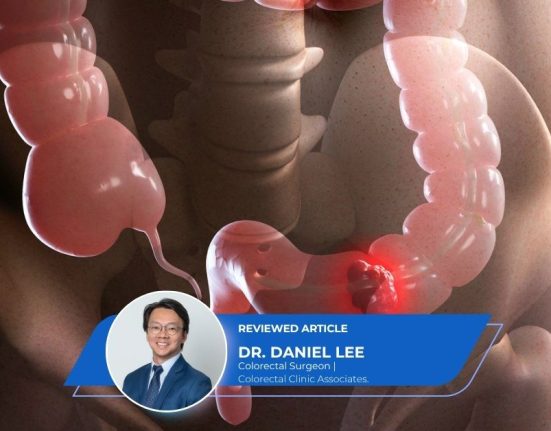
TAMIS Keyhole Surgery To Remove Early Rectal Tumours Without Visible Scars
- July 15, 2026
- 4 minutes read
- 67 Views
Rectal Cancer Symptoms – What Are They, And When Should You Be Concerned
- June 13, 2025
- 3 minutes read
- 478 Views
Robotic Rectal Cancer Surgery: A Modern Approach To Effective Colorectal Treatment
- June 12, 2025
- 4 minutes read
- 459 Views
Anal Fistula Surgery – Know Your Options
- June 4, 2025
- 4 minutes read
- 587 Views
Minimally Invasive Piles Treatment Options In Singapore
- May 30, 2025
- 3 minutes read
- 827 Views
Interview Videos
Dr Daniel Lee explains common anorectal problems and when surgery is required. He also explains how surgeons reduce surgery-related pain, risks, and recovery time.
All content on this site is informative only and is not intended to be a substitute for professional medical advice, diagnosis, or treatment, and should never be relied upon for specific medical advice. If you are experiencing a medical emergency, call 995 immediately or go to the nearest Accident & Emergency department.
health365.sg is a member of Group 365Asia.