


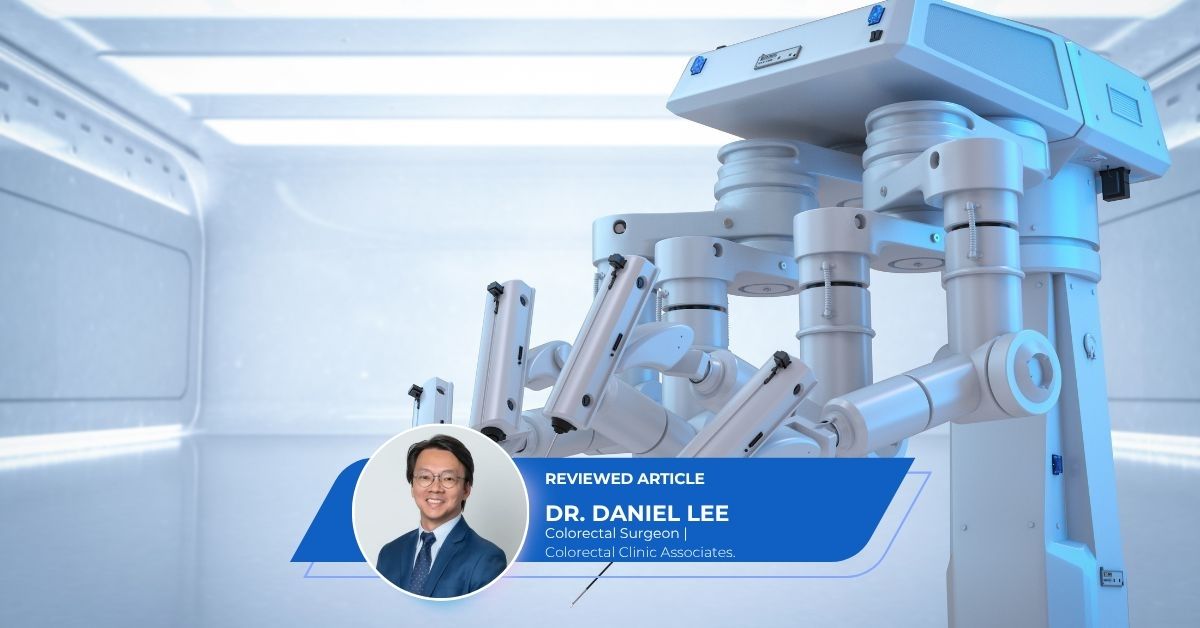
Robotic rectal cancer surgery is transforming how rectal cancer is treated. It offers patients an advanced and minimally invasive option that overcomes the drawbacks of traditional surgical options. By combining the expertise of a skilled surgeon with the precision of robotic technology, this technique has become an increasingly preferred choice for treating rectal cancer, particularly in complex rectal cancers or cancers in hard-to-reach areas.
Need A Consultation With An Experienced Colorectal Surgeon?
Contact UsBack To: Colon & Rectal Cancer Main Page
What Is Robotic Surgery?
Robotic surgery, also known as robot-assisted surgery, is an advanced surgical technique that enhanced a surgeon’s capabilities through a computer-integrated system with multi-articulating robotic arms. These arms, which mimic the dexterity of the human wrist, are controlled from a console where the surgeon sits and operates in real time. The system is designed to be intuitive, allowing for safe, precise, and effective manoeuvres, even in complex anatomical areas that are otherwise difficult to achieve with conventional laparoscopic tools.
A key feature of robotic surgery is the high-definition, 3D magnified camera, which gives the surgeon a clear and detailed view of the surgical area. Advanced systems also include special imaging technologies, such as fluorescence imaging using a dye called indocyanine green (ICG). This helps highlight blood flow and important structures like lymph nodes or bile ducts. Some systems can even overlay CT or MRI scans during the procedure. These technologies further enhance decision-making during surgery, and surgical safety, especially in complex or delicate operations.
Robotic surgery is not an automated process with an independent robot. The entire process is controlled in real-time by the surgeon.
Advantages Of Robotic Rectal Cancer Surgery
The robotic approach offers several clear benefits over traditional open or laparoscopic surgery, particularly in the confined space of the pelvis where rectal cancer is located. These advantages include:
- Enhanced Precision: Robotic instruments offer greater range of motion and finer control, which helps in preserving vital nerves and surrounding structures.
- Smaller Incisions: The minimally invasive nature of robotic surgery means smaller cuts, which translates to less pain, reduced blood loss, and lower risk of infection.
- Faster Recovery: Patients often experience quicker recovery times and shorter hospital stays.
- Improved Outcomes: Studies suggest better surgical margins (i.e. tumour is removed more completely; avoiding cutting too close to the tumour or leaving cancer behind), lower rates of complications, and higher rates of sphincter preservation, especially for low rectal tumours.
- Better Visualisation: The 3D high-definition view provides enhanced visibility in narrow pelvic spaces, allowing surgeons to operate with greater accuracy.
Robotic surgery is especially valuable in rectal cancer treatment because of the anatomy of the pelvis — a narrow, deep space surrounded by important nerves and organs. One of the key steps for rectal cancer surgery is Total Mesorectal Excision (TME). It involves removing the rectum along with its surrounding fat and lymph nodes. Robotic systems provide excellent visibility and fine control, leading to more complete cancer removal and lower recurrence rates.
Consult A Colorectal Surgeon On Rectal Cancer Treatment
Contact UsCommon Uses Of Robotic Surgery For Rectal Cancer
1. Robotic Low Anterior Resection (LAR)
This is commonly used for cancers in the upper or middle rectum. The diseased part of the rectum is removed, and the remaining sections are reconnected. Robotic assistance improves precision and may help avoid a permanent colostomy.
2. Robotic Abdominoperineal Resection (APR)
This surgery is performed when the cancer is very low in the rectum and sphincter-preserving surgery is not feasible. The anus and rectum are removed, and a permanent stoma is created. Robotic technology helps navigate the tight pelvic anatomy, reducing the risk of complications.
3. Completion Proctectomy with Ileal Pouch Formation
For selected patients with rectal cancer or polyposis syndromes, robotic surgery allows safe removal of the remaining rectum and the creation of a new internal reservoir (pouch) from the small intestine, helping to maintain bowel control and quality of life.
4. Resection in Obese or Elderly Patients
Robotic surgery offers significant advantages in patients with challenging anatomy, such as those who are obese or older. Obese patients have thicker layers of fat and more internal tissue around the bowel, which can make surgery more challenging and often requires larger incisions in traditional surgery. Robotic surgery, with its precise instruments and enhanced 3D vision, allows surgeons to operate safely through smaller openings, reducing recovery time and complications – benefits that are especially important for obese or elderly patients.
5. Reoperative or Complex Pelvic Surgery
In selected cases, patients with recurrent rectal cancer or prior pelvic surgeries, robotic tools allow safer navigation through scarred or distorted tissues, improving outcomes in otherwise high-risk cases.
Get An Appointment Today
Robotic rectal cancer surgery is a significant advancement in colorectal cancer treatment. It offers patients a safer, more precise, and less invasive option with promising long-term outcomes. For people diagnosed with rectal cancer, consulting a colorectal surgeon experienced in robotic techniques can open the door to better treatment outcomes and improved quality of life.
Consult A Surgeon On Robotic Rectal Cancer Surgery
Contact Us
This medical content has been reviewed by Dr Daniel Lee, a highly experienced colorectal surgeon in Singapore, known for his expertise in minimally invasive techniques such as laparoscopic colorectal surgery, TAMIS, and advanced laser procedures for piles, fistulas, and pilonidal disease. Dr Lee is trusted for handling even the most challenging cases.
Back To: Colon & Rectal Cancer Main Page
All content on this site is informative only and is not intended to be a substitute for professional medical advice, diagnosis, or treatment, and should never be relied upon for specific medical advice. If you are experiencing a medical emergency, call 995 immediately or go to the nearest Accident & Emergency department.
health365.sg is a member of Group 365Asia.