

Dr. John Hsiang (向晟) – Gastroenterologist and Hepatologist in Singapore
Specialist in Gastroenterology, Hepatology, Endoscopy, Colonoscopy and Liver Disease
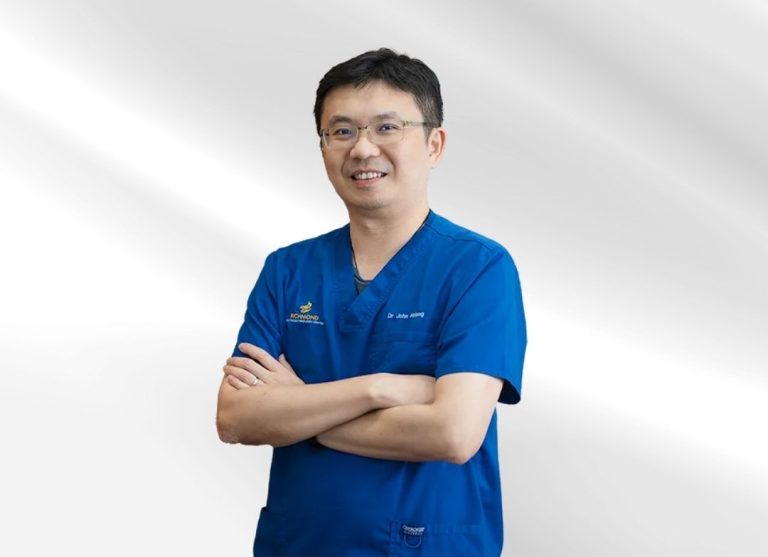
At-a-Glance
Dr John Hsiang is a Senior Consultant Gastroenterologist and Hepatologist and the Medical Director of Richmond Gastroenterology Centre. He is fellowship-trained at the Institute of Digestive Disease, The Chinese University of Hong Kong (Prince of Wales Hospital), holds a research doctorate (MD) in hepatology from the University of Auckland and has over 20 years of clinical experience across Singapore, New Zealand and Hong Kong.
✔ Areas of Expertise: Helicobacter pylori infection, gastro-oesophageal reflux disease (GERD), intestinal metaplasia surveillance, bloating, constipation and diarrhoea, fatty liver disease (MASLD), viral hepatitis B and C, cirrhosis, water immersion colonoscopy, sedation-free colonoscopy, gastroscopy and colorectal cancer screening.
✔ Clinic: Richmond Gastroenterology Centre | (Google Map – Mount Elizabeth) / (Google Map – Farrer Park)
✔ Language: English, Mandarin, Hokkien
✔ Insurance Panels: Prudential, Great Eastern, HSBC Life, Income Insurance, Alliance Healthcare, Make Health Connect (MHC), iXchange
✔ Practicing At: Mount Elizabeth Medical Centre (Orchard) and Farrer Park Medical Centre
Know Before You Go: Fellowship-trained gastroenterologist and hepatologist with a research doctorate in liver disease. He sits on the Ministry of Health’s National Hepatitis C Programme Steering Committee, and his audited colonoscopy detection rates are above international minimum standards.
the vision
Evidence-Based Care, Explained Clearly
“Good gut and liver care starts with an accurate diagnosis and a clear explanation. I want every patient to leave understanding what we found, why it matters and what we will do next.”
– Dr John Hsiang
Get To Know Dr John Hsiang
Dr John Hsiang is a Senior Consultant Gastroenterologist and Hepatologist who leads Richmond Gastroenterology Centre at Mount Elizabeth Orchard and Farrer Park Medical Centre. He graduated from the University of Otago, New Zealand, in 2003 and was awarded his Fellowship of the Royal Australasian College of Physicians (FRACP) in Gastroenterology in 2012. He holds specialist accreditation in gastroenterology in both New Zealand (2012) and Singapore (2015).
From 2013 to 2015 he completed his fellowship as a Clinical Research Fellow and Visiting Scholar at the Institute of Digestive Disease, The Chinese University of Hong Kong (Prince of Wales Hospital), under the mentorship of Professor Henry Chan, Professor Vincent Wong and Professor Grace Wong. This training was supported by a Clinical Training Research Fellowship from the Health Research Council of New Zealand. His research on chronic liver disease, hepatitis B, type 2 diabetes and statins earned him a Doctor of Medicine (MD) research doctorate from the University of Auckland in 2017.
On returning to Singapore, Dr Hsiang served as a Consultant Gastroenterologist at Changi General Hospital (2015 to 2018) and Sengkang General Hospital (2018 to 2021), where he received the SingHealth Gold Star Award. During this time he was also an Adjunct Assistant Professor at the Yong Loo Lin School of Medicine (NUS) and Duke-NUS Medical School. He entered private practice in 2021 and founded Richmond Gastroenterology Centre in 2023.
Dr Hsiang contributes to national liver health policy as a Steering Committee Member of the Ministry of Health’s National Hepatitis C Programme and as a member of the Expert Advisory Group for the ACE Clinical Guideline on Chronic Hepatitis B. He is also a participating specialist in the EMPOWER Project, a volunteer-driven initiative that brings hepatitis C screening and treatment to under-served communities. His randomised study on point-of-care hepatitis C screening received the Singapore Medical Journal Best Research Paper Award in 2022.
His clinical interests include water immersion colonoscopy, surveillance of intestinal metaplasia of the stomach and common gut complaints such as bloating, constipation and diarrhoea. He also manages viral hepatitis B and C, fatty liver disease and cirrhosis.
Colonoscopy Quality And Comfort
He audits his own colonoscopy results against international quality standards. The two key measures of how well a colonoscopy picks up precancerous polyps are the adenoma detection rate (ADR) and the sessile serrated lesion (SSL) detection rate. Dr Hsiang’s ADR is 32%, above the 25% minimum standard set by the European Society of Gastrointestinal Endoscopy. His SSL detection rate is 9.3%, above the 6% benchmark in the 2024 American College of Gastroenterology and American Society for Gastrointestinal Endoscopy quality indicators. For patients who prefer to avoid sedation, he offers sedation-free colonoscopy, with a caecal intubation rate (a complete examination to the start of the colon) of 96%.
Known for his caring demeanour, Dr Hsiang consults in English, Mandarin and Hokkien and shares plain-language gut and liver health education on Instagram and TikTok (@dr_johnhsiang).
Awards And Research Grants
- Singapore Medical Journal Best Research Paper Award (2022)
- SingHealth Gold Star Award (2020)
- National Medical Research Council (NMRC) Research Grant (2017)
- Investigator-Initiated Research Grant, Gilead Sciences (2017)
- Clinical Training Research Fellowship, Health Research Council of New Zealand (2013 to 2015)
- Young Investigator of the Year, New Zealand Society of Gastroenterology (2012)
National Committees And Editorial Roles
- Steering Committee Member, National Hepatitis C Programme, Ministry of Health Singapore
- Expert Advisory Group, ACE Clinical Guideline for Chronic Hepatitis B, Agency for Care Effectiveness (appointed 2026)
- Junior Editorial Board Member, Hepatoma Research (2022 to 2024)
- Peer reviewer for Alimentary Pharmacology & Therapeutics, JGH Open, Journal of Digestive Diseases and Diabetes, Obesity and Metabolism
- Member, American Association for the Study of Liver Diseases (AASLD) and Singapore Society of Gastroenterology
What Is His Ethos In Medicine?
Dr Hsiang believes patients deserve care that is backed by evidence and explained in words they understand. He takes time to walk through test results and treatment options, so that patients can make informed decisions in a comfortable and trusting environment.
If You Run Into Him Outside Work, You Are Likely To…
…find him on the court playing racket sports, out on a run, catching a movie or settling in for a board game night with family and friends.
Academic Qualifications
- MBChB, University of Otago, New Zealand (2003)
- FRACP, Fellowship of the Royal Australasian College of Physicians in Gastroenterology (2012)
- MD (Doctorate), University of Auckland, New Zealand (2017)
- FRCP, Royal College of Physicians of Edinburgh (2021)
- FAMS, Academy of Medicine Singapore, Gastroenterology (2023)
Publications
Dr Hsiang has authored 27 peer-reviewed publications (H-index 17, over 1,200 citations) covering hepatitis B and C, fatty liver disease, H. pylori, colonoscopy and polypectomy. Full publication list on Google Scholar
- Risk of postpolypectomy bleeding with uninterrupted clopidogrel therapy in an industry-independent, double-blind, randomized trial
- Point-of-care hepatitis C screening with direct access referral to improve linkage of care: a pilot randomised study
- Metabolic syndrome delays HBeAg seroclearance in Chinese patients with hepatitis B
- Randomized trial comparing effects of weight loss by liraglutide with lifestyle modification in non-alcoholic fatty liver disease
- SGLT2 inhibitors in liver patients
10 Questions & Answers
1. What inspired you to pursue a career in gastroenterology and hepatology?
As a junior doctor I saw how many serious gut and liver diseases can be prevented or caught early. A polyp removed today is a cancer that never happens, and hepatitis B or C picked up early rarely needs to progress to cirrhosis. That combination of detective work, hands-on procedures and real prevention drew me in, and my research years in Hong Kong confirmed it.
2. When should patients consider consulting a gastroenterologist?
See a specialist if symptoms such as reflux, bloating, abdominal pain or a change in bowel habit last more than a few weeks or keep coming back. Do not wait if you notice blood in the stool, black stools, vomiting blood, difficulty swallowing, unexplained weight loss or anaemia. People with abnormal liver tests, hepatitis B, fatty liver on a scan or a family history of bowel or stomach cancer also benefit from a review.
3. How do you stay current with the latest advancements and research in your field?
I review papers for international journals and sit on national committees for hepatitis C and hepatitis B guidelines, which keeps me close to the newest evidence. I also keep in touch with colleagues in Hong Kong, New Zealand and Singapore. I also audit my own colonoscopy results against international quality benchmarks.
4. What is your patient care philosophy?
Get the diagnosis right, then explain it clearly. I recommend tests only when they will change what we do, and I use treatments that are backed by good evidence. Patients should never leave the room unsure about what their results mean or what the next step is.
5. Can you describe any particular patient success stories or challenging cases that had a significant impact on your approach to gastroenterology?
Some of my most meaningful work has been outside the clinic. Through our hepatitis C screening research and the EMPOWER Project, we have tested and treated people in halfway houses and other under-served settings who would otherwise never have seen a specialist. Watching someone cured of hepatitis C with a short course of tablets reminds me that good medicine is about access as much as expertise.
6. What are some common misconceptions or myths about gut and liver health that you often encounter, and how do you address them with your patients?
The most common is that fatty liver is harmless. In some people it progresses to scarring, cirrhosis or liver cancer, and it also raises heart disease risk. Another is that no symptoms means no cancer; early bowel and stomach cancers are often silent, which is why screening matters. Many people also fear colonoscopy will be painful. With modern sedation, or water immersion techniques for those who prefer no sedation, most patients are surprised how comfortable it is.
7. How do you ensure patients have a good understanding of their treatment choices?
I show patients their own endoscopy pictures and scan results and explain them in plain English, Mandarin or Hokkien. I lay out the options, including doing nothing, with the likely benefits and risks of each. My team is available for follow-up questions after the consultation.
8. How do you maintain a work-life balance to stay refreshed and engaged with your patients?
I keep active with racket sports and running, and I protect time with my family for movies and board game nights. Exercise clears my head, and time with family keeps things in perspective. A refreshed doctor is a more attentive doctor.
9. In your opinion, what are some of the most exciting developments or technologies currently emerging in the field of endoscopy and digestive care?
Artificial intelligence that highlights polyps during colonoscopy is helping endoscopists find more precancerous lesions. In liver disease, the first medicines for fatty liver inflammation (MASH) have now been approved in the United States, and weight-loss drugs in the GLP-1 family are changing how we treat metabolic liver disease. Hepatitis C is now curable with a short course of tablets, which makes elimination a realistic national goal.
10. Can you share any advice on how people can take steps to prevent liver diseases or detect gastrointestinal conditions early for timely treatment?
Know your hepatitis B status and get vaccinated if you are not immune. Keep a healthy weight, stay active and limit alcohol to protect your liver. Start colorectal cancer screening from age 50, or earlier if a close family member has had bowel cancer. If you have had H. pylori or a family history of stomach cancer, speak to a gastroenterologist about whether a gastroscopy is right for you.
Reviewed Articles
Coming Soon!
All content on this site is informative only and is not intended to be a substitute for professional medical advice, diagnosis, or treatment, and should never be relied upon for specific medical advice. If you are experiencing a medical emergency, call 995 immediately or go to the nearest Accident & Emergency department.
health365.sg is a member of Group 365Asia.