


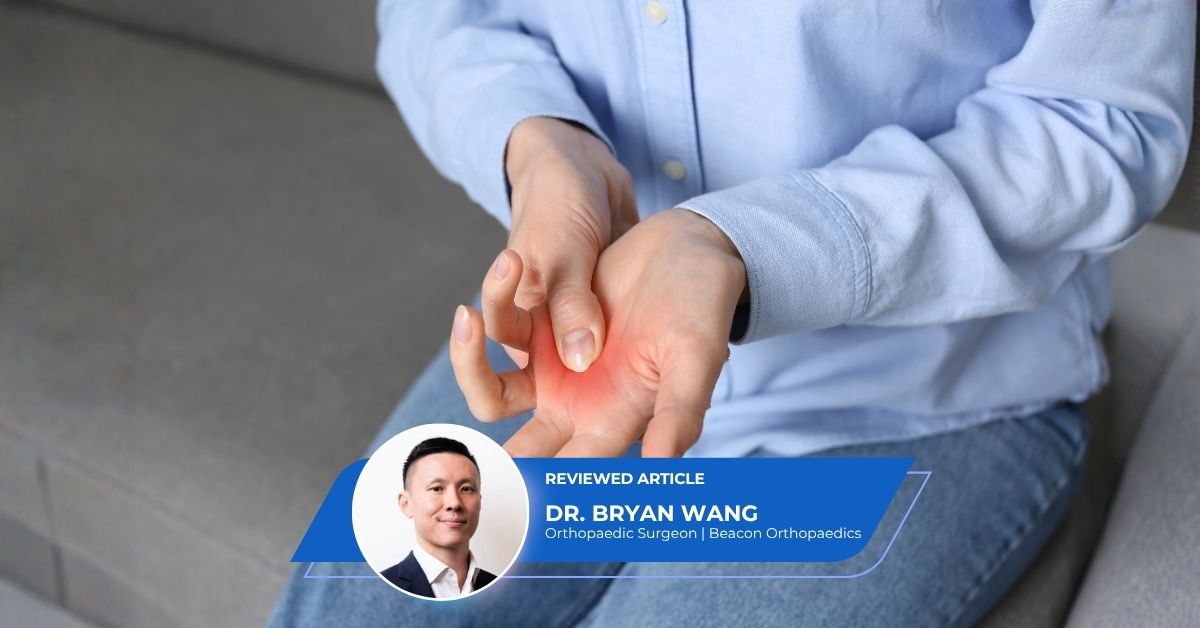
Trigger finger, also known medically as stenosing tenosynovitis, is a condition that causes one or more fingers to become stuck in a bent position and then suddenly straighten with a snap — similar to the motion of pulling and releasing a trigger. It is a relatively common hand problem that can cause discomfort, stiffness, and difficulty with daily tasks. Although it can affect anyone, certain risk factors make some people more prone to developing trigger finger.
Contact UsBack To: Orthopaedic Care In Singapore: Upper Limbs Main Page
What Is Trigger Finger?
Trigger finger occurs when the tendons in your fingers become irritated and inflamed. Tendons are cord-like tissues that connect muscles to bones, allowing smooth finger movement through a series of protective sheaths or tunnels. When inflammation causes the tendon sheath to thicken, it restricts the normal gliding motion of the tendon. As a result, your finger may catch or lock when you try to straighten or bend it.
The condition can affect any finger, including the thumb (sometimes referred to as “trigger thumb”). It may involve one or multiple fingers on one or both hands. In more severe cases, the finger can become completely locked in a bent position.
What Are The Causes Of Trigger Finger?
The exact cause of trigger finger is often related to repetitive hand or finger movements that strain the tendons over time. Activities that involve strong gripping, repetitive motion, or prolonged use of vibrating hand tools can increase the risk of tendon irritation.
Common causes include:
- Repetitive Hand Movements: Frequent use of tools, typing, or activities like sewing or playing musical instruments.
- Inflammatory Conditions: Diseases such as rheumatoid arthritis, gout, or diabetes can increase inflammation in the tendon sheaths.
- Direct Injury: Trauma or local swelling around the tendon sheath can lead to narrowing and impaired tendon movement.
In many cases, the condition develops gradually without a single identifiable cause. However, chronic overuse remains one of the most common underlying factors.
What Are Common Trigger Finger Symptoms?
Symptoms can range from mild stiffness to painful locking of the finger. They often worsen over time if left untreated.
Typical signs and symptoms include:
- Stiffness In The Finger: Especially noticeable in the morning or after periods of inactivity.
- A Catching Or Clicking Sensation: When bending or straightening the affected finger.
- Tenderness Or A Lump: At the base of the affected finger, where the tendon passes through the sheath.
- Finger Locking: In more severe cases, the finger may become stuck in a bent position and may suddenly pop straight or stay locked.
Early symptoms may come and go, but as inflammation progresses, finger movement can become increasingly restricted and painful.
What Are The Treatments For Trigger Finger?
Treatment for trigger finger depends on the severity of the condition. In many cases, conservative (non-surgical) management can help relieve symptoms and restore normal movement.
1. Rest And Activity Modification
Avoiding activities that aggravate the condition, such as gripping or repetitive finger movements, is the first step. Using padded gloves or ergonomic tools may also reduce strain.
2. Splinting
Wearing a splint keeps the affected finger in a straight position, allowing the tendon to rest and inflammation to subside. Splints are often worn at night for several weeks.
3. Medications
Nonsteroidal anti-inflammatory drugs (NSAIDs), such as ibuprofen, can help relieve pain and swelling.
4. Corticosteroid Injections
A corticosteroid injection into the tendon sheath can significantly reduce inflammation. Many patients experience lasting relief after one injection, though some may require additional doses.
5. Hand Therapy
A hand therapist can teach stretching and strengthening exercises to maintain flexibility and promote healing.
6. Surgery
If non-surgical options fail, a minor procedure called trigger finger release may be recommended. This surgery involves releasing the tight section of the tendon sheath to allow the tendon to glide smoothly again. The procedure is usually done under local anaesthesia and has a high success rate.
Who Is At Risk For Trigger Finger?
Certain people are more likely to develop trigger finger due to occupational, medical, or lifestyle factors. These include:
- Gender: Trigger finger is more common in women than men.
- Age: It tends to occur most often in people aged 40 to 60 years.
- Medical Conditions: Those with diabetes, rheumatoid arthritis, or gout are at higher risk.
- Repetitive Work: People whose jobs involve prolonged gripping, such as construction workers, musicians, or manual labourers, are more susceptible.
- Hand Trauma: Previous injury or surgery to the hand can increase vulnerability.
Understanding these risk factors can help you adopt preventive measures, such as ergonomic adjustments and proper hand care.
FAQs About Trigger Finger
Mild cases may improve with rest and self-care measures, especially if caught early. However, persistent or severe cases often require medical treatment to relieve symptoms and prevent permanent stiffness.
Diagnosis is usually based on a physical examination. Your doctor will assess the movement of your fingers and feel for tenderness or a nodule near the base of the affected finger. Imaging tests such as ultrasound are rarely needed.
Recurrence is possible, especially if underlying risk factors like repetitive strain or diabetes remain. However, surgical release has a very low recurrence rate when performed correctly.
When To See A Doctor
If you experience persistent finger stiffness, clicking, or pain that interferes with daily tasks, it is important to consult a doctor. Early diagnosis and treatment can prevent the condition from worsening and help avoid the need for surgery.
Contact Us
This medical content has been reviewed by Dr Bryan Wang, an experienced orthopaedic surgeon in Singapore known for his patient-centred approach, advanced minimally invasive techniques, and comprehensive management of complex shoulder conditions.
Back To: Orthopaedic Care In Singapore: Upper Limbs Main Page
All content on this site is informative only and is not intended to be a substitute for professional medical advice, diagnosis, or treatment, and should never be relied upon for specific medical advice. If you are experiencing a medical emergency, call 995 immediately or go to the nearest Accident & Emergency department.
health365.sg is a member of Group 365Asia.