

Retinal Diseases-The Big Story

Retinal Diseases: Saving Your Sight
Maintaining healthy vision depends on the integrity of the retina (a thin, light-sensitive layer at the back of the eye that acts like the film in a camera). When retinal diseases occur, this vital tissue is compromised, often leading to permanent vision loss if not addressed promptly. In Singapore, where lifestyle factors like high myopia and diabetes are prevalent, understanding the risks associated with the retina is a critical component of lifelong eye care. In ths Big Story, we focus in particular on:
- Retinal detachment – this is one of the most urgent conditions, occurring when the retina peels away from its underlying support tissue. Often described as a “falling wallpaper” effect, this separation deprives retinal cells of oxygen and nourishment. Without immediate surgical intervention to reattach the layer, the affected areas of the retina can die, resulting in a permanent “curtain” or shadow over one’s field of vision.
- Diabetic retinopathy – this is a progressive complication of diabetes that damages the tiny blood vessels within the retina. Over time, high blood sugar levels cause these vessels to leak fluid or bleed, and in advanced stages, abnormal new vessels grow on the surface of the retina. These fragile vessels can lead to scarring and even trigger a tractional retinal detachment, making it a leading cause of blindness among working-age adults in Singapore.
What Are The Symptoms Of Retinal Diseases?
Retinal conditions are often painless. This makes recognising visual warning signs vital. If you experience any of the following, you should consult an eye specialist immediately:
- Sudden Floaters: A dramatic increase in “cobwebs,” specks, or strings drifting across your vision.
- Flash of Light: Brief, bright streaks or lightning-like flashes (photopsia), especially in the periphery.
- The “Curtain” Effect: A dark shadow or blur that seems to be moving from the side, top, or bottom toward the center of your vision.
- Blurred or Distorted Vision: Straight lines appearing wavy or bent (a common sign of fluid leakage in diabetic retinopathy).
- Fluctuating Vision: Changes in clarity that may vary throughout the day, often linked to blood sugar levels.
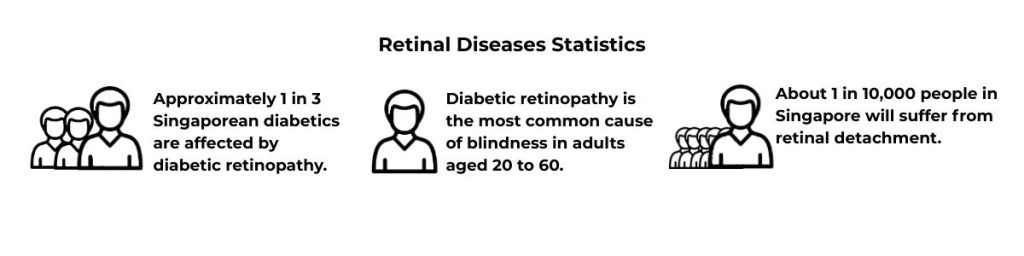
Singapore Statistics For Retinal Diseases
Singapore faces challenges regarding retinal health due to its aging population and high diabetes rates. Here are five significant statistics:
- According to Singhealth, approximately 1 in 3 Singaporeans with diabetes are affected by diabetic retinopathy.
- Diabetic retinopathy is the most common cause of blindness in adults aged 20 to 60.
- Research from the Singapore Epidemiology of Eye Diseases (SEED) study shows that Indians with diabetes have a 50% higher risk of developing diabetic retinopathy compared to Chinese Singaporeans.
- Most patients who have lived with diabetes for 20 years or more will develop some form of diabetic retinopathy.
- The incidence of retinal detachment in Singapore is roughly 1 in 10,000, with a notable risk factor being high myopia (short-sightedness), which is very common.
What Are The Common Causes Of Retinal Diseases And Who Is At Risk?
Retinal diseases do not have a single point of origin. Rather, they are often the result of ageing, systemic health issues, or physical changes within the eye.
Common Causes of Retinal Detachment
Retinal detachment typically occurs when the vitreous—the clear, gel-like substance that fills the centre of the eye—changes in consistency as we age.
Vitreous Shrinkage: As the gel thins and shrinks, it can tug on the retina. If the pull is strong enough, it may create a tear, allowing fluid to seep behind the retina and lift it away from the back of the eye.
Physical Trauma: A direct blow to the eye or head can cause immediate mechanical detachment or create small tears that lead to detachment later.
Severe Myopia (Short-sightedness): In highly myopic eyes, the eyeball is longer than average, which stretches and thins the retinal tissue, making it significantly more prone to tearing.
Common Causes of Diabetic Retinopathy
This condition is a direct consequence of chronic high blood glucose levels associated with diabetes.
Vessel Blockage: Excessive sugar in the blood eventually clogs the tiny blood vessels that nourish the retina, cutting off its blood supply.
Leaking and Swelling: In response, the eye attempts to grow new blood vessels. However, these new vessels are weak and “leaky,” spilling fluid and blood into the vitreous and causing the retina to swell.
Scar Tissue: Over time, these leaking vessels can cause scar tissue to form, which can eventually pull the retina away from the back of the eye (tractional detachment).
Learn More About Retinal Diseases
Find The Best Ophthalmologist In Singapore
When it comes to your eye health, you naturally would like to find the best ophthalmologist in Singapore. How would you identify such a doctor? Find out from our Guide To Finding The Best Eye Specialist In Singapore.
Comment: The row below to be moved to article for healthcare professionals article
Find A Doctor
Verified Healthcare Professionals
We connect you with a network of qualified and experienced doctors who specialise in chronic health conditions, health screening, and longevity.
Trusted Information Source
We pride ourselves on providing accurate, up-to-date, and evidence-based information about each disease, its prevention, and treatment.
Privacy and Security
Your health information and personal data are paramount to us. We will protect your privacy throughout the booking process and beyond.
Convenience at Your Fingertips
Our user-friendly platform allows you to find and book appointments 24/7 from the comfort of your home.
Our Preferred Doctor You Can Consider For Retinal Disease Treatment
Dr Lee Shu Yen is a senior eye specialist with extensive experience in managing cataracts, medical retina conditions, and complex general ophthalmology cases. She has over two decades of clinical experience in both public and private healthcare, and strong expertise in cataract and retinal disease management.



Retinal diseases often begin silently, but their impact on vision can be profound. Early diagnosis and timely treatment are the best ways to preserve sight and quality of life. Because the early stages usually have no symptoms, regular eye checks—especially for those with diabetes, high myopia, or a family history of retinal problems—are essential to detect changes before vision is affected.
Dr Lee Shu Yen
Book An Appointment
Take a proactive step for your health and peace of mind today. If you need to see a doctor about retinal disease treatment, our team is here to assist.
Financials
[findDoctor category="financial consultants" countries="Singapore" " limit="15"]
Related Content


FAQs - Test Your Knowledge About Retinal Diseases
No, it does not heal without treatment. Surgery is required to reattach the retina and preserve vision.
Success rates are high, with over 80–90% of cases reattached successfully in a single operation. However, vision recovery depends on how quickly treatment is received.
Yes, in some cases, a second detachment can occur. Regular follow-ups with your ophthalmologist are crucial to monitor eye health after surgery.
There is no permanent cure for diabetic retinopathy. Timely treatment and proper diabetes management can prevent further damage and, in many cases, restore partial vision. Early detection remains the most effective way to preserve eyesight.
Yes. Adopting a healthy lifestyle plays a vital role in preventing diabetic retinopathy and slowing its progression. This includes eating a balanced diet low in refined sugars and saturated fats, engaging in regular physical activity, monitoring blood glucose levels, and avoiding smoking. Consistent management of diabetes through lifestyle choices complements medical treatment and helps preserve long-term eye health.
Additional Resources
- Retina Surgery | Advanced Eye Clinic & Surgery
- Retinal Detachment | Cleveland Clinic
- What to Expect Before, During, and After Retinal Detachment Surgery | University of Pittsburg, Department of Ophthalmology
- Diabetic Retinopathy: Causes, Symptoms, Treatment | American Academy of Ophthalmology
- Panretinal Photocoagulation: A Review of Complications | National Library of Medicine
.