

Dr Tan Wee Boon – General Surgeon (Endocrine)
Find By 365Asia Preferred Doctor Partner Programme
Dr. Tan Wee Boon – General Surgeon in Singapore
Specialist in Thyroid, Hernia, Soft Tissue, and Endocrine Surgical Care
At-a-Glance
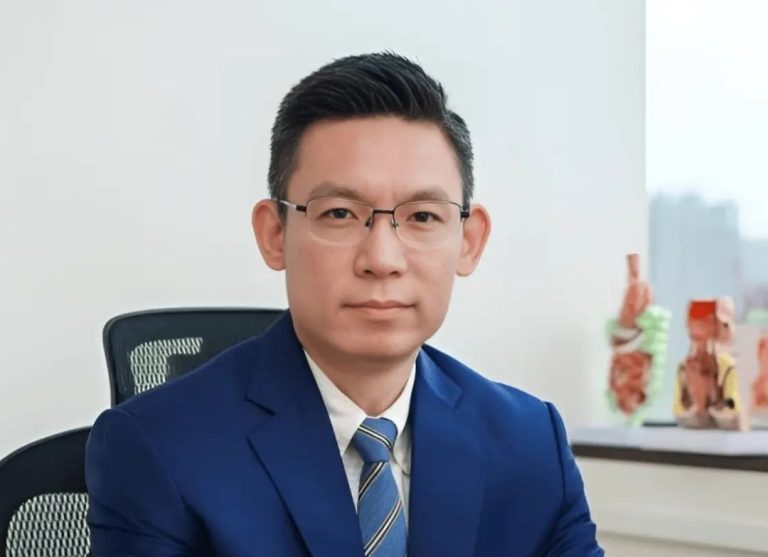
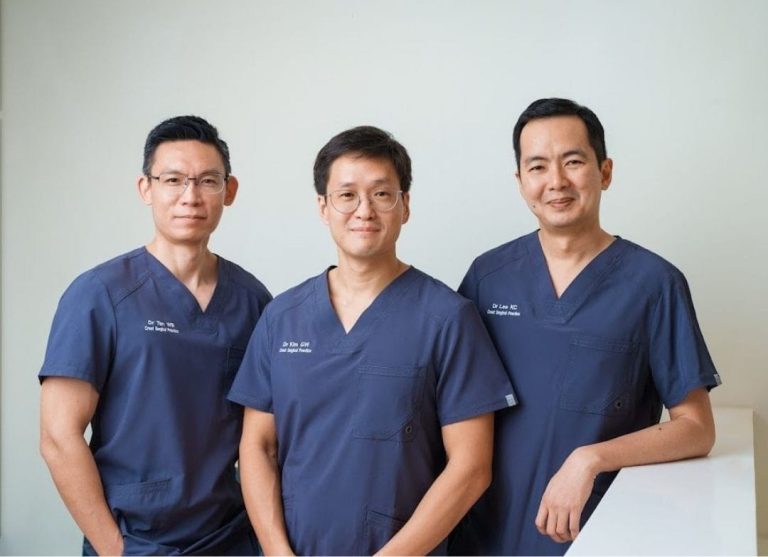
Dr Tan Wee Boon is a fellowship-trained Senior Consultant General Surgeon who specialises in minimally invasive, endocrine, and complex soft-tissue operations. Expertly skilled in advanced laparoscopic techniques and non-surgical thermal ablation, he focuses on delivering patient-centered surgical care while actively contributing to medical education and clinical research.
✔ Areas of Expertise: Non-surgical treatment of thyroid nodules, laparoscopic hernia surgery, endocrine procedures, soft tissue growths, and retroperitoneal sarcomas.
✔ Clinic: Crest Surgical Practice (Google Map)
✔ Language: English, Hokkien, Mandarin
✔ Insurance Panels: AIA, Alliance Healthcare, DA ADEPT, Fullerton Healthcare, Great Eastern, HSBC Life, IHP (Integrated Health Plans), Make Health Connect (MHC), Income, Prudential, Singlife
✔ Practicing At: Mount Elizabeth Hospital, Gleneagles Hospital, Thomson Medical Centre
Know Before You Go: Blends a compassionate bed-side manner with precision laparoscopic techniques for thyroid and hernia surgery.
the vision
Excellence In Surgery, Compassion In Care, And Commitment To Education
“Excellence in surgery, compassion in care, and a lifelong commitment to education define my approach. Every patient deserves the best of modern medicine and the dedication to continuous learning ensures that standard is met.”
– Dr Tan Wee Boon
Get To Know Dr Tan Wee Boon
Dr Tan Wee Boon is a Senior Consultant, General Surgeon at Crest Surgical Practice within Mount Elizabeth Hospital, Singapore. He specialises in Thyroid, Hernia and Endocrine Surgery.
He graduated from the National University of Singapore (NUS) with degrees in Bachelor of Medicine and Bachelor of Surgery (MBBS) in 2003. In 2007, he began his surgical training and was accredited as a general surgical specialist by the Specialist Accreditation Board, Singapore in 2013, following his fellowship with the Royal College of Surgeons of Edinburgh.
Dr Tan further honed his expertise with fellowship training in endocrine surgery at University College of London Hospital and robotic thyroidectomy at Yonsei University in Seoul, supported by the Academic Medicine Development Award.
Before his current private practice at Mount Elizabeth Orchard, Dr Tan was a senior consultant in the Department of General Surgery at National University Hospital (NUH). His surgical interests are primarily in hernia, soft tissue, and endocrine surgery, with extensive experience in laparoscopic hernia surgeries and managing conditions related to the thyroid, parathyroid, and adrenal glands. He also specialises in surgeries for soft tissue growths and advanced retroperitoneal sarcomas, contributing significantly to the Sarcoma Committee at NUH.
His passion for medical education is evident from his numerous teaching awards and positions, including his role as NUS Chief Convenor for the final surgical exams (MBBS) from 2018 to 2022. Even after moving to private practice, he remains a visiting consultant and adjunct assistant professor at NUH, continuing his dedication to public healthcare and education.
What Is His Ethos In Medicine?
Dr Tan is dedicated to staying at the forefront of medical advancements, ensuring his patients receive the highest quality of care through advanced techniques such as laparoscopic hernia surgeries and robotic thyroidectomy. He values education and mentorship, as evidenced by his numerous teaching awards and roles, including serving as the NUS Chief Convenor for final surgical exams. He continues to share his knowledge as an adjunct assistant professor and visiting consultant, reflecting his belief in lifelong learning and giving back to the medical community.
If You Run Into Him Outside Work, You Are Likely To…
…see him with his family exploring pet friendly places and cafes all over Singapore. Dr Tan also keeps a healthy lifestyle by running at least twice a week and going to the gym regularly. He also wake-surfs and goes for skiing trips during winter season.
Academic Qualifications
- Bachelor of Medicine and Bachelor of Surgery (MBBS) at National University of Singapore (NUS) in 2003.
- Surgical Training in General Surgery in 2007.
- Fellowship with the Royal College of Surgeons of Edinburgh (FRCS) in 2013.
- Fellowship Training in Endocrine Surgery at University College of London Hospital in London, UK.
- Robotic Thyroidectomy Training at Yonsei University in Seoul, South Korea.
Publications
- Do Ultrasound Patterns and Clinical Parameters Inform the Probability of Thyroid Cancer Predicted by Molecular Testing in Nodules with Indeterminate Cytology?
- The Efficacy and Safety of High-Intensity Focused Ultrasound (HIFU) Therapy for Benign Thyroid Nodules-A Single Center Experience from Singapore
10 Questions & Answers
General surgery has always been my choice of subspeciality since medical school days. It covers a wide variety of conditions which makes the work interesting. Results from treatments for general surgical conditions are gratifying as they often provide immediate relief for patients. I was also inspired by my general surgical mentors during my undergraduate days and during my post graduate training, especially in the field of thyroid and endocrine surgery.
Patients newly diagnosed with a thyroid nodule should be evaluated by an endocrine surgeon. They may notice swelling in the neck or the thyroid nodules may be detected via ultrasound during health screening.
Patients who experience abnormal swelling or pain in the groin (inguinal), around the navel (umbilical), or at the site of a previous scar should seek a medical evaluation by a hernia specialist. Hernias can only be treated with surgery, and it is important to have the procedure done before complications such as bowel strangulation occur.
To stay current in medical field, I attend medical conferences and lectures on a regular basis. Medical journals are another way we stay updated with new research and advancements.
It is important to provide holistic care to patients, focusing not just on treating the disease but also on addressing the patient’s overall well-being. Treatment should be individualized to select the most suitable approach for each patient.
One of my recent significant patient encounters was with a gentleman in his early thirties who had been diagnosed with stage 4 adrenal cancer. At the time, his wife was in her first trimester with their first child. Despite a guarded prognosis, we performed an adrenalectomy to control the disease. Following the surgery, he was placed on medical therapy. A year later, I received photos of his newborn from him. He was incredibly thankful to have lived to see his child, as this was his biggest concern before treatment. It’s always rewarding to know that your treatment has made a significant impact on a patient’s life. This experience underscores the importance of understanding each patient’s unique concerns and situation and tailoring our treatment goals accordingly.
Most people are confused by the terminology used for thyroid growth. A thyroid nodule refers to a lump in the thyroid gland. A goitre refers to a general enlargement of the whole gland. This can be a diffuse or nodular goitre depending on the cause of the enlargement.
Many patients believe they do not have thyroid problems if their neck is not visibly swollen. However, not all thyroid nodules are visible or palpable, especially those located deep in the posterior aspect of the thyroid lobes, which can be difficult to detect. This is also true for thyroid cancer, as early stages can be asymptomatic in some patients.
Additionally, there is a common misconception that reducing iodine intake can help shrink thyroid nodules. This is not accurate, as most patients with thyroid nodules have normal thyroid hormone levels, and the growth of these nodules is generally not related to hormonal dysfunction or excessive iodine intake.
It’s important to take the time to explain patients’ conditions and the necessary management options to them. The pros and cons of each option should be carefully outlined before recommending what we believe is best for the individual patient. Allowing patients time to think and ask questions before making a decision about their treatment is also beneficial.
Regular exercise helps me to feel energised and to stay focused. I typically go to the gym at least 3 times a week and meet up with friends for a run at least once a week.
Artificial Intelligence (AI) holds exciting potential for enhancing surgical precision in both diagnosis and treatment, thereby improving patient outcomes. Predictive analytics can help us identify high-risk patients, reducing the likelihood of complications. As AI technology becomes more widely adopted in healthcare systems worldwide, we can expect to see even more applications in medicine.
It is important to listen to one’s body and seek consultation early if there is any medical concern. One should also go for regular age-appropriate health screening.
Reviewed Articles
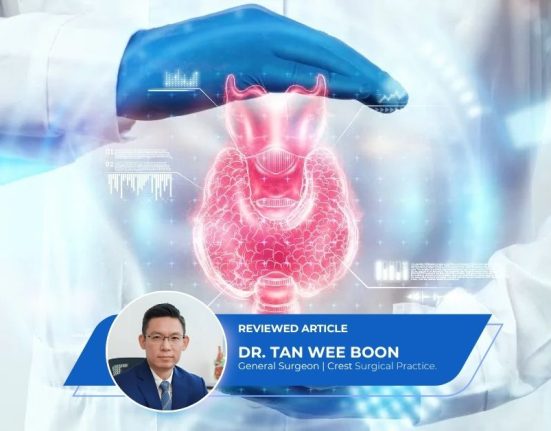
Thyroid Surgery In Singapore
- July 26, 2024
- 3 minutes read
- 906 Views
What Causes Thyroid Cancer, and How to Prevent It
- July 19, 2022
- 1 minute read
- 825 Views
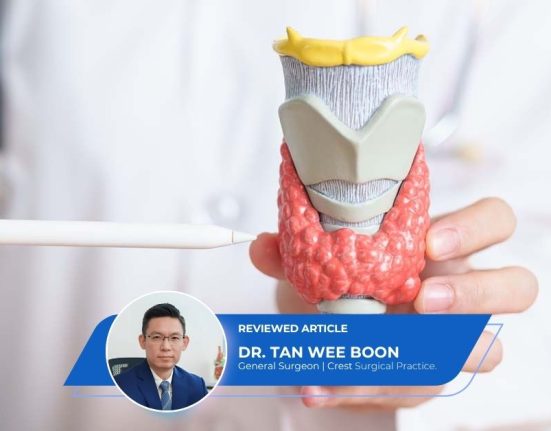
Thyroid Cancer In Singapore
- July 19, 2022
- 3 minutes read
- 1252 Views
Interview Videos
Dr Tan Wee Boon explains how thyroid nodules are diagnosed and explains about Radiofrequency Ablation (RFA) – a minimally invasive, scarless procedure that allows patients to go home the same day.
Dr Tan Wee Boon explains common thyroid conditions, their treatments, and the cost of treatment.
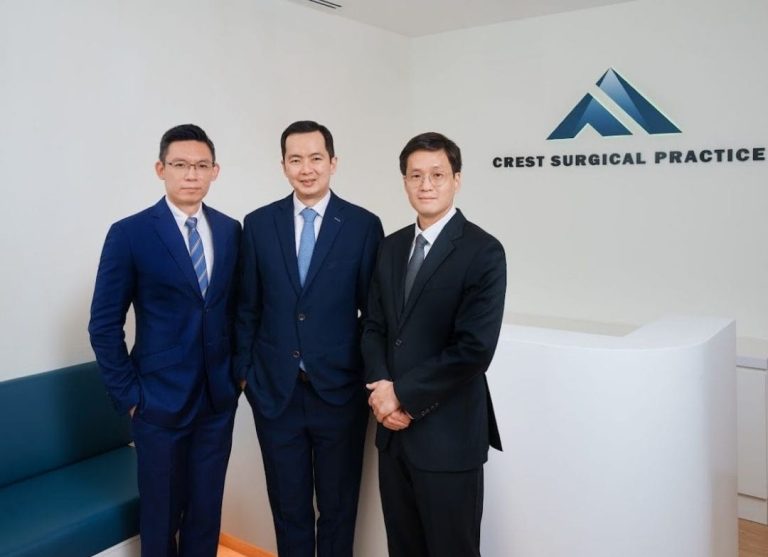
Take A Look At Crest Surgical Practice’s clinic At Gleneagles Medical Centre
All content on this site is informative only and is not intended to be a substitute for professional medical advice, diagnosis, or treatment, and should never be relied upon for specific medical advice. If you are experiencing a medical emergency, call 995 immediately or go to the nearest Accident & Emergency department.
health365.sg is a member of Group 365Asia.