

TL;DR
What Is Kidney Disease?
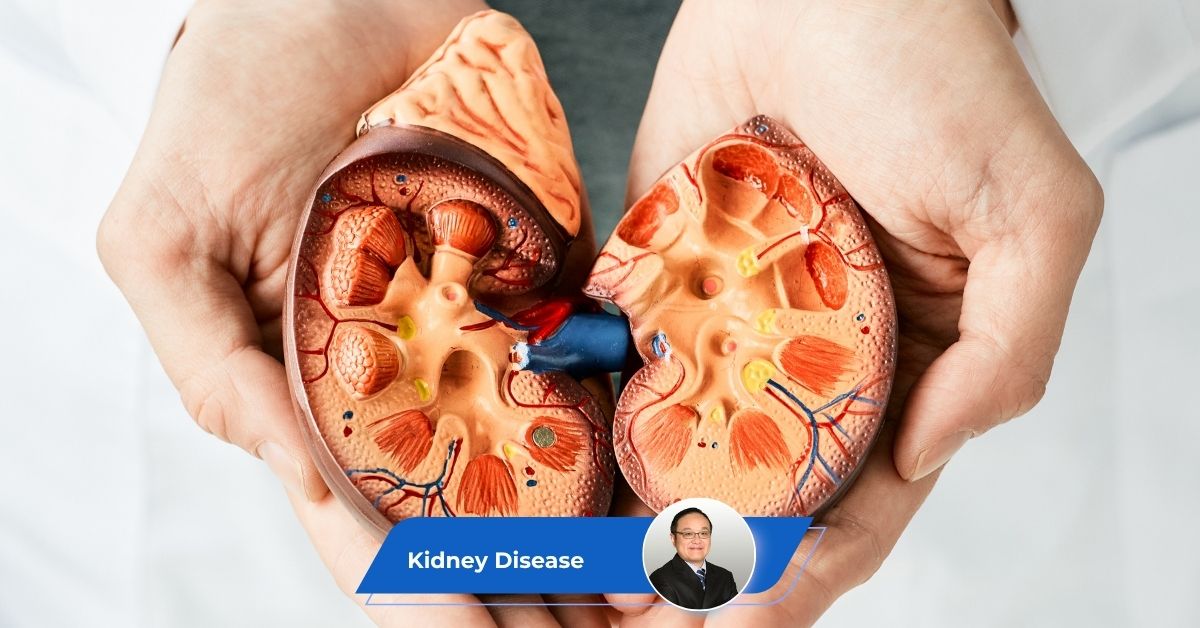
Kidney disease occurs when the kidneys experience structural damage or a progressive decline in function, impairing their ability to filter waste products, excess fluid, and toxins from the bloodstream.
The most common form is Chronic Kidney Disease (CKD), defined as persistent kidney damage or a reduced estimated Glomerular Filtration Rate (eGFR) lasting for three months or longer. Chronic conditions like diabetes and high blood pressure gradually strain the delicate filtering units (nephrons).
Another important form is obesity-related kidney disease (or obesity-related glomerulopathy), where excess body weight places an increased metabolic and physical strain on the kidneys. This hyperfiltration causes scarring over time and accelerates functional loss. Additionally, primary glomerular diseases—most notably IgA Nephropathy (an autoimmune condition where antibody deposits accumulate in the kidneys)—can trigger local inflammation, damage filtering membranes, and lead to progressive CKD.
Back To: Urology & Kidney Diseases Main Page
Kidney Disease Prevalence In Singapore
Kidney disease represents a major public health concern in Singapore. According to national health statistics, approximately 14% of Singaporean adults suffer from Chronic Kidney Disease. Singapore faces one of the highest rates of End-Stage Renal Disease (ESRD) globally, driven significantly by high rates of diabetes and hypertension. Every day, multiple individuals in Singapore suffer from kidney failure and require lifelong kidney replacement therapy (dialysis or kidney transplantation).
What Are The Causes Of Kidney Damage & Risk Factors?
Kidney disease develops due to multiple metabolic, systemic, and genetic causes. Primary risk factors include:
- Diabetes Mellitus: Uncontrolled blood sugar levels damage the delicate blood vessels in the kidneys over time, serving as the leading cause of kidney failure in Singapore.
- High Blood Pressure (Hypertension): Persistent high pressure within the renal blood vessels damages tissue, impairing filtration capacity.
- Obesity: Excess adipose tissue forces the kidneys to filter harder (hyperfiltration) to meet metabolic demands, directly triggering obesity-related kidney disease.
- Glomerular Diseases & IgA Nephropathy: Autoimmune and inflammatory conditions directly target the kidney’s filtering units. IgA Nephropathy is one of the most common forms of primary glomerulonephritis in Singapore and Asia.
- Family History & Genetic Conditions: A family history of renal disease or inherited conditions increases overall susceptibility.
- Smoking & Age: Ageing naturally decreases nephron density, while tobacco use restricts vascular blood flow and accelerates renal damage.
What Are The Symptoms Of Kidney Disease?
In its early stages, kidney disease is often asymptomatic and may go unnoticed. As kidney function declines, waste products and fluid build up in the body, leading to observable symptoms:
- Swelling (Edema): Fluid retention causes noticeable swelling in the legs, ankles, feet, face, or around the eyes.
- Urinary Changes: Changes in frequency, frothy or foamy urine (indicating protein/proteinuria), or dark, rust-coloured urine (blood/haematuria).
- Fatigue & Weakness: Decreased kidney function leads to a buildup of toxins or anaemia, causing persistent tiredness.
- Shortness of Breath: Fluid accumulation in the lungs or severe anaemia can make breathing difficult.
- Nausea & Appetite Loss: Uraemia (build-up of waste products in the blood) can cause persistent nausea, metallic taste, or loss of appetite.
- High Blood Pressure: Poorly functioning kidneys struggle to regulate fluid and pressure, worsening hypertension.
How To Prevent This Condition?
Preventing kidney disease involves controlling underlying metabolic risks and maintaining vascular health:
- Manage Blood Sugar & Pressure: Routine monitoring and strict control of diabetes and hypertension significantly slow or prevent renal damage.
- Maintain a Healthy Weight: Weight management strategies lower the risk of obesity-related kidney disease and reduce renal hyperfiltration.
- Adopt a Balanced Diet: Reducing sodium, processed foods, and excessive protein intake eases the workload on the kidneys.
- Quit Smoking: Stopping smoking preserves vascular health and blood flow to the renal arteries.
- Undergo Regular Screening: Annual blood and urine tests facilitate early detection of CKD or conditions like IgA Nephropathy before irreversible harm occurs.
What Are The Costs Of Screening & Testing For Kidney Disease?
Early screening and diagnostic tests evaluate functional capacity, protein leakage, and structural tissue changes:
| Screening / Diagnostic Test | Function & Description | Estimated Cost (Private Sector)* |
| Blood Tests (Serum Creatinine & eGFR) | Measures kidney filtration efficiency and metabolic waste buildup. | S$50–S$150 |
| Urine Tests (UACR / Proteinuria Screen) | Detects abnormal protein leakage or microhaematuria. | S$30–S$100 |
| Ultrasound Kidney / Renal Tract | Evaluates kidney size, structure, blockages, or cysts non-invasively. | S$300–S$600 |
| Renal Angiography | Imaging technique to assess blood flow within the renal arteries. | S$1,700–S$2,200 |
| Percutaneous Renal Biopsy | Ultrasound-guided needle biopsy of kidney tissue to diagnose conditions like IgA Nephropathy. | S$1,100–S$1,800 |
*Note: Private sector estimates in Singapore for 2026. Prices vary based on clinic, specialist fees, and facility charges. Ministry of Health (MOH) fee benchmark for a non-directed imaging-guided percutaneous renal parenchymal biopsy lists a surgeon fee range of S$1,100 to S$1,800.
Which Doctor For Treatment Of Kidney Disease?
Medical professionals involved in managing renal conditions include general practitioners, renal physicians, and vascular surgeons:
- Renal Physician (Nephrologist) – A specialist in kidney health who evaluates, diagnoses, and manages chronic kidney disease, obesity-related renal damage, hypertensive nephropathy, and autoimmune glomerular conditions such as IgA Nephropathy. They also oversee dialysis access planning and long-term renal replacement therapy.
- Vascular Surgeon – Specialises in creating and maintaining vascular access for patients requiring haemodialysis, such as Arteriovenous Fistulas (AVF) or Arteriovenous Grafts (AVG).
- Urologist– A surgical specialist focusing on anatomical issues of the urinary tract, including kidney stones, urinary obstructions, and renal structural abnormalities.
- Transplant Surgeon – Specialises in surgical kidney transplantation for patients with end-stage renal disease.
Preferred Doctors For Kidney Disease Treatment In Singapore
If you are looking for a doctor for managment of chronic kidney disease, obesity-related kidney conditions, or glomerular disorders in Singapore, you can consider our Preferred Doctor partners:
Dr Wong Weng Kin – Consultant Renal Physician & Nephrologist at One Future Kidney Care
Dr Wong Weng Kin is a Senior Consultant Nephrologist with extensive clinical expertise across the full spectrum of renal disorders. His key focus areas include chronic kidney disease (CKD), obesity-related kidney disease, metabolic kidney health, glomerular diseases (such as IgA Nephropathy), advanced dialysis management, and interventional nephrology. Formerly serving as Clinical Service Director and Director of Diagnostic & Interventional Nephrology at NUH, Dr Wong is an Adjunct Assistant Professor at the Yong Loo Lin School of Medicine, NUS.
Articles reviewed by Dr Wong Weng Kin:



[SG] Featured Doctor- Dr Wong Weng Kin
Resources To Help You Find A Doctor
- Best Kidney Specialist In Singapore
- Kidney Specialists For Interventional Nephrology & Dialysis Access
Which Hospitals And Medical Centres Are There For Screening & Treatment?
Patients in Singapore can access comprehensive renal care across public healthcare clusters and private medical centres:
- Public Sector: Tertiary institutions such as National University Hospital (NUH), Singapore General Hospital (SGH), Tan Tock Seng Hospital (TTSH), and Changi General Hospital (CGH) offer specialized outpatient renal clinics, interventional nephrology services, and inpatient care.
- Private Sector: Sub-specialised renal practices and specialist clinics operate at private hospital hubs, including Mount Elizabeth Hospital (Orchard), Mount Elizabeth Novena Hospital, Gleneagles Hospital, and Farrer Park Hospital.
- Ambulatory & Dialysis Centres: Community dialysis services are available through voluntary welfare organisations like the National Kidney Foundation (NKF) as well as private dialysis facilities like Diaverum Dialysis Centre and Fresenius Kidney Care.
Explore: Find A Hospital resources.
What Is The Cost Of Kidney Disease Treatment In Singapore?
Treatment costs vary based on disease stage and required therapeutic modalities:
| Treatment / Procedure | Description & Clinical Purpose | Estimated Cost (Private Sector)* |
| Long-Term Medications | Includes blood pressure controllers (ACE inhibitors/ARBs), SGLT2 inhibitors, and targeted therapies to slow CKD progression. | Varies (MediSave CDMP claimable) |
| Arteriovenous Fistula (AVF) Creation | Surgical procedure creating vascular access for long-term haemodialysis. | S$1,900–S$3,900 (Surgeon Fee Benchmark) |
| Haemodialysis (HD) | Regular blood filtering treatment (typically 3 times weekly). | S$2,500–S$4,000+ per month |
| Peritoneal Dialysis (PD) | Home-based dialysis utilising the peritoneal membrane for fluid exchange. | S$1,500–S$3,000+ per month |
| Kidney Transplantation | Surgical transplantation of a donor kidney. | S$13,500–S$20,900 (Surgeon Fee Benchmark) |
*Note: Private sector estimates for 2026. MOH surgeon fee benchmarks for AVF creation range from S$1,900 to S$3,900, while surgeon fee benchmarks for recipient kidney transplantation range from S$13,500 to S$20,900.
Treatment Options & Management
- Lifestyle Changes: Diet modifications (reducing salt, controlling protein and potassium intake) alongside exercise help manage blood pressure and metabolic demand.
- Medications: SGLT2 inhibitors, ACE inhibitors, and ARBs help protect kidney function, while immunosuppressants may be required for glomerular disorders like IgA Nephropathy.
- Kidney Replacement Therapy (KRT): For End-Stage Renal Disease, patients choose between Haemodialysis, Peritoneal Dialysis, or Kidney Transplantation.
Additional Resources On Costs
- Financial Planning For Cost Of Medical Treatment
- MediSave And Medishield Life Coverage For Overseas Singaporeans
What Are The Insurance And Financing Considerations For This Condition?
Health & Hospitalisation Insurance
- MediShield Life: Singapore’s basic health insurance covers hospitalisation, surgical procedures, and key outpatient treatments (including chronic dialysis) subject to daily ward caps and claim limits.
- Integrated Shield Plans (IPs): Private insurance plans that supplement MediShield Life to cover higher ward classes (Class A/B1) and private hospital bills.
- Critical Illness (CI) Policies: Provide a lump-sum payout upon diagnosis of End-Stage Kidney Failure to assist with living expenses and ongoing medical costs.



External Link: Health Insurance & Panel Doctor Networks
MediSave Usage & Government Subsidies
- Government Subsidies: Subsidised patients at public hospitals or polyclinics receive subsidies ranging from 50% to 80% based on means-testing.
- Chronic Disease Management Programme (CDMP): Allows patients to use up to S$500 or S$700 (for complex multi-chronic conditions) annually from MediSave for outpatient management of CKD, diabetes, and hypertension.
- Outpatient Dialysis MediSave: Medisave withdrawal limits apply for outpatient haemodialysis or peritoneal dialysis treatments.
Financial Assistance
- MediFund: A government endowment fund providing a safety net for needy Singaporeans facing remaining medical bills after subsidies and insurance.
- National Kidney Foundation (NKF) & VWOs: Voluntary welfare organisations offer subsidized dialysis, financial aid, and holistic support for eligible low-income renal patients.
FAQs
Chronic Kidney Disease (CKD) often progresses gradually without noticeable symptoms during its early stages. Because the remaining healthy nephrons compensate for impaired ones, patients may lose up to 90% of their renal function before severe symptoms like swelling or fatigue appear. Regular blood and urine tests are essential for early detection.
In its early stages, obesity-related kidney disease can be stabilized or improved through structured weight loss, dietary adjustments, and blood pressure control. Reducing body weight lowers renal hyperfiltration strain, helping to prevent progressive scarring and long-term kidney damage.
IgA Nephropathy is an autoimmune kidney disorder where abnormal Immunoglobulin A (IgA) antibodies deposit in the glomeruli (the filtering units of the kidneys). This causes localized inflammation, protein or blood leakage into the urine, and progressive scarring over time. It requires specialized evaluation by a nephrologist to guide treatment and preserve kidney function.
CKD is diagnosed using blood tests to calculate estimated Glomerular Filtration Rate (eGFR) and urine tests to check for protein leakage (urine albumin-to-creatinine ratio). CKD is classified into 5 stages based on eGFR level, ranging from Stage 1 (mild damage with normal eGFR) to Stage 5 (Kidney Failure requiring dialysis or transplantation).
Haemodialysis (HD) involves filtering the patient’s blood through a machine at a dialysis centre typically 3 times a week, requiring a vascular access like an AV fistula. Peritoneal Dialysis (PD) is a home-based continuous or automated exchange treatment that uses the patient’s abdominal lining (peritoneum) to filter waste. A nephrologist helps patients select the option best suited to their lifestyle and medical condition.
Get An Appointment With A Kidney Specialist
If you have concerns about kidney health, protein in the urine, or chronic kidney disease management, click the button below to arrange a consultation with a specialist.
Contact MedicalTravel.asiaBack To: Urology & Kidney Diseases Main Page
Additional Resources
- Diet, Exercise and Chronic Kidney Disease | One Future Kidney Care
- All you need to know about Kidney Biopsy | One Future Kidney Care
- Chronic kidney disease – Diagnosis and treatment | Mayo Clinic
- What to Know About the Stages of Chronic Kidney Disease | WebMD
- Kidney disease crisis looms in Singapore | ChannelNewsAsia
All content on this site is informative only and is not intended to be a substitute for professional medical advice, diagnosis, or treatment, and should never be relied upon for specific medical advice. If you are experiencing a medical emergency, call 995 immediately or go to the nearest Accident & Emergency department.
health365.sg is a member of 365Asia.