

Enlarged Prostate: More Than Just A Problematic Drip – The Big Story

Enlarged Prostate - More Than Just A Problematic Drip
For older men, dripping after urination (or difficulty starting urination) may be due to an enlarged prostate. However, while potentially awkward and inconvenient, these are just symptoms. Enlarged prostate can lead to more serious health complications if left untreated and allowed to develop.
What Is An Enlarged Prostate?
An enlarged prostate (Benign Prostatic Hyperplasia / BPH), is a common condition affecting men as they age. While it is not cancerous, it can impact the quality of life and lead to serious health complications.
What Are The Causes Of Enlarged Prostate?
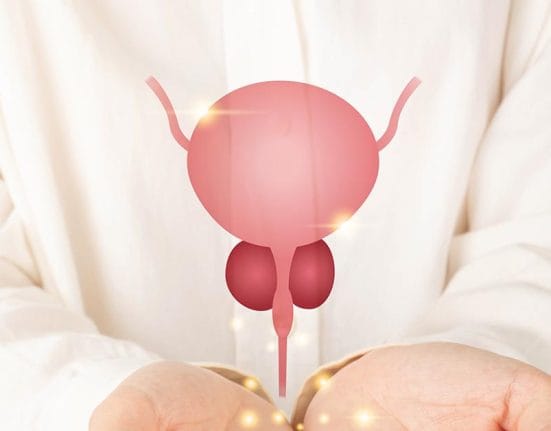
The prostate is a gland located below the bladder and in front of the rectum in men. Its function includes adding fluid to semen and helping push semen through the urethra.
What causes the prostate to enlarge is not fully understood. Factors known to contribute to its development are:
- Age – The condition becomes increasingly common after 40 years of age.
- Hormonal Changes – Changes in testosterone and dihydrotestosterone (DHT) levels contribute to prostate growth.
- Family History – Men with a family history of BPH have a higher risk of developing the condition themselves.
- Lifestyle & Diet – A high-fat diet, lack of exercise, and obesity may increase the risk of prostate enlargement.
- Underlying Health Conditions – Men with diabetes, heart disease, and hypertension have a higher likelihood of developing BPH.
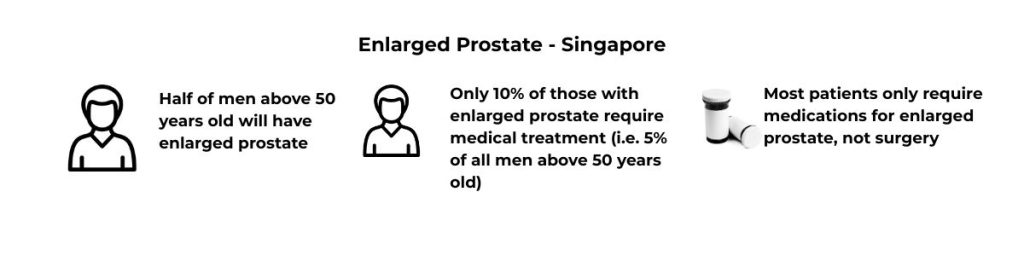
Enlarged Prostate Singapore Statistics
Enlarged prostate becomes more common as men get older:
- About 8% chance of developing the condition at age 40
- 50% chance at age 60, and
- 80% chance by age 90.
Most men with BPH may not require medical attention for the condition, but an estimated 10% of those with enlarged prostate may need to undergo some form of treatment.
What Are The Symptoms Of An Enlarged Prostate?
Enlarged prostate symptoms can range from mild to severe. They include:
- Frequent urination, especially at night
- Difficulty starting urination
- Weak urine stream
- Incomplete bladder emptying
- Dribbling at the end of urination
- Urgency to urinate
- Pain or discomfort while urinating (less common)
Why Should An Enlarged Prostate Not Be Ignored?
An enlarged prostate that worsens may result in the following complications:
- Inability to urinate (urinary retention). At this stage, a tube (catheter) may need to be placed into the bladder to drain the urine.
- Urinary tract infections (UTIs). Not being able to fully empty the bladder can raise the risk of infection in the urinary tract. Frequent UTIs may require surgery to remove part of the prostate.
- Bladder stones. These are most often caused by failure to fully empty the bladder. Bladder stones can cause bladder irritation, blood in the urine, and blocked urine flow.
- Bladder damage. The bladder may stretch and weaken over time is it frequently does not empty fully. This weakening has the vicious-cycle effect of making it harder to fully empty the bladder.
- Kidney damage. Pressure in the bladder from the inability to urinate may cause kidney damage. Damage may also be caused if bladder infections reach the kidneys.
When To See A Doctor And How Is An Enlarged Prostate Treated?
You should consult a doctor if you are experiencing symptoms, even if the symptoms to not seem to be too severe. Seeking medical attention can allow you to find out if there are any causes that could be treated and reduce the risk of a dangerous blockage of your urinary tract.
Medications
- Alpha-Blockers: These relax the muscles of the prostate and bladder neck, making it easier to urinate.
- 5-Alpha Reductase Inhibitors: These shrink the prostate.
Minimally Invasive Procedures
- Convective Water Vapour Thermal Therapy: This treatment uses steam injections to kill targeted prostate cells and reduce the size of the prostate.
- Prostatic Urethral Lift: Small implants are placed in the body to hold the enlarged prostate tissue away from the urethra.
Surgery
- Transurethral Resection of the Prostate (TURP): Surgical removal of part of the prostate. Laser Therapy: This treatment uses laser to remove excess prostate tissue.
- Simple Prostatectomy: Surgical removal of the inside part of the prostate gland. Used for severely enlarged prostate when other treatments are unsuitable or have failed.
Learn More About Enlarged Prostate
Comment: The row below to be moved to article for healthcare professionals article
Find A Doctor
Verified Healthcare Professionals
We connect you with a network of qualified and experienced doctors who specialise in chronic health conditions, health screening, and longevity.
Trusted Information Source
We pride ourselves on providing accurate, up-to-date, and evidence-based information about each disease, its prevention, and treatment.
Privacy and Security
Your health information and personal data are paramount to us. We will protect your privacy throughout the booking process and beyond.
Convenience at Your Fingertips
Our user-friendly platform allows you to find and book appointments 24/7 from the comfort of your home.
Our Preferred and Partner Doctors You Can Consider For Enlarged Prostate Treatments:




Book An Appointment
Take a proactive step for your health and peace of mind today. If you need to see an urology regarding enlarged prostate symptoms, our team is here to assist.
Financials
[findDoctor category="financial consultants" countries="Singapore" " limit="15"]
Related Content





FAQs - Test Your Knowledge About Enlarged Prostate And Prostate Health
No — BPH is not cancer and does not cause prostate cancer. However, the two conditions can exist at the same time because both are linked to ageing and hormonal changes. Regular prostate check-ups and PSA (Prostate-Specific Antigen) blood tests are important to distinguish between benign enlargement and possible cancer.ere is no scientific evidence linking physical activity (such as running, jumping, or playing sports) after eating to the onset of appendicitis.
Yes. A balanced diet rich in vegetables, fruits, and omega-3 fatty acids, along with regular physical activity, helps support prostate health. Limiting red meat, processed foods, and alcohol can also be beneficial. Regular medical check-ups are essential for early detection of prostate conditions.
Some men find relief from herbal and Traditional Chinese Medicine (TCM) treatments, such as saw palmetto, pygeum africanum, beta-sitosterol, or formulas like Qian Lie Tong Pian. These may help reduce inflammation, improve urinary flow, and balance hormones.
However, results can vary, and scientific evidence is mixed — always consult a qualified healthcare professional before using herbal remedies, especially alongside prescribed medication.
Recovery depends on the procedure:
Most men stay in hospital for 1–3 days after TURP or laser surgery.
A catheter is usually in place for 1–2 days to help with urination.
Common short-term effects include mild bleeding, burning during urination, or increased frequency.
Most men return to normal activities within 2–4 weeks.
Long-term, urinary flow and quality of life typically improve significantly.
Sexual function usually recovers, although some men may experience retrograde ejaculation (semen flows backward into the bladder), which is harmless but affects fertility.
5. What is the impact of enlarged prostate and prostate surgery on fertility and sexual performance?
An enlarged prostate itself generally does not cause erectile dysfunction, but it can affect sexual comfort and satisfaction in several ways. The urinary symptoms can indirectly reduce libido and confidence. Some men also find that medications used to treat BPH (like tamsulosin or finasteride) may temporarily lower sexual desire or affect ejaculation volume.
When it comes to prostate surgery, the effects depend on the type of procedure:
- TURP (Transurethral Resection of the Prostate) and similar operations often cause retrograde ejaculation — where semen flows backward into the bladder instead of out through the penis. This condition is harmless but can affect fertility, as semen does not exit the body normally.
- Erectile function is usually preserved after BPH surgery, although some men may notice temporary changes in erection strength or sensation during recovery.
- Newer minimally invasive techniques have a lower risk of affecting sexual function, as they avoid cutting or removing tissue near the nerves that control erections.
Overall, most men report improved quality of life and maintained sexual performance after recovery, particularly once urinary symptoms have eased. However, those wishing to have children should discuss fertility preservation options — such as sperm banking — before surgery.
Additional Resources
- Enlarged Prostate (BPH) Treatment in Singapore | Urology Practice
- The growing problem of an enlarged prostate gland | Harvard Health Publishing
- How to shrink the prostate naturally | Medical News Today
- Prostate | Cleveland Clinic
- It’s Complicated: Enlarged Prostate and Sex | Healthline
.