

GLP-1s, Weight Loss, And The Future Of Kidney Protection – The Big Story

GLP-1s, Weight Loss, And The Future Of Kidney Protection
TL;DR: GLP-1s And Kidney Protection At A Glance
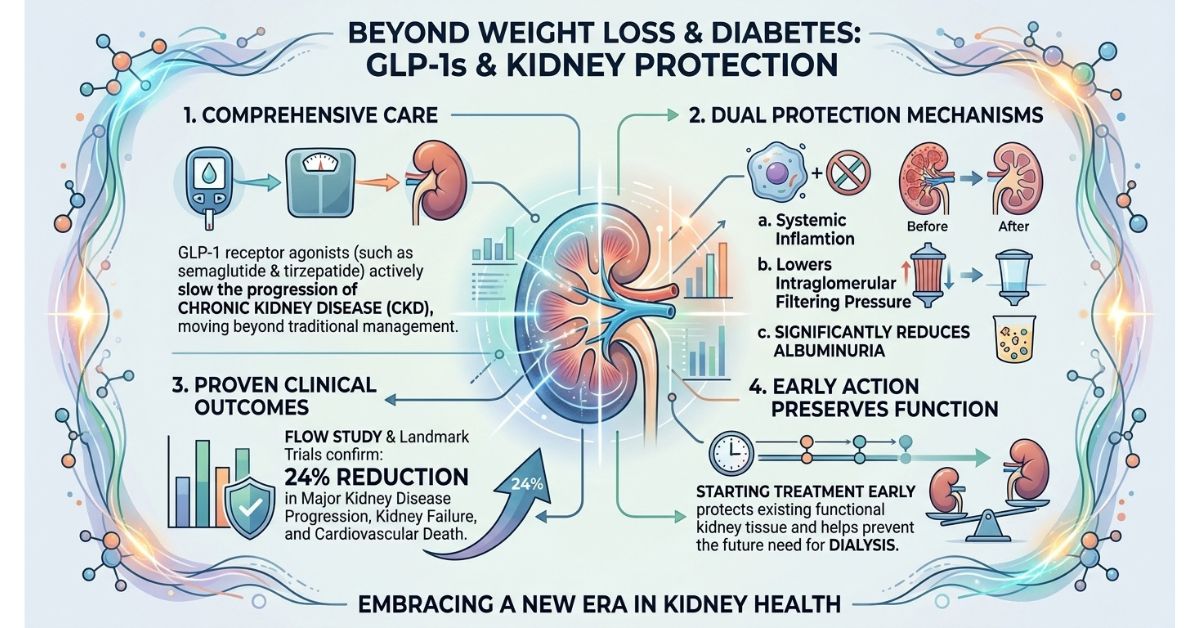
- Beyond Weight Loss & Diabetes: GLP-1 receptor agonists (such as semaglutide and tirzepatide) do more than manage blood sugar and obesity. They also actively slow the progression of chronic kidney disease (CKD).
- Dual Protection: They protect the kidneys by reducing systemic inflammation, lowering intraglomerular filtering pressure, and significantly reducing albuminuria (protein leakage into urine).
- Proven Clinical Outcomes: Landmark trials like the FLOW study show a 24% reduction in major kidney disease progression, kidney failure, and cardiovascular death.
- Early Action Matters: While GLP-1s cannot reverse permanent scarring, starting treatment early preserves remaining functional kidney tissue and helps prevent the future need for dialysis.
Click to expand infographic.
How Do GLP-1 Receptor Agonists Protect Kidney Health?
Glucagon-like peptide-1 (GLP-1) receptor agonists protect kidney function through a combination of metabolic improvements and direct anti-inflammatory cellular pathways. Initially developed for type 2 diabetes and obesity management, medications such as semaglutide and tirzepatide slow the decline of kidney function in patients with chronic kidney disease (CKD).
While significant weight loss and blood pressure reduction relieve mechanical stress on kidney filtering units (glomeruli), GLP-1 medications also exert direct renoprotective effects. They reduce intraglomerular pressure, suppress systemic inflammation, lower oxidative stress, and significantly decrease albuminuria (protein leakage into urine). Landmark clinical trials, including the FLOW study, demonstrate that GLP-1 receptor agonists lower the risk of kidney failure progression, major cardiovascular events, and all-cause mortality in patients with metabolic disease and chronic kidney impairment.



The Hidden Burden Of Chronic Kidney Disease In Metabolic Health
Chronic kidney disease affects roughly 14% of the adult population in Singapore. It develops silently, often progressing to advanced stages without causing obvious early symptoms.
The primary drivers of kidney damage are metabolic disorders, including type 2 diabetes, obesity, and hypertension. Excess body weight forces the kidneys to filter blood at abnormally high pressures, a state known as glomerular hyperfiltration. Over years of sustained stress, delicate microscopic filters break down, allowing protein to leak into urine and causing irreversible scarring (glomerulosclerosis).
Key Clinical Mechanisms: How GLP-1s Protect Renal Function
GLP-1 receptor agonists mimic an endogenous incretin hormone released by the gut after meals. Beyond regulating appetite and blood glucose levels, GLP-1 receptors located throughout kidney tissue trigger several protective processes:
- Reduction Of Intraglomerular Pressure: GLP-1 therapy restores balance to blood flow entering and exiting kidney filters, reducing damaging internal pressure.
- Suppression Of Renal Inflammation: These agents inhibit pro-inflammatory signaling molecules (cytokines) that drive progressive kidney fibrosis.
- Decrease In Protein Leakage: By stabilizing the filtration barrier, GLP-1 medications reduce urine albumin-to-creatinine ratio (UACR), a core clinical biomarker for kidney damage.
- Metabolic Load Relief: Significant body weight reduction lowers systemic vascular resistance, visceral fat volume, and circulating lipid toxicity.
Evidence Breakdown: Clinical Trials On GLP-1 Kidney Protection
Clinical evidence confirming direct kidney protection has reshaped management guidelines for type 2 diabetes and chronic kidney disease.
The milestone FLOW trial evaluated semaglutide specifically in patients with chronic kidney disease and type 2 diabetes. The study was stopped early due to clear efficacy, showing a 24% reduction in the primary composite endpoint of kidney disease progression, kidney failure, and cardiovascular death.
Diagnostic Comparison: Traditional Nephroprotection Vs GLP-1 Combination Therapy
For decades, kidney protection relied almost exclusively on renin-angiotensin system (RAS) inhibitors, such as ACE inhibitors or Angiotensin Receptor Blockers (ARBs). Later, SGLT2 inhibitors added another major layer of defense.
The introduction of GLP-1 receptor agonists provides a complementary mechanism that works alongside existing therapies. While SGLT2 inhibitors primarily alter sodium transport and fluid dynamics within kidney tubules, GLP-1 receptor agonists address systemic inflammation, metabolic burden, and metabolic tissue stress.
Treatment Pathways: Integrating GLP-1s Into Preventive Kidney Care
Integrating GLP-1 medications into a kidney protection strategy involves structured clinical steps:
1. Early Biomarker Screening
Screening relies on two routine lab tests:
- Estimated Glomerular Filtration Rate (eGFR): Measures overall kidney filtering capacity from blood samples.
- Urine Albumin-To-Creatinine Ratio (UACR): Detects early microscopic protein leakage before eGFR drops.
2. Comprehensive Multidisciplinary Management
For patients with diabetes, obesity, or elevated kidney risk, specialists combine therapies:
- First-Line Foundation: Optimized background therapy with RAS inhibitors and SGLT2 inhibitors.
- Targeted Incretin Therapy: Addition of GLP-1 receptor agonists to reduce cardiovascular risk, lower albuminuria, and manage body weight.
- Monitoring Schedule: Regular blood and urine checks at 3-to-6-month intervals to monitor eGFR stability and metabolic parameters.
Looking For A Renal Physician In Singapore Treating Chronic Kidney Disease? Consider Dr Wong Weng Kin
Managing metabolic kidney disease requires specialist oversight that bridges diabetes, heart, and renal health. Dr Wong Weng Kin is a Senior Consultant Renal Physician practicing at One Future Kidney Care in Singapore, specialising in preventive nephrology and chronic kidney disease management.
- Precision Kidney Screening: Comprehensive baseline evaluations of your estimated glomerular filtration rate (eGFR) and urine albumin-to-creatinine ratio (UACR) ensure GLP-1 therapy is introduced safely.
- Tailored Combination Therapy: Dr Wong integrates GLP-1 receptor agonists alongside existing RAS inhibitors and SGLT2 inhibitors to maximize kidney protection while minimizing side effects.
- Proactive Dialysis Prevention: Early specialist intervention stops silent kidney damage before irreversible scarring occurs, preserving long-term renal function.
"The shift toward GLP-1 receptor agonists changes the traditional paradigm regarding kidney disease progression in diabetic patients. By addressing glycemic control, weight, systemic vascular inflammation, and intrarenal signaling simultaneously, we are able to preserve kidney function far more effectively.Starting treatment before extensive tissue scarring occurs gives patients the best opportunity to avoid dialysis later in life."
- Dr Wong Weng Kin
Articles Reviewed By Dr Wong Weng Kin




Foamy Urine May Be A Sign Of Poor Kidney Health
- December 18, 2025


Guide To IgA Nephropathy In Singapore
- December 17, 2025

Obesity Is One Of The Key Causes Of Kidney Disease
- November 24, 2025

Guide To Chronic Kidney Disease In Singapore.
- December 15, 2024
Find A Doctor
Verified Healthcare Professionals
We connect you with a network of qualified and experienced doctors who specialise in chronic health conditions, health screening, and longevity.
Trusted Information Source
We pride ourselves on providing accurate, up-to-date, and evidence-based information about each disease, its prevention, and treatment.
Privacy and Security
Your health information and personal data are paramount to us. We will protect your privacy throughout the booking process and beyond.
Convenience at Your Fingertips
Our user-friendly platform allows you to find and book appointments 24/7 from the comfort of your home.
Additional Resources
- 365Asia List of Best Kidney Specialists In Singapore
When To Speak With A Renal Physician
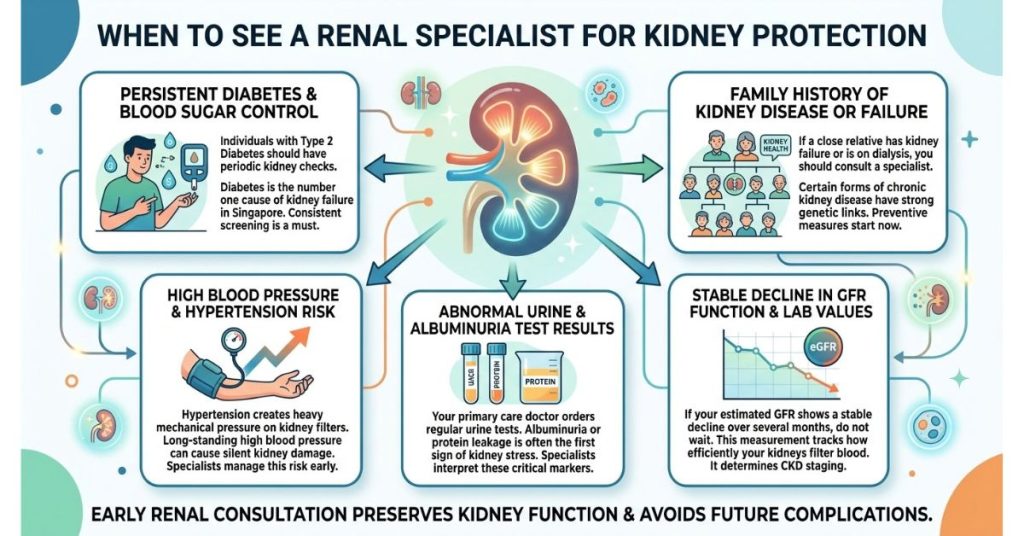
Managing kidney risk requires timely evaluation from a kidney specialist. If you have type 2 diabetes, high blood pressure, abnormal urine test results, or a family history of renal disease, consult a renal physician to assess your kidney health markers and determine whether GLP-1 receptor agonist therapy is suitable for your care plan.
Frequently Asked Questions About GLP-1s And Kidney Protection
Do GLP-1 Medications Cause Acute Kidney Injury?
Transient gastrointestinal side effects like nausea or vomiting can occur during initial dose escalation. If severe fluid loss occurs without adequate hydration, secondary acute kidney stress can happen. Maintaining steady fluid intake prevents this issue, and the long-term effect of GLP-1 therapy remains strongly protective for the kidneys.
Are GLP-1 Receptor Agonists Approved For Kidney Protection Without Diabetes?
While initial approvals focused on type 2 diabetes and chronic weight management, clinical trial evidence in non-diabetic kidney disease and obesity continues to expand. Regulators globally continue updating drug labels based on renal outcomes data.
Can GLP-1 Medications Reverse Existing Kidney Damage?
GLP-1 medications slow or stop the progression of kidney decline and reduce protein leakage. However, fully scarred kidney tissue (fibrosis) cannot be regenerated. Early intervention while functional tissue remains is essential.