

Pioneering Preventive Cardiology In Asia
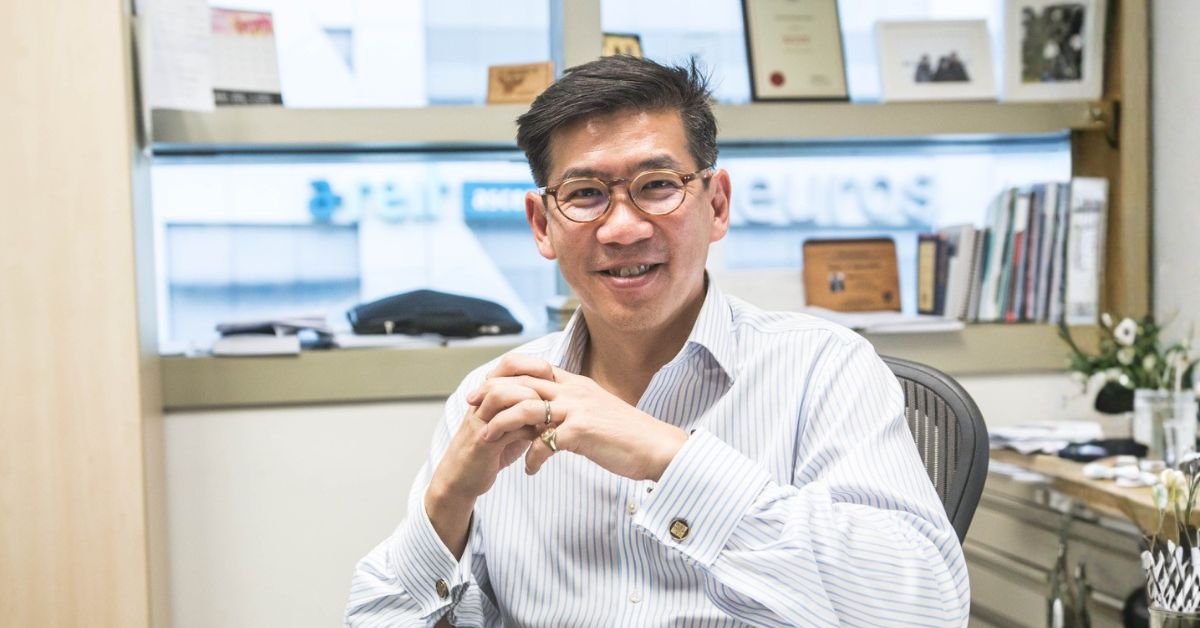
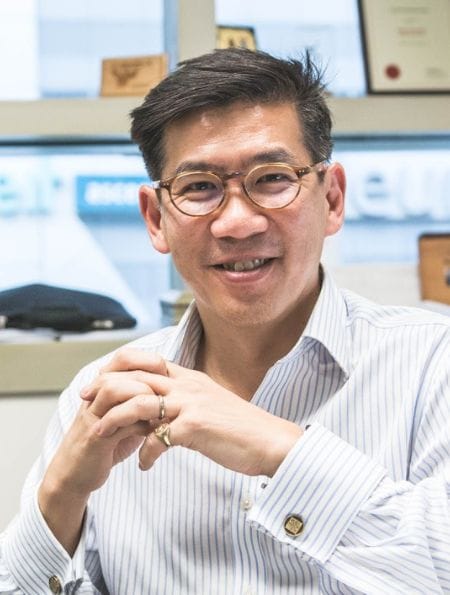
As Senior Consultant Cardiologist at the National University Heart Centre, Singapore (NUHCS), Vice-Dean (Research) at the NUS Yong Loo Lin School of Medicine, Zayed bin Sultan Al Nahyan Professor of Medicine, Group Director Research, NUHS, and Director of the NUS Cardiovascular Research Institute (CVRI), Prof Roger Foo has long stood at the forefront of cardiovascular genomics and precision medicine in Asia. While his career spans decades of groundbreaking bench-to-bedside research in cardiac epigenetics, his current focus is directed at a broader, population-level imperative: shifting healthcare from reactive disease treatment to proactive, personalised prevention.
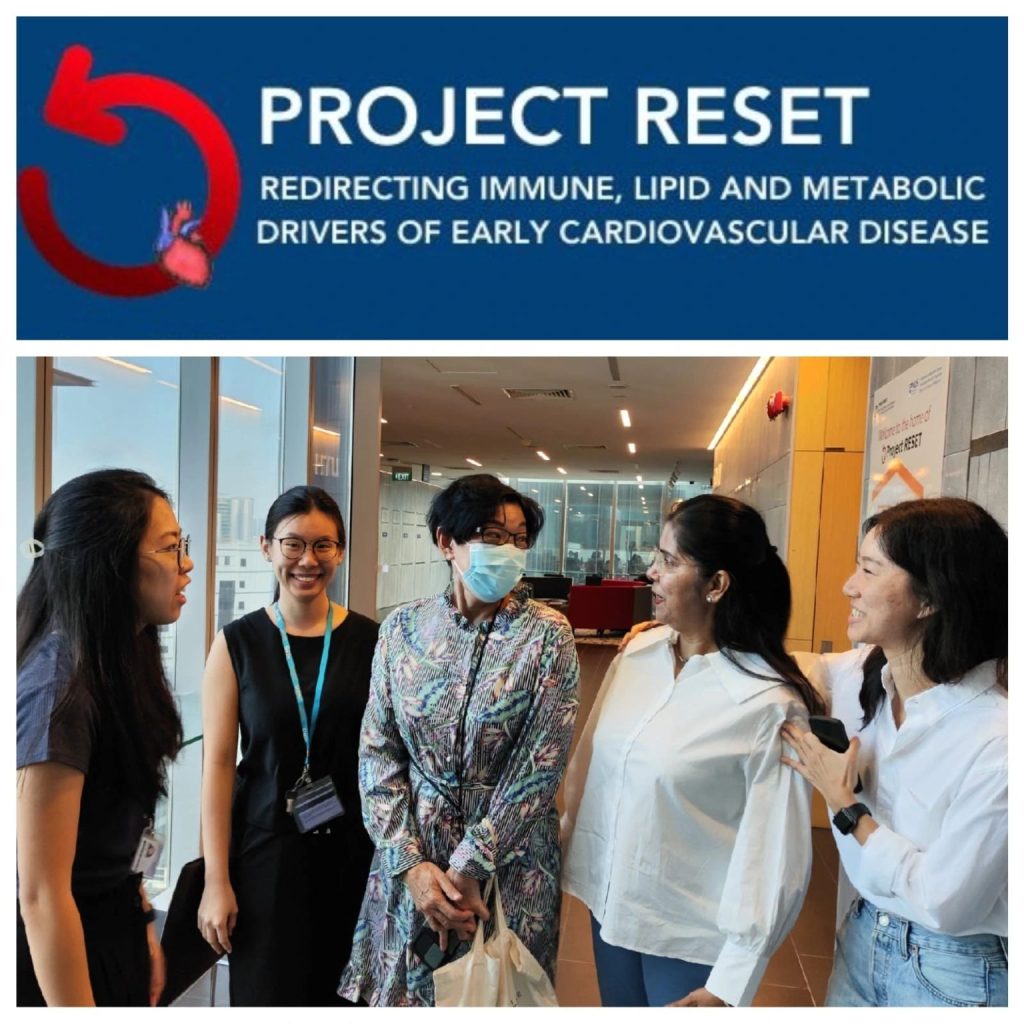
At the heart of this vision is Project RESET (Redirecting immune, lipid and metabolic drivers of early cardiovascular disease), a major nationwide initiative headed by Prof Foo.
What Is Project RESET?
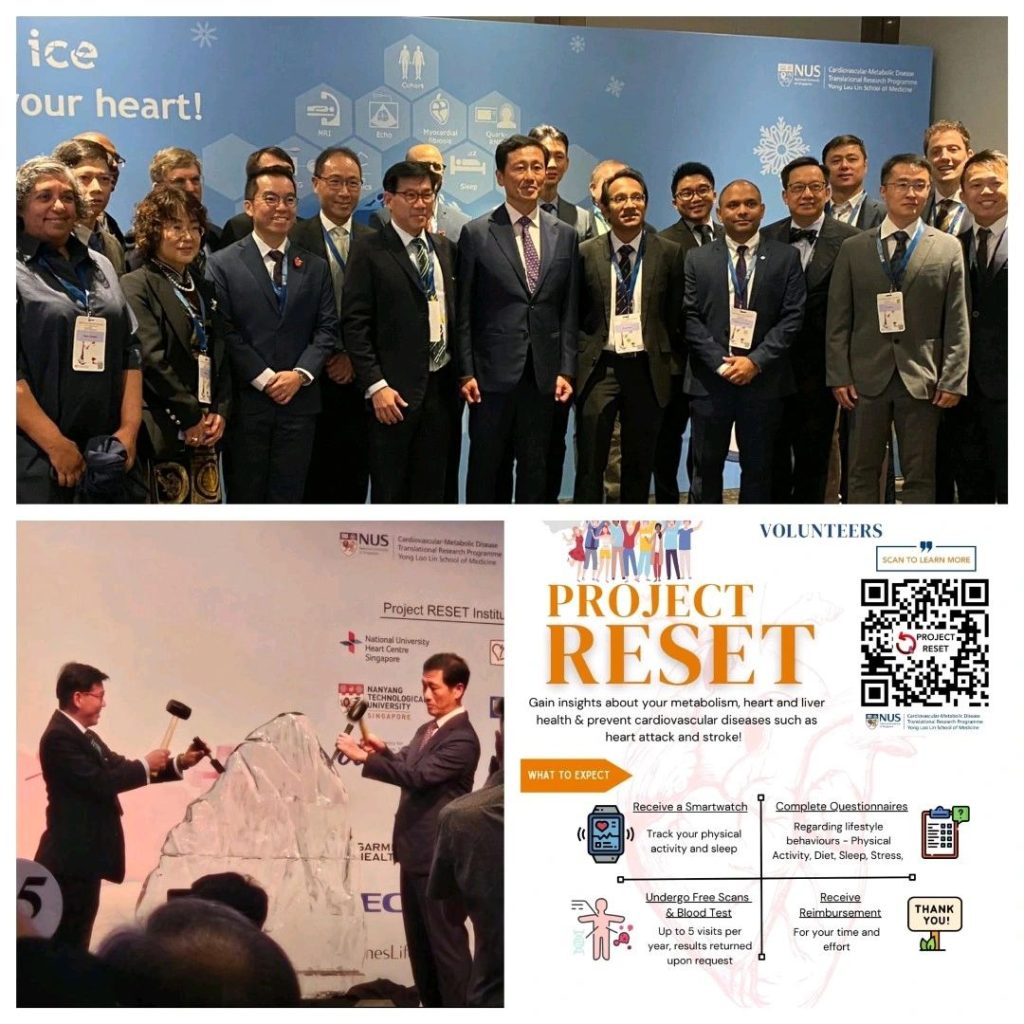
Supported by a S$25 million grant from the National Research Foundation (NRF) and the Ministry of Health’s National Medical Research Council (NMRC), Project RESET is a 5-year collaborative research initiative involving top medical schools, public healthcare clusters, and research institutes across Singapore.
The project addresses a critical health gap: in Singapore, heart disease claims roughly 23 lives every day, and an estimated one in three adults harbours early, undetected cardiovascular disease. Furthermore, while average life expectancy reaches 85 years, the healthy “healthspan” averages only 74 years—leaving Singaporeans spending an average of 11 years in ill-health due to chronic conditions like heart failure and stroke.
To tackle this, Project RESET is recruiting 10,000 Singaporeans and Permanent Residents aged 40 to 70. Eligible participants are those with cardiovascular risk factors (such as high blood pressure, high cholesterol, obesity, fatty liver, or family history) who have never experienced a heart attack, stroke, heart failure, or balloon angioplasty.
Uncovering The Hidden Iceberg Of Cardiovascular Risks
Project RESET investigates the interconnected cardio-liver-metabolic axis, capturing data on:
- Subclinical Heart Conditions: Early Left Ventricular (LV) muscle fibrosis and arterial plaque.
- Metabolic & Liver Function: Fatty liver disease (MASLD) and metabolic flexibility.
- Multi-Omic Biomarkers: Genetic, transcriptomic, and metabolic markers specific to Asian ethnicities.
Leaving A Lasting Legacy
My hope for Project RESET is simple: that in ten years, “silent” heart disease is no longer silent for anyone in Singapore who wants to know their risk. We have spent decades treating heart attacks and strokes after they happen. I want RESET to help us catch the disease years earlier, while it is still reversible, and to do that at a scale that actually changes national statistics, not just individual outcomes. If we get this right, a Singaporean in their forties will be able to find out, with real precision, what their heart, liver and metabolism are quietly telling them, and be given a clear, personal path to change course. That is the legacy I want for this project, and for the many colleagues and participants who are building it with me.
Prof Roger Foo
10 Questions & Answers: Inside Project RESET
The following questions explore the scientific scope, preliminary observations, and future public health impact of Project RESET:
1. What critical gap in Singapore’s cardiovascular landscape inspired the launch of Project RESET, and how does it align with the national shift toward preventive care under Healthier SG?
The gap that drove RESET is stark once you see the numbers together: heart disease takes roughly 23 lives a day in Singapore, and yet a paper we published in The Lancet Regional Health Western Pacific in 2023 found that as many as one in three adults here already has early, undetected cardiovascular disease. We are very good at treating heart attacks and strokes. We are much less good at finding the disease before it becomes an emergency. We are even worse at “measuring health”. Healthier SG is built on the same premise, that keeping people well is more effective, and more humane, than waiting to treat them once they are sick. RESET gives that national shift a research engine: a large, deeply characterised cohort that lets us find the earliest, measurable signs of heart disease and test how best to act on them, rather than relying on population averages built largely on Western data.
2. How does Project RESET define “subclinical” cardiovascular disease, and why is identifying asymptomatic individuals so vital for public health?
Subclinical disease is heart disease that exists before it announces itself. It has no chest pain, no breathlessness, nothing that would send someone to a doctor. In RESET, that means things like early fibrosis in the heart muscle, arterial plaque, or a fatty, inflamed liver, all detectable on scans and blood tests in someone who feels completely well. Finding these people matters because the first symptom of heart disease is sometimes a heart attack. If we can identify who is on that path five or ten years out, we have a real window to intervene with lifestyle change or treatment, and to prevent the event altogether rather than manage its aftermath.
3. What specific criteria—such as screening adults aged 40–70 with risk factors but no prior heart attack or stroke—were set to ensure robust cohort data?
We enrol Singaporeans and Permanent Residents aged 40 to 70 who already carry recognised risk factors, such as high blood pressure, high cholesterol, obesity, fatty liver or a family history of heart disease, but who have never had a heart attack, stroke, heart failure or angioplasty. That line matters. It gives us a cohort concentrated in the years where prevention still has the most to offer, before disease has become established, while keeping the group large and representative enough, across our Chinese, Malay and Indian communities, to produce data that is genuinely generalisable to Singapore rather than to a narrow slice of it.
4. Why does the project place significant emphasis on examining liver health (e.g., fatty liver disease) alongside heart function when assessing overall cardiac vulnerability?
We look at the liver because the heart rarely runs into trouble alone. Fatty liver disease, MASLD, shares the same upstream drivers as heart disease, insulin resistance, obesity, poor metabolic flexibility, and it is often the first organ to show the strain. In our early screening of about 100 participants aged 40 to 60, roughly half already had fatty liver disease and arterial calcification, despite feeling well. Treating the heart in isolation misses that shared biology. By tracking the heart and liver together, alongside metabolic markers, we get a much fuller picture of where an individual sits on the path to cardiovascular disease, and more levers to intervene early.
5. What specific early conditions—such as Left Ventricular (LV) fibrosis, arterial stiffness, or impaired metabolic flexibility—are being tracked across the cohort?
Across the cohort we track early left ventricular fibrosis, arterial stiffness and plaque, and metabolic flexibility, essentially how efficiently the body switches between burning fat and glucose for fuel. We pair these with genetic, transcriptomic and metabolic markers specific to Asian populations, because most of the reference data cardiologists rely on was generated in Western cohorts and does not always transfer cleanly to us. Every participant also wears a smartwatch that tracks activity, sleep and stress, so we can see how daily life connects to what is happening inside the heart, liver and arteries, not just what a single clinic visit captures.
6. What will the 5-year follow-up programme entail for the 3,000 selected participants, and what clinical or lifestyle interventions will be tested?
Of the 10,000 in the main cohort, 3,000 are continuing into a five-year follow-up. Some will join a randomised controlled trial testing digitally-supported lifestyle coaching over a year, to see whether structured, technology-enabled support genuinely shifts risk markers and not just self-reported habits. Others will help us pilot the AI and immersive tools, CardioSight and HaptGlove, that translate their scan and blood results into something they can act on. Across the group, we are repeating key scans and tests over time, so we can watch subclinical disease evolve, or reverse, in real people rather than inferring it from a single snapshot.
7. How are cutting-edge tools like AI-driven dashboards (CardioSight) and VR/haptic technologies (HaptGlove) being used to communicate personal health risks to participants?
CardioSight takes someone’s scans, blood work and lifestyle data and turns them into a personal risk picture they can actually understand, rather than a page of numbers that means little outside a clinic. HaptGlove goes a step further: it is a virtual reality glove that lets a participant feel, through touch and grip, what a stiff liver or a narrowed artery is like. We built it because telling someone their arterial calcium score is high rarely changes behaviour on its own, but letting them physically sense what that means for their body tends to land very differently. We are testing whether that kind of visceral, immersive understanding motivates lasting change more effectively than a conversation and a printout. Both tools are still being refined with hopes of improving communication to participants in the near future.
8. What role does pilot testing at play in translating high-tech clinical research into practical, community-level wellness interventions?
Pilot testing is where we find out whether an idea that works in a lab or a clinic will actually work in someone’s everyday life. We are running an early pilot at Health District at Queenstown, testing these screening and coaching approaches with residents close to home before considering any wider rollout. That step matters because a tool can be scientifically sound and still fail in practice, if it is inconvenient, confusing, or simply does not fit how people actually live. Only interventions that hold up in that real-world setting are worth scaling to the rest of Singapore.
9. What early trends or preliminary findings have emerged from the initial screening cohort, particularly regarding multi-ethnic Asian risk factors (Chinese, Malay, Indian)?
It is still early, but the initial signal is sobering. In our first roughly 100 participants aged 40 to 70, all without any prior heart attack or stroke, about half already showed fatty liver disease and arterial calcification. That is a much higher burden of hidden disease than most people, including many of these participants themselves, would have guessed. We are also starting to see patterns across our Chinese, Malay and Indian participants that echo what we already know about differing cardiovascular and metabolic risk profiles between these groups, though we need a much larger sample before drawing firm conclusions. What is already clear is that looking well and being well are not the same thing for a large share of middle-aged Singaporeans.
10. How do you envision the data from Project RESET helping to bridge Singapore’s 11-year healthspan gap and shaping cardiovascular screening policies over the next decade?
Singaporeans live to 85 on average but stay healthy only to about 74, which means eleven years, often more, spent managing chronic illness rather than living well. Heart failure and stroke are major contributors to that gap. If RESET can show that we can reliably find cardiovascular and metabolic disease years before symptoms appear, and that timely, personalised intervention actually changes its course, that is not just a research result. It is a case for rethinking how Singapore screens for heart disease nationally, who gets screened and when, and what we offer them once we find something. My hope is that the evidence from this cohort becomes the basis for exactly that kind of policy change, not in decades, but within this one.
Back to: A Lifetime In Medicine Main Page
Also Featured In A Lifetime In Medicine
Know of a doctor or personality in the healthcare & medical field deserving of being honoured for their lifetime of work in medicine? Contact Group 365Asia with your suggestion.



All content on this site is informative only and is not intended to be a substitute for professional medical advice, diagnosis, or treatment, and should never be relied upon for specific medical advice. If you are experiencing a medical emergency, call 995 immediately or go to the nearest Accident & Emergency department.
health365.sg is a member of Group 365Asia.