


Cardiovascular disease remains the leading cause of death globally, accounting for nearly one-third of all deaths worldwide. Yet, as medical experts highlighted on World Heart Day (SCMP article published 29 September 2026), the vast majority of heart disease cases are entirely preventable. In an insightful discussion, three prominent cardiologists shared their perspectives on the future of cardiology—emphasising a paradigm shift from reacting to heart attacks to intercepting cardiovascular damage before symptoms ever arise.
Back To: Guide To Coronary Artery Disease In Singapore
Shift Upstream: Finding Heart Disease Before It Finds You
A key consensus among cardiologists is that modern medicine must move “upstream.” Historically, cardiology has excelled at managing acute crises—treating clogged arteries, restoring heart function after an attack, and performing emergency interventions. However, waiting for a cardiac event to occur is no longer sufficient.
The future of cardiology relies on early detection, genetic risk profiling, and preventive strategies that begin years—or even decades—before a patient experiences their first symptom. Advanced cardiac imaging, early biomarker tracking, and novel therapeutic interventions are transforming heart care into a proactive discipline.
Insights From Health365 Preferred Doctor: Dr Pinakin V Parekh
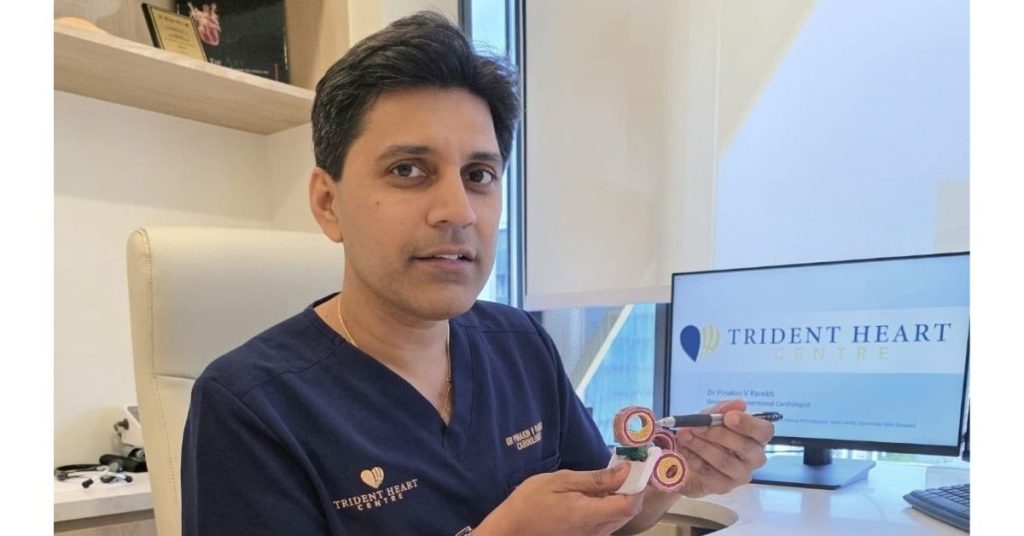
One of the prominent cardiologists interviewed by SCMP is Dr Pinakin V Parekh, a preventive, general, and interventional cardiologist. He is a Preferred Doctor at health365.
Based in Singapore, Dr Pinakin is an expert in procedures such as Coronary Angiogram, Advanced Coronary Angiogram Testing, Microvascular Angina, and Coronary Angioplasty Procedures. He is known by patients for his empathy, compassion, and advocacy for early diagnosis and early intervention.
Why Move Upstream In Cardiovascular Care?
“We are moving from treating heart disease to finding it before it finds you,” notes Dr Pinakin. He explains that while modern medicine offers remarkable surgical interventions, stents, and medications, “we cannot stent our way out of an unhealthy population.” True victory against heart disease requires identifying vulnerabilities early and taking action long before structural damage occurs.
The Hidden Danger: Lipoprotein(a) [Lp(a)]
Dr Pinakin highlights the critical role of Lipoprotein(a), or Lp(a)—a fatty particle circulating in the bloodstream similar to LDL (“bad”) cholesterol, but considerably more dangerous. High levels of Lp(a) can double or even triple an individual’s risk of suffering a heart attack.
Key facts about Lp(a) emphasised by Dr Pinakin and recent clinical guidelines include:
- Genetic Determination: Unlike standard cholesterol, Lp(a) levels are inherited and generally cannot be altered through diet or exercise alone.
- Universal Screening Recommendation: According to clinical guidelines published in Circulation (March 2026) by 11 major international cardiovascular organisations, all adults should get an Lp(a) blood test at least once in their lifetime.
- Risk Management: While Lp(a) itself is genetically fixed, knowing your baseline level allows cardiologists to aggressively manage other modifiable risk factors to offset the overall cardiovascular risk.
Heart Disease Is Getting “Younger”
One of Dr Pinakin Parekh’s primary concerns is that cardiovascular risk factors are increasingly affecting younger populations. Factors such as obesity, diabetes, hypertension, poor sleep, chronic stress, sedentary habits, smoking, and vaping are accumulating earlier in life.
“Many people still think of heart disease as something that happens when you are old. That disconnect worries me,” explains Dr Pinakin. Because cardiovascular disease develops silently over decades, feeling healthy does not guarantee that your internal risk is low.
What Is The Key Takeaway Action Plan For Heart Health?
Dr Pinakin’s top recommendation for every individual is simple: “Know your numbers before they become your symptoms.” This involves regularly monitoring key health markers:
- Blood pressure
- Lipid profile (including cholesterol and Lp(a))
- Fasting blood sugar levels
- Family cardiovascular history
Technological Innovation & Broadening Access
Dr Hafiz Naderi, a clinical lecturer in cardiology at Queen Mary University of London, highlights how Artificial Intelligence (AI) is opening new possibilities in risk prediction. AI algorithms can now detect subtle, previously invisible patterns in routine, non-invasive tests like standard Electrocardiograms (ECGs). This technology serves as an added diagnostic tool to identify high-risk individuals early.
However, Dr Naderi emphasises that technology must be paired with fundamental public health measures. Conditions like high blood pressure (hypertension) often present zero outward symptoms while silently damaging the heart, brain, and blood vessels. Simply screening for and controlling blood pressure globally remains one of the most effective ways to prevent heart attacks and strokes.
Advanced Therapeutics & Sustainable Habits
Professor Yeo Khung Keong, CEO and Senior Consultant at the National Heart Centre Singapore, points to the evolving landscape of medical therapeutics. Novel drug classes—such as GLP-1 receptor agonists—are proving to be transformative. By addressing obesity and diabetes alongside cardiovascular risk factors, these medications alter the health trajectory for millions of patients.
Despite advanced pharmaceutical tools, Professor Yeo stresses that foundational lifestyle habits remain unbeatable in efficiency and cost-effectiveness. Regular exercise, such as brisk walking for 30 minutes daily, significantly improves metabolic and cardiovascular health without requiring expensive equipment or specialised facilities.
Get An Appointment With A Cardiologist
The future of heart health is not defined by better crisis management in the emergency room, but by early proactive intervention. By identifying genetic risks like Lp(a), screening key vital numbers early, adopting consistent exercise routines, and utilising targeted preventive medicine, individuals can take charge of their heart health decades before disease takes hold. If you wish to get an appointment with a cardiologist for heart health screening, or get a general health screening, contact us via the button below.
Contact UsBack To: Guide To Coronary Artery Disease In Singapore
All content on this site is informative only and is not intended to be a substitute for professional medical advice, diagnosis, or treatment, and should never be relied upon for specific medical advice. If you are experiencing a medical emergency, call 995 immediately or go to the nearest Accident & Emergency department.
health365.sg is a member of Group 365Asia.