

Chest Pain With Clear Arteries? INOCA And Microvascular Angina – The Big Story

Chest Pain With Clear Arteries? Understanding INOCA And Microvascular Angina
TL;DR: Quick Summary On Microvascular Angina And INOCA In Singapore
- What Is INOCA & MVA?
INOCA (Ischaemia with Non-Obstructive Coronary Arteries) and Microvascular Angina (MVA) occur when a patient experiences heart-related chest pain caused by poor blood flow in the tiny microscopic vessels of the heart, even though standard angiograms show no major blockages (less than 50% obstruction) in the main heart arteries. MVA is one of the underlying causes of INOCA. - Singapore Statistics: 22% of patients in Singapore undergoing cardiac evaluations for angina are found to have non-obstructive coronary arteries.
- Why Normal Tests Miss It: Standard CT heart scans and coronary angiograms only visualise large surface arteries. They cannot see the microscopic blood vessels where endothelial dysfunction or spasms take place.
- Key Symptoms: Chest tightness, heavy pressure, shortness of breath, and discomfort that often persists for 10 to 30 minutes after physical exertion or emotional stress.
- Expert Care In Singapore: Advanced invasive coronary function testing (measuring CFR and IMR) at centres like Trident Heart Centre (led by Senior Consultant Cardiologist Dr Pinakin V Parekh) allows specialists to accurately diagnose microvascular disease and tailor medical treatment.
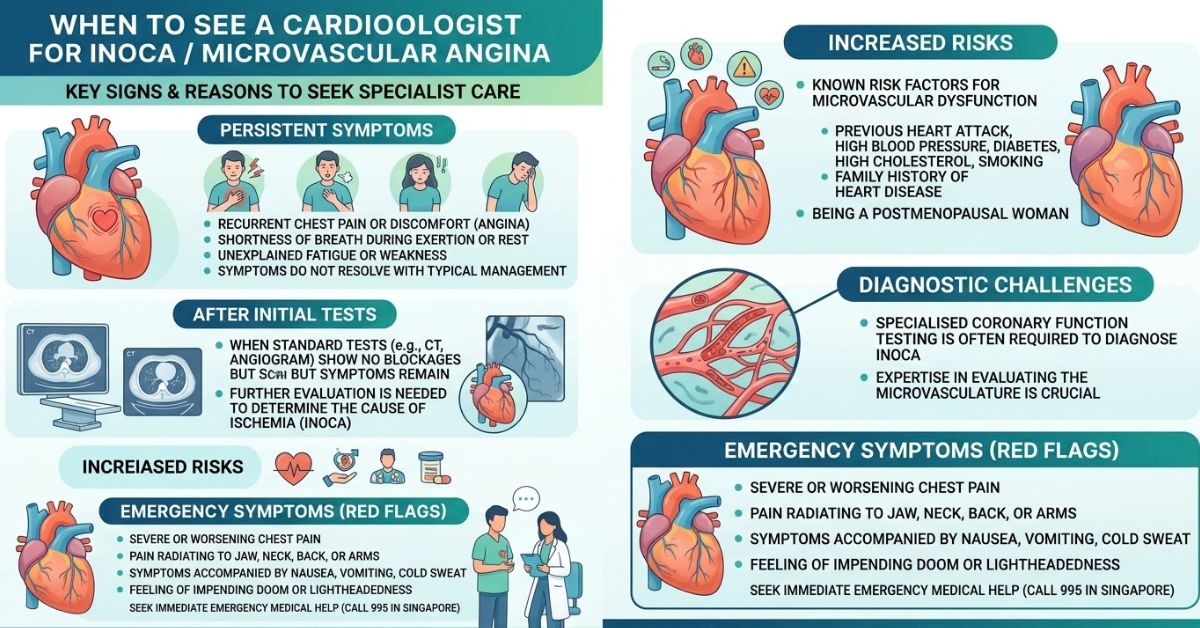
Click to expand infographic.
What Is INOCA And Microvascular Angina?
To understand these conditions, it is helpful to picture the circulation of the heart as a plumbing system made of two distinct parts:
The Large Surface Arteries: The major vessels visible on standard heart scans and conventional angiograms.
The Microvascular Network: A complex, tiny network of tiny blood vessels branching deep into the heart muscle.
INOCA is an umbrella term used when a patient experiences reduced blood flow (ischaemia) and chest pain, but standard medical imaging shows no significant blockages (less than 50% obstruction) in the main coronary arteries.
Microvascular Angina (MVA) is a specific subtype of INOCA. It occurs when the microscopic blood vessels fail to dilate properly or constrict abnormally. Although these tiny microvessels are far too small to be seen on a conventional angiogram, their dysfunction reduces oxygen-rich blood supply to the heart muscle, leading to real physical pain.



What Is The Prevalence Of Non-Obstructive Heart Disease In Singapore?
The phenomenon of experiencing heart-related chest pain without visible blockages in major blood vessels is a significant clinical issue in Singapore.
According to verified data from the Singapore Cardiac Data Bank, 22% of patients presenting with angina (chest pain caused by reduced blood flow to the heart) have no major blockages in their main heart arteries on standard angiograms. Internationally, clinical studies indicate that between 20% and 65% of stable patients evaluated for suspected coronary artery disease are found to have non-obstructive coronary arteries.
Local health institutions, including the National Heart Centre Singapore (NHCS), highlight that non-obstructive heart conditions disproportionately affect older adults, individuals with diabetes, and female patients.
What Causes Microvascular Angina And INOCA?
While conventional coronary artery disease involves large fatty plaques narrowing the main arteries, Microvascular Angina stems from functional and structural problems in the microcirculation.
Key underlying factors include:
- Microvascular Endothelial Dysfunction: The inner lining of the tiny blood vessels does not produce enough natural dilating signals, preventing them from expanding when the heart needs more blood.
- Coronary Microvascular Spasm: The small blood vessels undergo sudden, temporary spasms, restricting blood flow even during rest.
- Structural Remodelling: Gradual thickening or narrowing of the microvessel walls over time.
Traditional cardiovascular risk factors—such as high blood pressure, elevated cholesterol, diabetes, obesity, smoking, and a sedentary lifestyle—can contribute significantly to damage within these microvessels.
What Are The Common Symptoms Of Microvascular Angina To Watch For?
The symptoms of Microvascular Angina can mimic classic heart disease, but they often present with distinct nuances:
- Chest Pain or Discomfort: Often described as pressure, tightness, squeezing, or a heavy ache behind the breastbone.
- Discomfort Beyond the Chest: Pain radiating to the left arm, neck, jaw, back, or upper abdomen.
- Symptoms Triggered by Stress or Fatigue: Pain can occur during physical exertion, but it is also frequently triggered by emotional stress or mental fatigue.
- Persistent Pain After Exertion: Unlike typical angina which often resolves within minutes of rest, microvascular chest pain may persist for 10 to 30 minutes or longer after physical activity stops.
- Associated Symptoms: Shortness of breath, unexplained fatigue, dizziness, or sleep disturbances.
Women are disproportionately affected by INOCA and Microvascular Angina, particularly during or after menopause, though the condition can affect men as well.
Why Standard Heart Tests Might Miss Microvascular Angina?
Conventional diagnostic tools, such as basic electrocardiograms (ECGs) or standard CT coronary angiograms, are designed primarily to detect structural blockages in the major surface arteries. When these large arteries appear open, standard testing may fail to identify the dysfunction occurring deep within the microvascular bed.
As a result, patients are sometimes told that their chest pain is non-cardiac or related to stress, anxiety, or acid reflux. Living with untreated INOCA can impair quality of life, cause ongoing anxiety, and increase the risk of future cardiovascular events if left unmanaged.
Modern Diagnostic Approaches In Singapore
Fortunately, advanced cardiac diagnostic techniques in Singapore now allow cardiologists to evaluate microvascular function directly.
Comprehensive evaluation often includes:
- Advanced Invasive Coronary Function Testing: Performed in a catheterisation laboratory to measure Coronary Flow Reserve (CFR) and Index of Microvascular Resistance (IMR), alongside acetylcholine provocation testing to identify microvascular spasms.
- Non-Invasive Imaging: Specialised Cardiac Magnetic Resonance (CMR) imaging or Positron Emission Tomography (PET) scans capable of measuring myocardial perfusion at the microscopic level.
An accurate diagnosis allows healthcare providers to tailor treatments specifically to the mechanism causing the pain, rather than relying on trial-and-error management.
How Is INOCA Managed And Treated?
Treatment for INOCA and Microvascular Angina is personalised based on whether the primary cause is vessel constriction, microvascular spasm, or structural changes.
Management strategies generally include:
1. Targeted Medications
- Vasodilators: Medications such as calcium channel blockers or nitrates help relax and widen blood vessels to prevent spasms.
- Beta-Blockers: Help reduce the heart’s workload and lower heart rate during exertion.
- ACE Inhibitors or ARBs: Improve endothelial function and help regulate blood pressure.
- Statins: Lower cholesterol and reduce inflammation within the blood vessel linings.
2. Comprehensive Lifestyle Modifications
- Heart-Healthy Nutrition: Adopting a balanced diet rich in whole foods, vegetables, lean proteins, and low in saturated fats and sodium.
- Tailored Exercise Programs: Engaging in regular, moderate aerobic activity under medical guidance to improve vascular function.
- Stress Management: Utilising mindfulness, relaxation techniques, and adequate rest, as emotional stress is a known trigger for microvascular constriction.
- Smoking Cessation: Eliminating tobacco use to protect the delicate inner lining of the microvessels.
Looking For A Cardiologist In Singapore With Expertise In Microvascular Angina & INOCA? Consider Dr Pinakin V Parekh
When dealing with complex chest pain and microvascular heart conditions, consulting an experienced cardiologist is essential for an accurate diagnosis and treatment plan.
Dr Pinakin V Parekh is a UK and Singapore-trained Senior Consultant Cardiologist practicing at Trident Heart Centre, with accreditation at Gleneagles Hospital and Farrer Park Hospital. Dr Pinakin subspecialises in interventional cardiology, advanced coronary physiology, and preventive cardiovascular care.
Known for his warm approach and ability to explain complex medical concepts clearly, Dr Pinakin emphasises that chest pain with clear main arteries should not be ignored:
Articles Reviewed By Dr Pinakin



Stent Or Bypass Surgery To Treat Blocked Arteries?
- January 28, 2025

Heart Attack Vs Cardiac Arrest – Are They The Same?
- January 16, 2025
Find A Doctor
Verified Healthcare Professionals
We connect you with a network of qualified and experienced doctors who specialise in chronic health conditions, health screening, and longevity.
Trusted Information Source
We pride ourselves on providing accurate, up-to-date, and evidence-based information about each disease, its prevention, and treatment.
Privacy and Security
Your health information and personal data are paramount to us. We will protect your privacy throughout the booking process and beyond.
Convenience at Your Fingertips
Our user-friendly platform allows you to find and book appointments 24/7 from the comfort of your home.
Additional Resources
- 365Asia List of Top Cardiologists In Singapore.
When Should You See A Cardiologist?
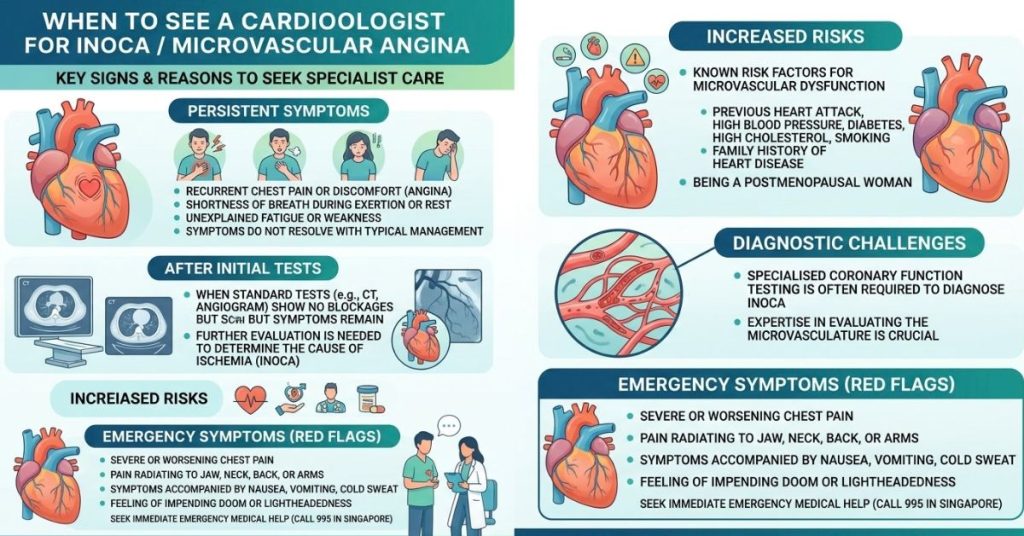
If you experience persistent chest discomfort, shortness of breath, or unexplained fatigue—even if a previous heart test showed clear arteries—it is important to seek a professional cardiovascular evaluation. Undiagnosed chest pain warrants thorough medical investigation to protect your long-term heart health.
Take Charge Of Your Heart Health
Do not let unexplained chest pain disrupt your daily life. If you wish to seek a specialist opinion or explore comprehensive heart screening options in Singapore, you can arrange a consultation with a cardiologist to discuss your symptoms and advanced diagnostic options.
Frequently Asked Questions (FAQs) About INOCA And Microvascular Angina
1. Can Microvascular Angina Cause A Heart Attack?
While Microvascular Angina (MVA) is generally associated with lower immediate risk of large-scale myocardial infarction compared to acute obstructive coronary artery disease, it should not be considered benign. Persistent ischaemia and microvascular dysfunction can cause chronic chest pain, impair daily functioning, and increase long-term cardiovascular risks if left unmanaged. Proper medical diagnosis and treatment are essential to protect long-term heart health.
2. Why Did My Standard CT Heart Scan Or Coronary Angiogram Come Back Normal?
Standard imaging techniques such as CT coronary angiograms or basic invasive angiograms are designed to visualise large coronary arteries on the surface of the heart. They lack the spatial resolution required to view the microscopic blood vessels deep within the heart muscle. As a result, if your chest pain is driven by microvascular dysfunction or spasm, standard scans will frequently appear normal.
3. How Is Microvascular Angina Diagnosed In Singapore?
In Singapore, cardiologists subspecialising in advanced coronary physiology use specialised diagnostic tests to evaluate microvascular function. These include invasive Coronary Function Testing (CFT)—which measures Coronary Flow Reserve (CFR) and the Index of Microvascular Resistance (IMR) alongside acetylcholine provocation testing—as well as non-invasive techniques such as specialised Cardiac Magnetic Resonance (CMR) perfusion imaging.
4. Are Women More Likely To Suffer From INOCA And Microvascular Angina?
Yes, clinical studies indicate that women—particularly postmenopausal women—are significantly more likely to experience INOCA and Microvascular Angina than men. Changes in oestrogen levels during and after menopause can affect endothelial function in the microvasculature, making tiny blood vessels more prone to constriction and poor dilation.
5. What Treatments Are Available For Microvascular Angina?
Treatment for Microvascular Angina focuses on symptom relief and improving microvascular function. Management strategies typically involve tailored cardiovascular medications—such as calcium channel blockers, beta-blockers, ACE inhibitors, or statins—alongside structured lifestyle modifications including regular moderate exercise, stress management, a heart-healthy diet, and smoking cessation.