

Crohn’s Disease – The Big Story

Managing Crohn’s Disease In Singapore: Understanding Symptoms, Diagnosis, And Modern Treatment Approaches
TL;DR: Managing Crohn’s Disease
Crohn’s disease is a chronic inflammatory bowel disease (IBD) that can affect any part of the digestive tract, causing symptoms such as persistent diarrhoea, abdominal pain, weight loss, and fatigue. While it is a lifelong condition, early specialist diagnosis and structured treatment strategies—ranging from targeted medications to surgical interventions—can effectively control inflammation, prevent severe complications, and restore quality of life.
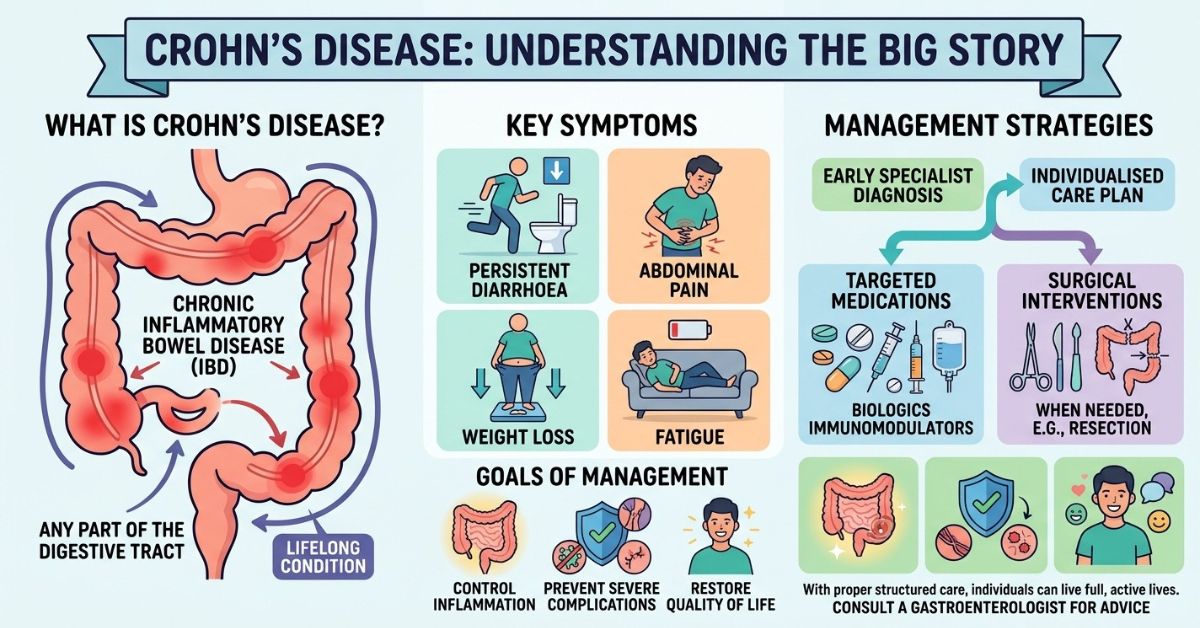
Click to expand infographic.
The Rising Relevance Of Crohn’s Disease In Singapore
Inflammatory Bowel Disease (IBD), which includes Crohn’s disease and ulcerative colitis, was historically considered more prevalent in Western nations. However, over recent decades, Singapore and other rapidly urbanising countries across Asia have experienced a notable increase in IBD incidence.
Crohn’s disease involves transmural inflammation—meaning it can affect all layers of the intestinal wall—and can occur anywhere along the gastrointestinal tract, from the mouth to the anus. The exact cause remains complex, involving an interaction between genetic predisposition, environmental factors, gut microbiota balance, and immune system dysregulation.
Because symptoms often overlap with common gastrointestinal issues like irritable bowel syndrome (IBS) or food intolerances, diagnosis can sometimes be delayed. Timely evaluation by a gastroenterologist is crucial to managing inflammation before structural damage to the gut occurs.

Powered by Find by 365Asia


[SG] Featured Doctor- Dr Juanda Leo Hartono
Gastroenterologist
What Are The Symptoms And Key Indicators Of Crohn’s Disease?
The symptoms of Crohn’s disease can vary depending on which region of the digestive tract is involved and the severity of inflammation. Common clinical presentation includes:
- Persistent Diarrhoea: Frequently accompanied by abdominal cramping or urgency.
- Abdominal Pain And Cramping: Often localised around the lower right abdomen, though it can occur anywhere along the gut.
- Unexplained Weight Loss And Malnutrition: Caused by poor nutrient absorption in inflamed segments of the small intestine.
- Chronic Fatigue: Resulting from ongoing systemic inflammation, poor sleep, or secondary anaemia.
- Perianal Discomfort: Development of painful skin tags, anal fissures, or drainage from perianal abscesses and fistulas.
How Is Crohn’s Disease Diagnosed?
Accurate diagnosis requires a combination of clinical evaluation, endoscopic visualisation, imaging studies, and laboratory assessments:
- Diagnostic Endoscopy And Colonoscopy: Endoscopic evaluation allows direct visualisation of the intestinal lining and collection of tissue biopsies to confirm patchy, transmural inflammation.
- Cross-Sectional Imaging: Magnetic Resonance Enterography (MRE) or Computed Tomography (CT) enterography helps map disease extension in areas of the small intestine beyond the reach of standard endoscopes.
- Biomarker Testing: Stool tests (such as faecal calprotectin) and blood tests (including C-reactive protein) assist in quantifying intestinal inflammation and monitoring treatment response.
What Are The Treatments For Crohn’s Disease?
While Crohn’s disease has no known cure, modern treatment approaches aim to induce and maintain clinical and endoscopic remission, promote mucosal healing, and prevent long-term structural complications such as strictures, fistulas, or bowel obstructions.
| Treatment Approach | Primary Medical Mechanism | Clinical Goal |
| Anti-Inflammatory Medications | Aminosalicylates (5-ASAs) or short-term corticosteroids. | Rapid reduction of active tissue inflammation during acute disease flare-ups. |
| Immunomodulators | Agents like azathioprine, 6-mercaptopurine, or methotrexate that modify immune responses. | Long-term maintenance of disease remission and reduction of steroid dependence. |
| Biologic & Small Molecule Therapies | Targeted therapies against specific inflammatory cytokines (e.g., Anti-TNF, Anti-IL-12/23, Anti-integrins). | Deep mucosal healing, control of severe or steroid-refractory inflammation, and prevention of surgical complications. |
| Surgical Intervention | Minimally invasive or robotic resection of diseased, narrowed, or strictured bowel segments. | Relief of structural bowel obstructions, abscess drainage, or repair of complex fistulas when medical therapy is insufficient. |
Read our article on Crohn’s Disease Treatment Options In Singapore for more details.
Get An Appointment For A Gastroenterology Consultation
If you or a family member are experiencing chronic abdominal pain, persistent changes in bowel habits, or unexplained weight loss, early medical assessment is essential to rule out or properly manage inflammatory conditions.
Our Preferred Doctor You Can Consider For Crohn’s Disease
For individuals seeking specialised evaluation and care for Crohn’s disease or other gastrointestinal conditions in Singapore, consulting an experienced gastroenterologist helps ensure access to personalised diagnostic and therapeutic strategies.
Dr Juanda Leo Hartono (Gastroenterologist In Singapore)
Dr Juanda Leo Hartono is a Consultant Gastroenterologist practicing in Singapore (Juanda Leo Gastroenterology Liver Clinic), specialising in the management of complex gastrointestinal conditions, inflammatory bowel diseases, and digestive health.
Articles Reviewed By Dr Juanda Leo Hartono

What Is Inflammatory Bowel Disease?
- January 21, 2025

Inflammatory Bowel Disease Symptoms And Screening
- January 21, 2025

Is Frequent Diarrhea A Sign Of Cancer?
- January 7, 2025

Preparation For Colonoscopy Screening – 5 Best Tips You Must Know
- December 26, 2024
Find A Doctor
Verified Healthcare Professionals
We connect you with a network of qualified and experienced doctors who specialise in chronic health conditions, health screening, and longevity.
Trusted Information Source
We pride ourselves on providing accurate, up-to-date, and evidence-based information about each disease, its prevention, and treatment.
Privacy and Security
Your health information and personal data are paramount to us. We will protect your privacy throughout the booking process and beyond.
Convenience at Your Fingertips
Our user-friendly platform allows you to find and book appointments 24/7 from the comfort of your home.
Additional Resources
- 365Asia List of Best Gastroenterologists In Singapore
When Should You See A Gastroenterologist For Crohn’s Disease?
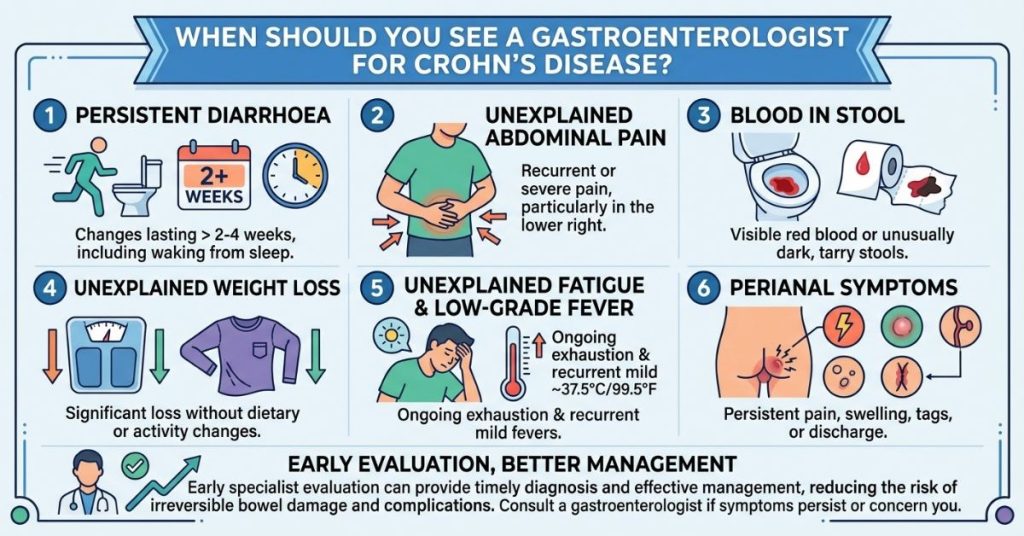
While occasional digestive discomfort is common, persistent or worsening gastrointestinal symptoms warrant professional medical evaluation. Because Crohn’s disease causes deep, transmural inflammation that can lead to irreversible structural damage over time, timely consultation with a gastroenterologist is essential for early diagnosis and effective management.
You should consider scheduling an appointment with a gastroenterologist if you experience any of the following key indicators:
- Persistent Diarrhoea: Bowel changes or loose stools that last longer than two to four weeks, or symptoms that wake you from sleep during the night.
- Unexplained Abdominal Pain: Recurrent or severe cramping and pain, particularly in the lower right abdomen, that does not resolve with standard over-the-counter remedies.
- Blood In Your Stool: Visible red blood or unusually dark, tarry stools, which indicate active bleeding within the gastrointestinal tract.
- Unexplained Weight Loss: Noticeable drop in weight without changes to your diet or activity level, often resulting from malabsorption or chronic tissue inflammation.
- Unexplained Fatigue And Low-Grade Fever: Ongoing exhaustion accompanied by mild, recurrent fevers, which can signal underlying systemic inflammation or secondary anaemia.
- Perianal Symptoms: Persistent pain, swelling, discharge, or skin tags around the anal region, which may indicate the formation of anal fissures, abscesses, or fistulas.
Early evaluation by a specialist allows for targeted diagnostic tests—such as colonoscopy, cross-sectional imaging, or biomarker assays—to confirm or rule out inflammatory bowel disease (IBD) before significant complications arise.
Frequently Asked Questions About Crohn’s Disease
Can Crohn’s Disease Be Prevented?
Because Crohn’s disease involves genetic, immune, and environmental factors, there is no single proven way to prevent its onset. However, avoiding cigarette smoking—a major modifiable risk factor known to worsen disease course—and maintaining a balanced gut microbiome through healthy lifestyle habits may reduce flare risks.
Is Surgery Always Necessary For Crohn’s Disease?
No. Surgery is typically reserved for cases where medical management does not adequately control inflammation, or when structural complications arise, such as severe intestinal narrowing (strictures), abscesses, or fistulas. Modern biologic therapies have significantly reduced the long-term rate of surgical intervention.
What Is The Difference Between Crohn’s Disease And Ulcerative Colitis?
While both are types of Inflammatory Bowel Disease (IBD), Crohn’s disease can affect any part of the gastrointestinal tract and involves deep layers of the tissue wall. In contrast, ulcerative colitis affects only the colon (large intestine) and is restricted to the innermost lining (mucosa). Find out more about the differences in our article Ulcerative Colitis Vs Crohn’s – Which Do You Have?