

DNA Test Singapore: Genetic Testing for Stomach Cancer

DNA Test Singapore: Genetic Testing for Stomach Cancer
DNA Test Singapore – Welcome to the Health365’s The Big Story on DNA testing for stomach cancer in Singapore. DNA testing is a medical advancement that presents an important step towards knowing your risk, detecting cancer early, and accessing personalised treatment. If you are concerned about stomach cancer, genetic testing and biomarkers can provide valuable insights.
What Is Stomach Cancer?
Stomach cancer happens when cells in any part of the stomach grow and divide abnormally. These cells can grow into a tumour. The cancer may spread along the stomach wall or may develop directly through the wall and spread into the bloodstream or lymphatic system. Once beyond the stomach, cancer can spread to other organs.
Why Is Stomach Cancer A Concern In Singapore?
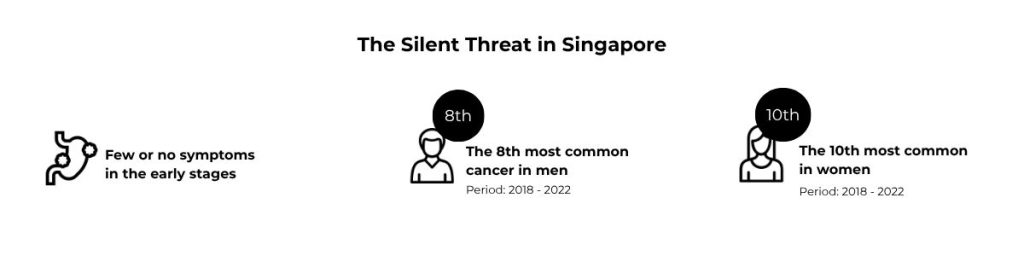
Stomach cancer in Singapore is one of the top 10 cancers and a silent killer disease with few or no symptoms in the early stages. Based on Singapore Cancer Registry 2022 Annual Report data, it is the 8th and 10th most common cancer in men and women respectively for the period 2018-2022. Stomach cancer affects men more than women, but is more common in people aged 50 years and above.
Stomach cancer for the same period is the 6th and 7th most common cause of cancer-related deaths in Singapore – higher than the incidence rate. This may be due to late detection whereby the cancer has already advanced and is more difficult to treat successfully.
Who Is At Risk For Stomach Cancer?
- Age – Stomach cancer is more common in older people.
- Gender – Men are more likely to develop the disease than women.
- Family History/Genetics – People who have a parent, child, or sibling who had stomach cancer have a higher risk. Additionally, certain inherited genetic disorders, such as Lynch syndrome, hereditary diffuse gastric cancer, hereditary breast and ovarian cancer (HBOC), and familial adenomatous polyposis (FAP) may increase the risk of stomach cancer.
- Diet – A high salt diet has been linked to an increased risk of stomach cancer.
- Tobacco – Smoking increases the risk of getting many types of cancer including stomach cancer.
- Chronic gastritis (long-term inflammation of the stomach) – People with a long history of gastritis may be at an increased risk.
- Helicobacter pylori infection – People with this bacteria in the stomach, if untreated, may be at higher risk of stomach cancer.
What Is Genetic And DNA Testing?
Genetic testing looks at your body’s DNA. The DNA is a “blueprint” that exists inside every cell in your body. Sometimes, changes (mutations) in certain genes can increase the risk of developing stomach cancer. These mutations can be inherited from parents or can develop over a lifetime.
In Singapore, DNA tests are increasingly used both to identify people at higher risk of stomach cancer and to guide personalised treatment plans once cancer is diagnosed.
Why Stomach Cancer Genetic Testing May Be Important
- Early Detection: Some people carry inherited genetic mutations that increase their likelihood of developing stomach cancer. Knowing this early allows for regular check-ups or preventive measures.
- Personalised Treatment: Tumour tests reveal specific markers which help doctors choose the most effective therapies.
- Family Health: Identifying genetic risks can help even your relatives get tested and take early action.
Learn More About Genetic Testing For Stomach Cancer
Types of Genetic Tests for Stomach Cancer
- Germline Genetic Tests – These tests analyse inherited changes in your DNA to find mutations that increase cancer risk.
- Tumour Biomarker Tests – If cancer is diagnosed, samples of the tumour are tested for biomarkers such as HER2 and PD-L1. This helps doctors select targeted treatments or immunotherapy.
- Non-Invasive Blood Tests – Singapore is leading innovation with blood tests like GASTROClear. This test looks for microRNA markers linked to stomach cancer. This simple blood test can screen for early-stage cancer even before symptoms appear.
Focus On: GASTROClear Stomach Cancer Blood Test
GASTROClear by MiRXES is a stomach cancer blood test. It is the first of its kind in the world designed to detect stomach cancer in people who may not be experiencing any symptoms yet. GASTROClear is the result of an international collaboration led by the Singapore Gastric Cancer Consortium (SGCC) and involved researchers and clinicians from Singapore and South Korea.
Using only a small blood sample, GASTROClear can provide information about your risk of developing stomach cancer. The risk may be categorised as low, moderate or high.
What To Expect With GASTROClear
Simple And Convenient Testing
GASTROClear involves a quick blood draw in a clinic or hospital, with no need for fasting or special preparation. The process is non-invasive.
Fast Results And Clear Outcomes
Your blood sample is tested for biomarkers linked to stomach cancer. Results are usually available a around week. Your risk will be categorised as low, intermediate, or high.
Targeted For At-Risk Individuals
GASTROClear is most suitable for adults over 40 or those with additional risk factors like a family history of gastric cancer. If your risk score is elevated, your doctor may recommend further investigations or regular follow-ups.
What is GASTROClear?
Learn More About GASTROClear in our guide.
Dive Deeper Into GASTROClear Screening
For Healthcare Professionals: Click for more comprehensive information about GASTROClear
Comment: The row below to be moved to article for healthcare professionals article
Find A Doctor
Verified Healthcare Professionals
We connect you with a network of qualified and experienced doctors and medical professionals.
Trusted Information Source
We pride ourselves on providing accurate, up-to-date, and evidence-based information about each disease, its prevention, and treatment.
Privacy and Security
Your health information and personal data are paramount to us. We will protect your privacy throughout the booking process and beyond.
Convenience at Your Fingertips
Our user-friendly platform allows you to find and book appointments 24/7 from the comfort of your home.
Book An Appointment
Take a proactive step for your health and peace of mind today. If you need to see a doctor about DNA test in Singapore for cancer, your cancer risks, or cancer treatment, our team is here to assist.
Financials
[findDoctor category="financial consultants" countries="Singapore" " limit="15"]
Related Content



FAQs - Test Your Knowledge About Shingles
DNA testing for stomach cancer usually involves analysing a sample of blood or saliva to detect genetic markers that are associated with the disease. Some tests, like GASTROClear, focus on microRNA biomarkers to identify early cancer. On the other hand, genetic tests screen for inherited mutations (such as those in the CDH1 gene) that elevate lifetime risk. These together provide insights into both current cancer presence and hereditary risk.
The accuracy varies depending on the type of test. GASTROClear detects about 87% of stomach cancers, including early stage cancer. On the other hand, genetic tests identify inherited mutations linked with high cancer risk but do not diagnose cancer directly. Combining these 2 types of tests can provide a comprehensive risk assessment and early detection.
DNA testing should be considered by adults aged 40 and above, especially if they have a personal or family history of gastric cancer. Genetic tests are particularly recommended for people with a family history of hereditary cancer syndromes to identify mutations that may increase their cancer risk.
Additional Resources
- Genetic Testing for Inherited Cancer Risk | National Cancer Institute
- Understanding Genetic Testing for Cancer Risk | American Cancer Society
- Cancer Genetics Service | National Cancer Centre Singapore
- Genetic Testing for Cancer Risk: What GPs Should Know as the First Line of Defence | National Cancer Centre Singapore
- Next-Generation Tumor Genetic Testing | Memorial Sloan Kettering Cancer Center
- Tumor Markers | Cleveland Clinic
- Types Of Tumor Markers | Stanford Medicine
- Tumor Marker Tests in Common Use | National Cancer Institute
- GASTROClear Blood Test for Early Detection | Mirxes
- GASTROClear: Revolutionising gastric cancer detection | NUHS+
.