


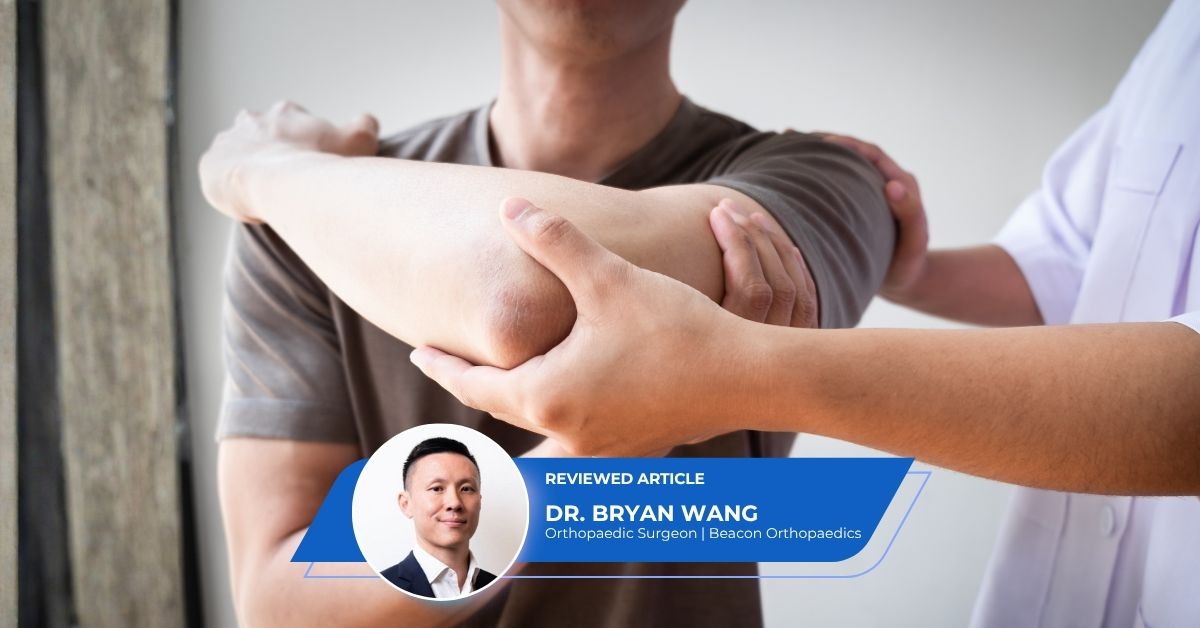
In Singapore, as the number of sports participants increases and the population ages, rotator cuff tears are becoming a more common shoulder issue. When diagnosed with a rotator cuff tear, many patients wonder if a surgery is required. This article explores the treatment options for rotator cuff tears and the advantages and considerations for arthroscopic minimally invasive surgery in Singapore.
Get An Appointment With An Orthopaedic Specialist For Your Shoulder Pain
Contact UsBack To: Orthopaedic Care In Singapore: Upper Limbs Main Page
Treatment Options For Rotator Cuff Tear: Surgery Is Not Always Required
Not every rotator cuff tear requires surgery. Depending on the size and severity of the tear, as well as a patient’s age and activity level, conservative treatment may be sufficient.
Situations Suitable For Conservative Treatment
- Partial-thickness tears (less than 50% of tendon thickness)
- Small full-thickness tears (less than 1 cm)
- Elderly or low-activity individuals
- Symptomatic tears without major loss of strength
Common Conservative Treatment Methods In Singapore
- Physical therapy: Targeted exercises to strengthen and stabilise the shoulder
- Medication: Non-steroidal anti-inflammatory drugs to manage pain
- Steroid injections: To reduce inflammation and relieve pain
- Activity modification: Avoiding actions that worsen symptoms
Clear Indications For Surgical Intervention
Surgery is typically recommended for:
- Large or massive full-thickness tears (greater than 1–1.5 cm)
- Ineffective conservative treatment after 3–6 months
- Younger or high-activity individuals
- Progressive muscle weakness or atrophy
- Acute traumatic injuries
Surgical Decision Factors For Rotator Cuff Tear Patients In Singapore
Medical Considerations
- Size, location, and type of the tear
- Duration and severity of symptoms
- Muscle atrophy and tendon retraction
Personal Factors
- Age and general health
- Occupation and activity levels
- Rehabilitation commitment and lifestyle demands
Unique Considerations In Singapore
- Medical costs and insurance coverage
- Work or holiday planning around surgery
- Access to rehabilitation centres and physiotherapy services
Advantages Of Arthroscopic Minimally Invasive Surgery In Singapore
Precise Diagnosis And Minimally Invasive Treatment
Arthroscopic surgery involves three to four small incisions (0.5–1 cm each). It allows surgeons to thoroughly explore the shoulder joint, identify hidden issues not visible on MRI, and repair the rotator cuff with minimal damage to healthy tissue.
Quick Recovery Suitable For Singapore’s Lifestyle
- Many patients are discharged on the same day or after a short stay
- Postoperative pain is typically mild, with limited need for pain medication
- Early rehabilitation enables a faster return to work and daily life
Mature Technology With Reliable Outcomes
Arthroscopic techniques are widely used in Singapore’s major hospitals. Surgeons have extensive experience, and complication rates are low—postoperative infection rates are typically below 0.5%.
Drawbacks Of Arthroscopic Surgery And Special Considerations
Technical Limitations
- Less effective for severely degenerated or retracted tears
- May require conversion to open surgery
- Requires specialised equipment and expertise
Cost Considerations In Singapore
The average cost of arthroscopic rotator cuff repair in Singapore ranges around S$35,000 in private hospitals, depending on:
- Surgery complexity
- Surgeon’s qualifications
Most comprehensive health insurance plans cover a significant portion of costs. Patients should consult their insurer before surgery for a Letter of Guarantee (LOG).
Rehabilitation Requirements
- Strict adherence to physiotherapy plans is crucial
- Full recovery usually takes 3–6 months or longer
- Regular follow-ups and guided exercise are key to optimal recovery
Surgery Costs And Insurance Guidelines In Singapore
Cost Components
- Surgeon’s and anaesthetist’s fees
- Hospital stay (if required)
- Operating room and equipment charges
- Implants (such as suture anchors)
- Postoperative follow-up and rehabilitation
Insurance Coverage
Most major health insurance policies in Singapore provide partial or full coverage for arthroscopic rotator cuff repair. Confirm your plan details before surgery to ensure smooth processing and financial clarity.
Standard Rehabilitation Phases
| Phase | Duration | Focus |
| Protection Phase | 0–6 weeks | Passive movement and sling support |
| Active Movement Phase | 6–12 weeks | Gradual restoration of mobility |
| Strengthening Phase | 3–6 months | Muscle rebuilding and endurance |
| Functional Recovery Phase | 6–12 months | Full activity and return to sports/work |
Get An Appointment With An Orthopaedic Specialist
Rotator cuff tears do not always require surgery. However, for patients who meet surgical indications, arthroscopic minimally invasive repair offers a lower-trauma, effective, and rapid-recovery option. Always consult an experienced orthopaedic surgeon to determine the most suitable treatment plan for your individual needs.
Contact Us
This medical content has been reviewed by Dr Bryan Wang, an experienced orthopaedic surgeon in Singapore known for his patient-centred approach, advanced minimally invasive techniques, and comprehensive management of complex shoulder conditions.
Back To: Orthopaedic Care In Singapore: Upper Limbs Main Page
All content on this site is informative only and is not intended to be a substitute for professional medical advice, diagnosis, or treatment, and should never be relied upon for specific medical advice. If you are experiencing a medical emergency, call 995 immediately or go to the nearest Accident & Emergency department.
health365.sg is a member of Group 365Asia.