

Dr. Tan Sok Chuen – Consultant Orthopaedic Surgeon in Singapore
Specialist in Primary and Complex Hip & Knee Surgery, Joint Replacement & Preservation, and Sports Injuries

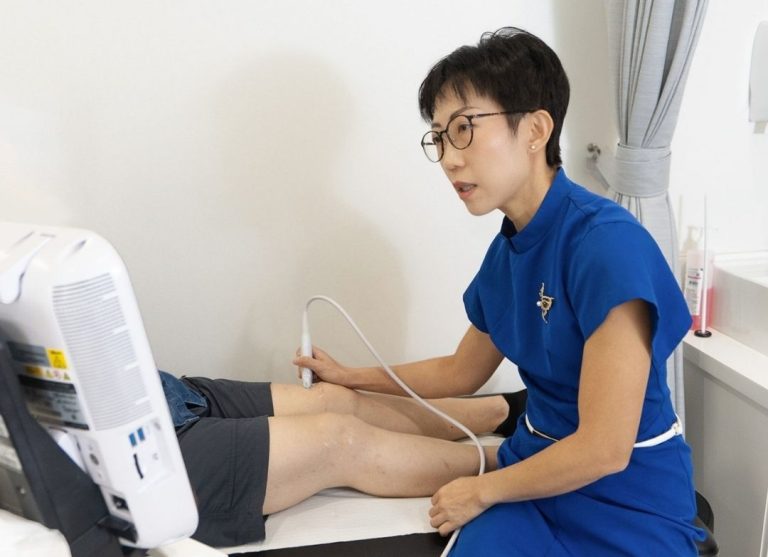


At-a-Glance
Dr Tan Sok Chuen is a double-fellowship-trained Specialist Orthopaedic Surgeon and the first female hip and knee replacement surgeon in Singapore, with extensive expertise in joint revision surgery, minimally invasive procedures, and osteoporosis treatment.
✔ Areas of Expertise: Primary & Complex Hip and Knee Replacement, Partial Knee Replacement, Direct Anterior Approach Hip Replacement, Revision Arthroplasty, Arthroscopic Knee Surgery, and Osteoporosis Treatment.
✔ Clinic: Hip & Knee Orthopaedics, Google Map Link
✔ Language: English, Mandarin
✔ Insurance Panels: Singlife Shield, NTUC Income Shield, HSBC Life Shield, Prudential (PruPanel Connect at Aptus, Novaptus, Novena Surgery Centre), Great Eastern (DA Adept Health Connect)
✔ Practicing At: Mount Elizabeth Novena Hospital
Know Before You Go: Female hip and knee replacement surgeon dedicated to personable, patient-centric care to restore mobility with minimal downtime, ensuring patients age gracefully and active.
the vision
Personable, Patient-Centric Mobility Care.
“Nothing gives me greater satisfaction than helping patients in their recovery journey and seeing them back on their feet again.”
– Dr Tan Sok Chuen
Get To Know Dr Tan Sok Chuen
Dr Tan Sok Chuen completed her undergraduate and postgraduate medical degrees at the National University of Singapore (NUS). She completed her Orthopaedic Seamless Training programme across tertiary institutions in Singapore and was awarded subspecialty fellowships in Hip & Knee Surgery at London Health Sciences Centre in Ontario, Canada, and Nuffield Orthopaedic Centre in Oxford, UK. Prior to entering private practice, Dr Tan was a Consultant in Orthopaedic Surgery at Ng Teng Fong General Hospital. She is also an Adjunct Assistant Professor involved in undergraduate medical education.
What Is Her Ethos In Medicine?
She believes in a holistic, patient-first approach to orthopaedic care, focusing on clear communication and empathetic guidance. By tailoring both surgical and non-surgical solutions to individual lifestyles, she aims to empower patients to regain their independence, reduce recovery times, and preserve natural joint health wherever possible.
If You Run Into Her Outside Work, You Are Likely To…
…see her running or in the gym.
Academic Qualifications
- MRCSEd Member – Royal College of Surgeons of Edinburgh
- MBBS – Bachelor of Medicine and Bachelor of Surgery)
- MMed (Ortho) Master of Medicine (Orthopaedic Surgery)
- FRCSEd (Trauma & Ortho) Fellowship of the Royal College of Surgeons of Edinburgh in Trauma and Orthopaedic Surgery
- Member of the Sports Medicine Association Singapore
- Member of the International Society of Arthroscopy, Knee Surgery and Orthopaedic Sports Medicine
Publications
- Tribocorrosion: Ceramic and Oxidized Zirconium vs Cobalt Chromium Heads in Total Hip Arthroplasty
- Effect of Taper Design on Trunnionosis in Metal on Polyethylene Total Hip Arthroplasty
- Does the Additional Articulation in Retrieved Bipolar Hemiarthroplasty Implants Decrease Trunnionosis Compared to Total Hip Arthroplasty?
- Trunnionosis: Does head size affect fretting and corrosion in Total Hip Arthroplasty
- Taperosis: Does head length affect fretting and corrosion in total hip arthroplasty?
10 Questions & Answers
1. What inspired you to pursue a career in orthopaedics?
When I completed my orthopaedic posting, I was drawn to the precision and relative predictability of orthopaedic surgery. What excites me most is the breadth of the specialty. I enjoy the biomechanics underlying the function of muscles and joints, the engineering principles involved in implant design, and the physics and geometry that influence fracture patterns. Orthopaedics brings together multiple disciplines in a uniquely fascinating way, and I consider it both a privilege and a joy to build a career in this field.
2. When should patients consider consulting an orthopaedic specialist for hip or knee pain?
If they are experiencing hip or knee pain which persists beyond a week of rest, or if they are experiencing some limitation in mobility and function, then they should consider consulting an orthopaedic specialist.
3. How do you stay current with the latest advancements and research in your field?
I make a conscious effort to stay current with advances in orthopaedics by regularly reviewing publications in leading orthopaedic journals and attending conferences and professional meetings. I also participate in courses on emerging techniques and implant technologies to ensure that my knowledge and skills remain up to date.
4. What is your patient care philosophy?
I believe my role extends beyond that of an expert advisor. I see myself as a guide and collaborator, working alongside my patients to achieve the best possible outcomes. My approach is to provide clear, evidence-based recommendations and professional opinions, while also taking the time to understand each patient’s goals, values, and personal circumstances. Together, we can determine the treatment plan that best meets their individual needs.
5. Can you describe any particular patient success stories or challenging cases that had a significant impact on your approach to orthopaedics?
I remember an elderly patient who had an infection of her knee prosthesis many years after her initial surgery. She underwent many surgeries before the infection could be cleared. It was an arduous journey though eventually she managed to walk independently. Even though the cause of infection was likely due to spread through the bloodstream from other organs, however it did make me become an extra careful surgeon who watches out for breach of sterility during the surgery process.
6. What are some common misconceptions or myths about hip and knee health and replacement that you often encounter, and how do you address them with your patients?
The most frequent misconception is that patients think they cannot walk after a knee or hip replacement. The truth is that patients generally can start walking within the same day or by the next morning after their knee or hip replacement. In the clinic, we have videos of our previous patients walking after their knee or hip replacements.
Another common misconception is that one cannot squat or kneel after a knee replacement. The truth is that the knee implants that we use allow up to 150 degrees of bending angle, so the implants do not prohibit deep bending of the knees.
Another concern is of implant loosening with physical activities. The implants are designed in such a way that they fit snugly with precisely-placed bone cuts, much like how Lego blocks fit. In addition, strong bone cement is applied between the bone surfaces and the implants, mating them together. This is why we can allow patients to resume physical activities like brisk walks and slow jogs after joint replacement surgery.
7. How do you ensure patients have a good understanding of their treatment choices?
Time and effective communication. I think it is important to give time for a discussion about a surgery that involves placing a prosthesis in a major weight-bearing joint for the next 20-30 years of a person’s life. There should be sufficient time not just for me to deliver the information, but also time for that information to sink in, to allow time for the patient to reiterate the information from his/her own understanding. And also allow time for the patient to ask questions and to convey his/her concerns. This may sometimes take 2 to 3 consultations.
8. How do you maintain a work-life balance to stay refreshed and engaged with your patients?
I think it is important to prioritise my health so I set aside at least 30min every day for exercise. This keeps me energised and keeps my mind fresh for the day.
I also enjoy engaging people from different walks of life and read about a wide range of topics so that I can better engage and connect with my patients.
9. In your opinion, what are some of the most exciting developments or technologies currently emerging in the field of orthopaedic surgery?
AI-assisted generation of small proteins or peptide drugs which can slow down or halt the deterioration of cartilage, would be a gamechanger. However I suspect this may take a decade or so.
10. Can you share any advice on how people can take steps to preserve their hip and knee health or detect joint degeneration early for timely treatment?
Moderate intensity activities and consistent strength training can help preserve our joints. Anyone with persistent pain and swelling of the joint beyond 2 weeks, should seek consultation with a doctor for further evaluation.
Reviewed Articles
Coming soon!
All content on this site is informative only and is not intended to be a substitute for professional medical advice, diagnosis, or treatment, and should never be relied upon for specific medical advice. If you are experiencing a medical emergency, call 995 immediately or go to the nearest Accident & Emergency department.
health365.sg is a member of Group 365Asia.