

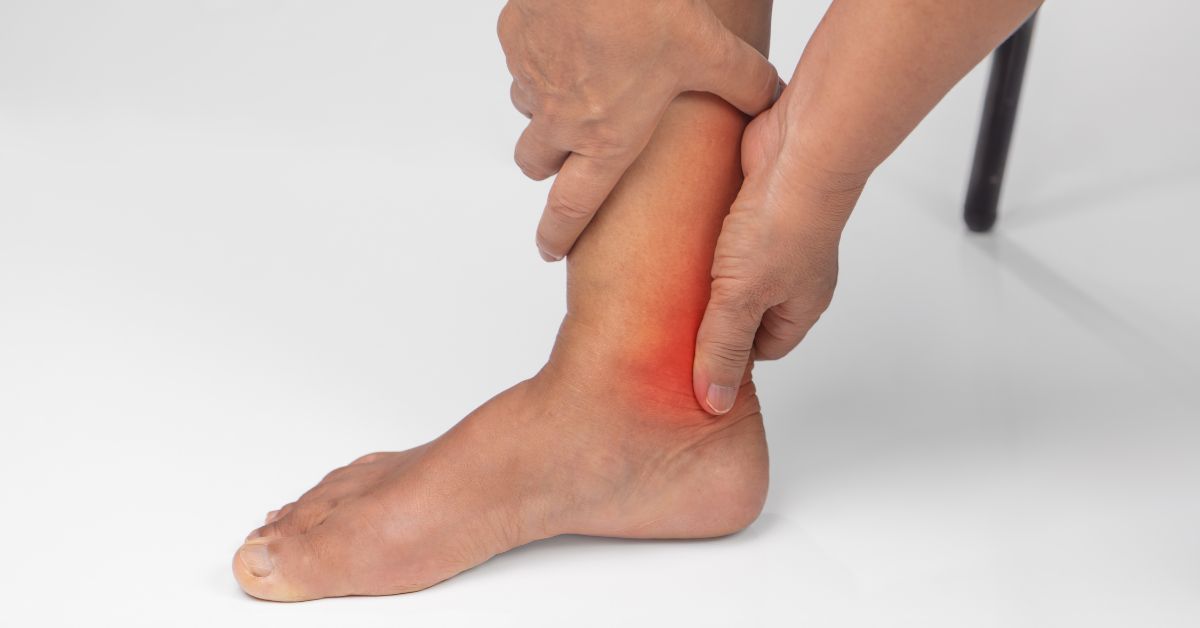
Ankle arthritis is a condition that can significantly impact a person’s mobility and quality of life. Unlike the more common hip or knee arthritis, ankle arthritis In Singapore is frequently the result of previous trauma rather than simple wear and tear. As Singapore’s population ages and remains active, understanding how to manage this condition—from early symptoms to advanced surgical interventions like total ankle replacement—is essential for maintaining an independent lifestyle.
Get An Appointment With An Orthopaedic Surgeon
Contact UsBack To: Orthopaedic Care In Singapore: Lower Limbs Main Page
What Is Ankle Arthritis?
Ankle arthritis involves the inflammation and gradual breakdown of the cartilage that cushions the ankle joint (the tibiotalar joint). When this cartilage wears thin, the bones begin to rub against one another, leading to pain, swelling, and reduced flexibility.
While there are over 100 types of arthritis, the three most common forms affecting the ankle in Singapore are:
- Post-Traumatic Arthritis: This is the most prevalent cause, accounting for nearly 70% of cases. It develops years after a significant injury, such as an ankle fracture or severe sprain.
- Osteoarthritis: Often described as “wear and tear,” this occurs when the joint cartilage degenerates over time.
- Rheumatoid Arthritis: An autoimmune condition where the body’s immune system attacks the synovium (joint lining), causing chronic inflammation and joint damage.
Key Symptoms To Look Out For
The symptoms of ankle arthritis often develop gradually. In the early stages, discomfort may only occur during strenuous activities, but as the condition progresses, it can interfere with daily movements like walking on uneven ground or climbing stairs.
Common symptoms include:
- Persistent Pain: Often described as a deep ache that worsens with activity and improves with rest.
- Stiffness: Difficulty moving the ankle, especially in the morning or after long periods of sitting.
- Swelling: Fluid accumulation (effusion) around the joint, making it appear larger than the other ankle.
- Instability: A feeling that the ankle might “give way” during walking.
- Deformity: In advanced cases, the ankle may start to tilt or look misaligned.
Causes And Risk Factors
Understanding the root cause is vital for choosing the right treatment. In Singapore, doctors often look at a patient’s medical history to identify the following risk factors:
- Previous Injuries: Any history of ankle fractures or chronic ligament laxity significantly increases the risk of developing arthritis later in life.
- Age: While post-traumatic arthritis can affect younger adults, the risk of general osteoarthritis increases as we get older.
- Obesity: Carrying excess weight puts additional mechanical stress on the small surface area of the ankle joint.
- Inflammatory Conditions: Patients with gout or rheumatoid arthritis are more susceptible to joint degradation.
- Genetics: A family history of joint issues can play a minor role in how resilient your cartilage is to stress.
Treatment Options For Ankle Arthritis In Singapore
Treatment for ankle arthritis typically follows a “stepped” approach, beginning with the least invasive methods.
Non-Surgical Management
Most orthopaedic specialists in Singapore will first recommend conservative treatments to manage pain and preserve function:
- Activity Modification: Switching from high-impact sports (running) to low-impact activities like swimming or cycling.
- Physiotherapy: Strengthening the muscles around the ankle to provide better support and improving the range of motion.
- Orthotics and Bracing: Custom insoles or ankle-foot orthoses (AFOs) can help realign the foot and reduce pressure on the arthritic joint.
- Medications: Oral non-steroidal anti-inflammatory drugs (NSAIDs) or topical gels to reduce inflammation.
- Injections: Corticosteroid injections for temporary pain relief or Hyaluronic Acid injections to provide lubrication.
Surgical Interventions
When conservative treatments no longer provide relief, surgery may be considered.
- Ankle Arthroscopy: A minimally invasive “keyhole” surgery to remove bone spurs or loose fragments.
- Ankle Fusion (Arthrodesis): The “gold standard” for many years, this involves fusing the bones together to eliminate painful motion. It provides excellent pain relief but results in a permanent loss of ankle movement.
- Total Ankle Replacement (Arthroplasty): This involves replacing the damaged joint surfaces with artificial metal and plastic components. This is increasingly popular in Singapore as it preserves joint mobility.
Cost Of Ankle Replacement Surgery In Singapore
For many patients, the financial aspect is a major consideration. The total cost of a total ankle replacement depends on whether the procedure is performed in a public or private hospital and the complexity of the case.
MOH Fee Benchmarks for Surgeon Fees
The Ministry of Health (MOH) provides fee benchmarks to ensure transparency in private healthcare. For a Primary Total Joint Replacement of the Ankle (TOSP Code: SB703A), the benchmarks as of 2026 are:
| Type of Fee | Recommended Range (Private Sector) |
| Surgeon Fee | $12,200 – $15,600 (Excluding GST) |
| Anaesthetist Fee | Often ranges from 20% to 35% of the surgeon fee |
Note: These figures represent the professional fees for the doctor only. They do not include hospital charges, the cost of the implant (which can be significant), ward charges, or medications. For public hospitals, costs are significantly lower due to government subsidies for eligible Singaporeans and Permanent Residents.
Find The Best Orthopaedic Surgeon For Ankle Arthritis In Singapore Treatment
If you are looking for the best orthopaedic surgeon in Singapore for ankle arthritis treatment, you can consider our Preferred Doctors:
- Dr Ananda Vella is an orthopaedic surgeon with over 20 years of experience treating a wide range of lower limb, sports and general orthopaedic conditions. His expertise includes minimally invasive and arthroscopic techniques for foot and ankle problems, knee and hip conditions, and sports injuries.



[SG] Featured Doctor- Dr Kevin Koo
Get An Appointment With An Orthopaedic Surgeon
Managing ankle arthritis in Singapore requires a combination of early diagnosis, lifestyle adjustments, and expert medical care. While the condition cannot be “cured” in the traditional sense, modern treatments—ranging from advanced physiotherapy to total ankle replacement—allow most patients to return to a pain-free, active life.
If you are experiencing persistent ankle pain that limits your daily activities, it is advisable to consult a foot and ankle specialist to discuss a personalised treatment roadmap.
Contact UsBack To: Orthopaedic Care In Singapore: Lower Limbs Main Page
Frequently Asked Questions
Neither is universally “better”; the choice depends on the patient. Ankle replacement is often preferred for older patients who wish to maintain joint motion and have healthy bone quality. Ankle fusion is typically recommended for younger, highly active individuals or those with severe deformities, as it is extremely durable.
For major surgeries like fusion or replacement, patients typically need to be non-weight-bearing for 2 to 6 weeks using crutches or a knee scooter. Full recovery and a return to normal walking usually take between 3 to 6 months, supported by intensive physiotherapy.
Yes, Singaporeans and Permanent Residents can use their MediSave to offset a portion of the surgical and hospitalisation costs. The amount you can withdraw depends on the complexity of the procedure (Table of Surgical Procedures ranking) and the length of your stay. It is best to check with your clinic’s billing department for a detailed financial breakdown.
All content on this site is informative only and is not intended to be a substitute for professional medical advice, diagnosis, or treatment, and should never be relied upon for specific medical advice. If you are experiencing a medical emergency, call 995 immediately or go to the nearest Accident & Emergency department.
health365.sg is a member of Group 365Asia.