


Colorectal surgery is an important medical field focused on surgically treating diseases of the colon, rectum, and anus. Robotic colorectal surgery has become an increasingly popular and effective option in Singapore as it offers patients greater precision, faster recovery, and improved long-term results.
This article explains when surgical treatment is required for colorectal conditions, what robotic surgery involves, why it is often considered superior to traditional methods, and when other techniques may still be more appropriate.
Get An Appointment With A Colorectal Surgeon
Contact UsBack To: Colorectal Cancer And Other Conditions Main Page
When Is Colorectal Surgery Needed?
Colorectal surgery is required when diseases of the large intestine, rectum, or anus cannot be adequately treated with medication or lifestyle changes. In Singapore, some of the most common conditions requiring surgical intervention include:
- Colorectal cancer – The most common reason for colorectal surgery. Early surgical removal of tumours offers the best chance of cure.
- Diverticular disease – Recurrent inflammation or infection (diverticulitis) of small pouches in the colon may necessitate surgical resection.
- Inflammatory bowel disease (IBD) – Chronic conditions such as ulcerative colitis or Crohn’s disease sometimes require surgery to remove damaged sections of the bowel.
- Colorectal polyps – Large or precancerous growths that cannot be safely removed via colonoscopy.
- Anal and rectal conditions – Including fistulas, abscesses, or prolapse that cause pain or functional problems.
In most cases, the primary goal of colorectal surgery is to remove diseased tissue while preserving normal bowel function and minimising postoperative complications.
Surgical Options For Colorectal Conditions
In Singapore, several surgical approaches to colorectal surgery are practiced, depending on the condition’s complexity, the patient’s health, and the surgeon’s expertise:
Open Colorectal Surgery
- Involves a single large incision in the abdomen to access the bowel.
- Typically used for emergency cases or when the tumour is large or has spread.
- While effective, recovery times tend to be longer and postoperative discomfort greater.
Laparoscopic (Keyhole) Surgery
- Uses several small incisions through which instruments and a camera are inserted.
- Offers less pain, smaller scars, and quicker recovery compared to open surgery.
- Has been the standard minimally invasive technique for over two decades.
Robotic Colorectal Surgery
- A newer, more advanced form of minimally invasive surgery performed using robotic technology.
- Provides surgeons with enhanced precision, control, and visibility — particularly beneficial in complex colorectal operations.
What Is Robotic Colorectal Surgery?
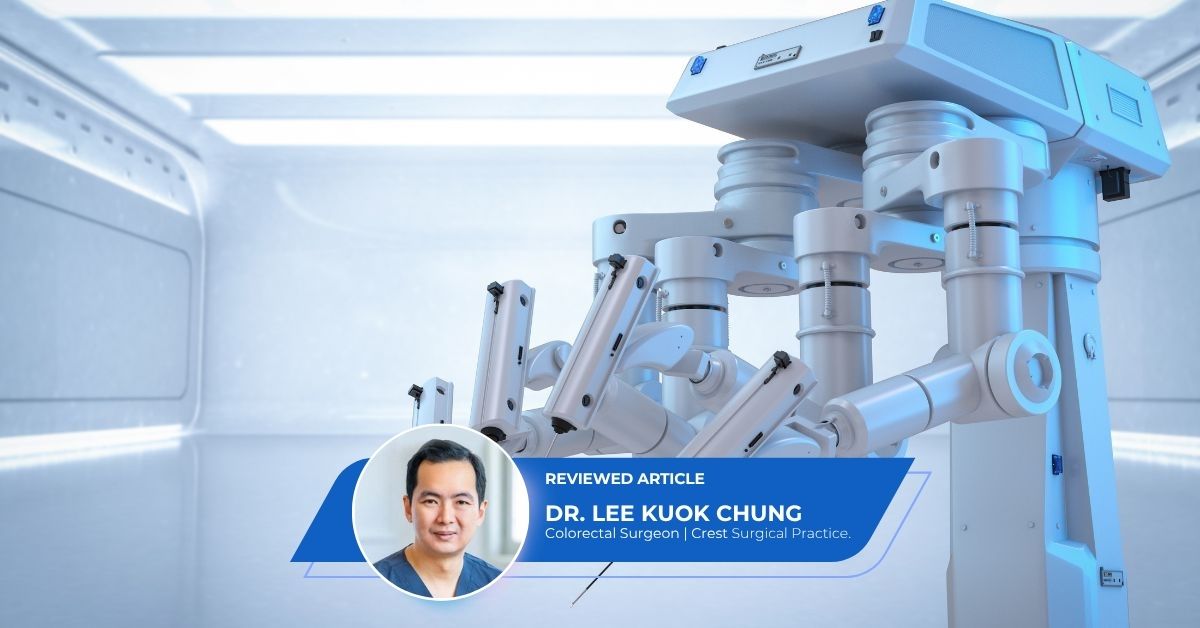
Robotic colorectal surgery uses a sophisticated robotic system. In Singapore, it is most commonly the da Vinci Surgical System. Robotic surgery systems assist surgeons in performing complex procedures.
During the operation:
- The surgeon sits at a console and controls robotic arms equipped with surgical instruments.
- A high-definition 3D camera provides a magnified, crystal-clear view of the surgical site.
- The robotic arms translate the surgeon’s precise hand movements into micro-actions, allowing for greater dexterity and stability than the human hand alone.
The system does not operate autonomously; the surgeon remains in full control at all times.
When Is Robotic Surgery Applicable?
Robotic colorectal surgery is suitable for many colorectal conditions that require precise dissection and reconstruction, including:
- Early and locally advanced colorectal cancer
- Rectal cancer, especially in the deep pelvis where space is limited
- Diverticular disease requiring segmental colon resection
- Rectal prolapse repair or pelvic floor reconstruction
When Is Robotic Colorectal Surgery A Better Option?
Robotic technology enhances the surgeon’s ability to perform delicate operations with exceptional accuracy. Compared to traditional open or laparoscopic surgery, the benefits of robotic colorectal surgery include:
- Enhanced Precision: The robotic system eliminates hand tremors and allows for micrometre-level control. This is especially valuable in rectal surgery, where vital nerves controlling bladder and sexual function are located.
- Superior Visualisation: The 3D high-definition camera provides a magnified, immersive view of the surgical field, improving safety when working around delicate structures.
- Greater Dexterity: Robotic instruments can rotate and bend beyond the capabilities of the human wrist, enabling surgeons to reach tight or curved spaces with ease.
- Reduced Blood Loss: Improved precision reduces tissue trauma, leading to less bleeding during surgery.
- Faster Recovery: Smaller incisions mean less postoperative pain, fewer complications, and quicker return to daily activities.
- Better Functional Outcomes: Studies have shown improved bowel and urinary control after robotic rectal surgery due to more precise nerve preservation.
For many patients, these benefits translate into shorter hospital stays, minimal scarring, and an overall smoother recovery experience.
When Is Robotic Surgery Not Recommended?
While robotic colorectal surgery offers many advantages, it is not suitable for every case. Situations where other techniques may be preferred include:
- Emergency surgeries for bowel perforation, severe infection, or uncontrolled bleeding, where immediate access is needed.
- Extensive or metastatic cancer requiring large resections or multiple organ involvement.
- Severe adhesions (scar tissue from previous operations) that make robotic access difficult.
In such cases, traditional open or laparoscopic surgery remains the safer choice. The decision is always made after a detailed evaluation by a colorectal surgeon, balancing risks, benefits, and patient preferences.
Frequently Asked Questions (FAQs)
Is Robotic Colorectal Surgery Safe?
Yes, robotic colorectal surgery is considered highly safe and is performed under strict medical safety protocols in Singapore’s accredited hospitals. Surgeons must undergo rigorous, specialized training to operate these advanced robotic platforms. Clinical outcomes have consistently been shown to be equal or superior to conventional laparoscopic surgery in terms of precision and complication rates.
How Long Is the Recovery After Robotic Colorectal Surgery?
Full recovery after robotic colorectal surgery typically takes 2 to 4 weeks, with most patients requiring a hospital stay of only 3 to 5 days. This is significantly faster than traditional open surgery, which usually requires a 7 to 10-day hospital stay. Because the procedure is minimally invasive, patients experience less postoperative pain and can return to work and daily activities much sooner.
Is Robotic Colorectal Surgery More Expensive?
Yes, robotic surgery generally carries a higher upfront cost due to the advanced technology, specialized equipment, and maintenance involved. However, many patients and surgical specialists consider it a worthwhile investment because it leads to a faster recovery, shorter hospital stays, and a lower risk of complications. Additionally, some private health insurance and Medisave plans in Singapore may partially cover the cost of the procedure.
Get An Appointment With A Colorectal Surgeon Experienced In Robotic Surgery
Robotic colorectal surgery represents the cutting edge of surgical care in Singapore. By combining advanced technology with human expertise, it allows for highly precise, minimally invasive treatment of complex colorectal diseases.
While not suitable for every case, for many patients robotic surgery provides the best balance of safety, precision, and recovery outcomes. As technology continues to evolve, more Singaporeans can look forward to less invasive procedures, better results, and a quicker return to healthy living.
Contact UsBack To: Colorectal Cancer And Other Conditions Main Page

This medical content has been reviewed by Dr Lee Kuok Chung, a highly experienced colorectal surgeon specialising in minimally invasive and robotic surgery for colorectal cancer and complex perianal conditions. He is also one of the few surgeons in Singapore skilled in advanced endoscopic techniques such as EMR and ESD, allowing large polyps and early cancers to be removed without major surgery.
All content on this site is informative only and is not intended to be a substitute for professional medical advice, diagnosis, or treatment, and should never be relied upon for specific medical advice. If you are experiencing a medical emergency, call 995 immediately or go to the nearest Accident & Emergency department.
health365.sg is a member of Group 365Asia.