

Thyroid Disorders In Singapore: The Big Story

Thyroid Disorders In Singapore - Silent Conditions Affecting Singaporeans
Thyroid disorders are among the most common endocrine conditions. They affect your metabolism, energy levels, and overall wellbeing. In Singapore, access to advanced medical care have made early detection and effective treatment more achievable than ever. Whether you are dealing with hypothyroidism, hyperthyroidism, goitre, or thyroid nodules, understanding your symptoms and treatment options is the first step to better health.
In this Big Story, we explore into thyroid disorders, and the options available for effective treatment.
What Is The Thyroid Gland?
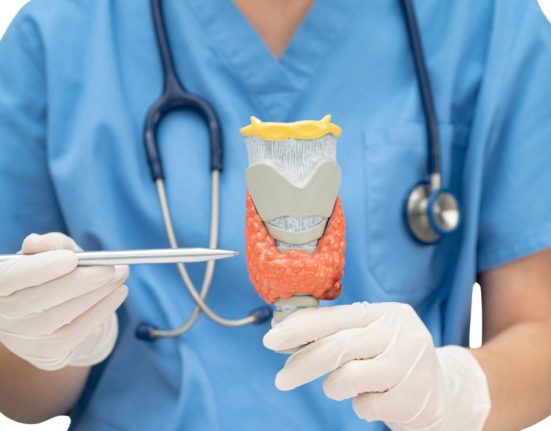
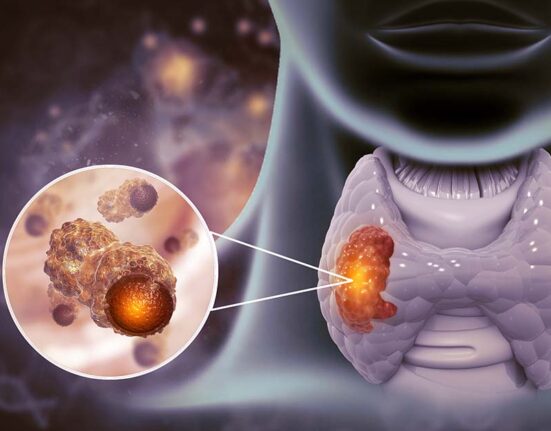
The thyroid gland is an endocrine organ located in the front part of the neck.
It produces hormones known as T3 (triiodothyronine) and T4 (thyroxine). These hormones help to regulate our metabolic rate and have a significant impact on the proper functioning of vital organs such as the heart, brain, and muscles.
In addition to controlling metabolism, thyroid hormones are also essential for growth, development, and the maintenance of body temperature.
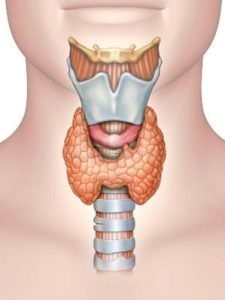
Image courtesy of Crest Surgical Practice.
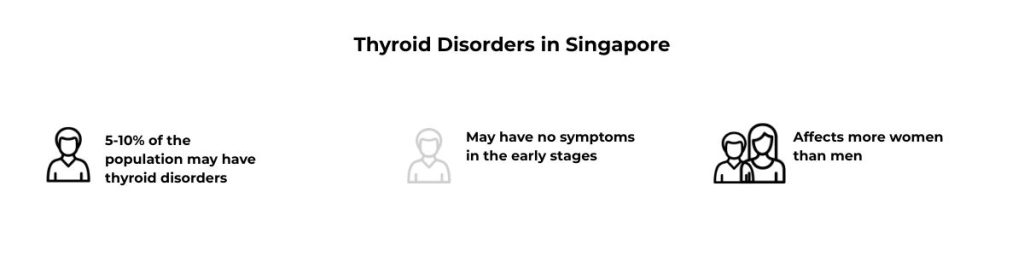
Common Thyroid Disorders
Hyperthyroidism & Hypothyroidism
Hyperthyroidism (an excess of thyroid hormones) or hypothyroidism (a deficiency of thyroid hormones) can occur due to hormonal imbalances.
The most common cause of hyperthyroidism is Graves’ disease, an autoimmune disorder.
Thyroid Nodules
The thyroid gland can develop lumps or nodules. The risk of thyroid nodules increases with age, particularly after 60. Additionally, thyroid nodules are more common in women than in men.
Nodules can be benign (non-cancerous) or malignant (cancerous).
Thyroid Cancer
Thyroid cancer in Singapore is one of the most common cancers in women under the age of 39. A careful diagnosis is needed to ascertain if a nodule is benign (in most cases) or cancerous.
Who Is At Risk For Thyroid Disorders?
These are the risk factors for developing thyroid disorders:
- Gender – Women are significantly more likely than men to develop thyroid disorders.
- Age – Risk increases with age, especially after 60.
- Family history – A history of thyroid disease or autoimmune conditions raises risk.
- Autoimmune diseases – Conditions like type 1 diabetes, rheumatoid arthritis, or lupus increase likelihood.
- Iodine intake – Both deficiency and excess iodine can trigger thyroid dysfunction.
- Radiation exposure – Past radiation to the head, neck, or chest increases risk.
- Pregnancy and postpartum changes – Can trigger thyroiditis in susceptible women.
- Certain medications – Lithium, amiodarone, and interferon-alpha may affect thyroid function.
- Chronic stress and illness – May contribute to thyroid dysfunction.
- Environmental factors – Pesticides, industrial chemicals, and pollutants are linked to thyroid disruption.
- Genetic predisposition – Specific gene variants increase susceptibility to thyroid autoimmune diseases.
- Nutritional factors – Selenium, iron, and vitamin D deficiencies may influence thyroid health.
Learn More About Thyroid Disorders
Thyroid Nodules
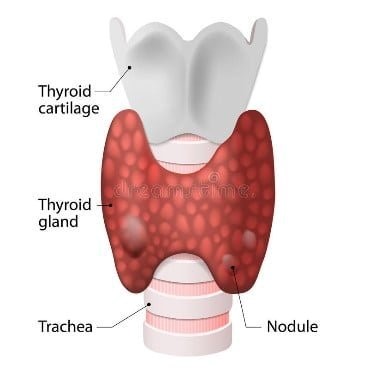
A thyroid nodule is an unusual accumulation of thyroid cells and tissue, resulting in a lump or growth in the gland.
Most nodules are benign and associated with aging. However, it is crucial to assess them upon detection to rule out the possibility of cancer.
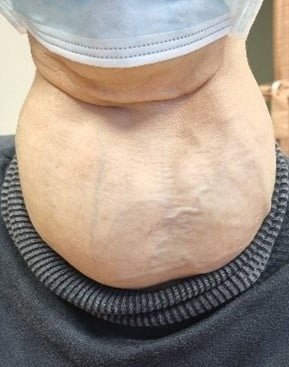
Images courtesy of Crest Surgical Practice.
Thyroid Nodules - Symptoms And Diagnosis
Many thyroid nodules do not cause noticeable symptoms and are often discovered incidentally. Larger nodules may be visible as a swelling in the neck and may cause:
- Discomfort, tightness, or pressure in the neck.
- Difficulty swallowing.
- Difficulty breathing.
- Hoarseness of the voice may be a sign of cancer if the nerves that control the vocal cords are affected.
In the early stages of thyroid cancer, most patients do not exhibit any symptoms.
What Investigations Are Needed If Thyroid Nodules Are Detected?
Investigations may include:
- Blood tests.
- Ultrasound of the thyroid gland.
- Needle biopsy.
Thyroid Disorders - What Are The Treatments For Thyroid Nodules?
Treatment for benign nodules may include:
- Observation and repeated ultrasound.
- Surgery if they continue to grow or causes symptoms.
- Non-surgical treatments may also be possible – Needle Aspiration, High-Intensity Focus Ultrasound, and Radiofrequency Ablation.
For cancerous nodules, surgery will be needed to remove half, or the entire thyroid gland. Non-surgical options are not recommended for thyroid cancer.
Most thyroid cancers are curable if detected and treated early.
Learn More About Thyroid Nodules And Thyroid Disorders
Comment: The row below to be moved to article for healthcare professionals article
Find A Doctor
Verified Healthcare Professionals
We connect you with a network of qualified and experienced doctors who specialise in chronic health conditions, health screening, and longevity.
Trusted Information Source
We pride ourselves on providing accurate, up-to-date, and evidence-based information about each disease, its prevention, and treatment.
Privacy and Security
Your health information and personal data are paramount to us. We will protect your privacy throughout the booking process and beyond.
Convenience at Your Fingertips
Our user-friendly platform allows you to find and book appointments 24/7 from the comfort of your home.
Our Preferred Doctors You Can Consider For Thyroid Disorder Management & Treatment:

Powered by Find by 365Asia
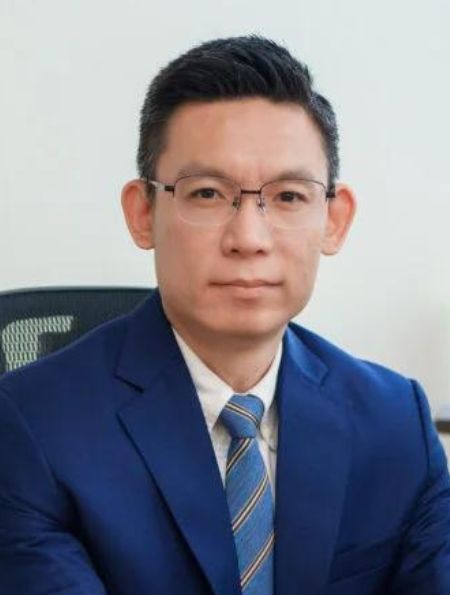
Dr Tan Wee Boon
Singapore, Singapore
General Surgery, General Surgery (Endocrine), General Surgery (Hernia)
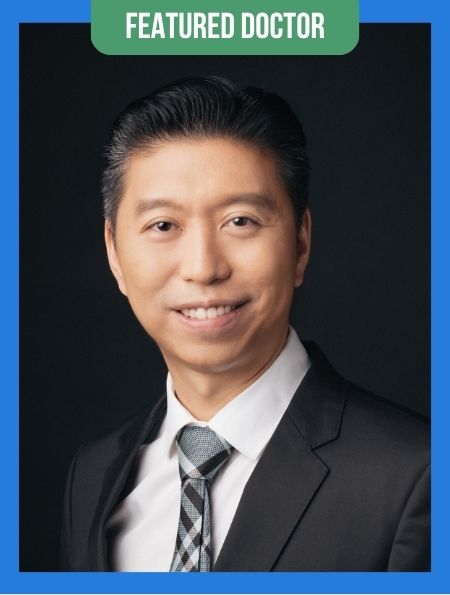
[SG] Featured Doctor- Dr Kevin Koo
Orthopaedic Surgeon In Singapore
Thyroid nodules are common especially in women. Patients found to have thyroid nodules should seek consultation with a thyroid specialist to check hormonal function and to exclude cancer. Investigations performed typically involved blood test, ultrasound and needle biopsy in certain cases. Treatment options may involve medication to correct hormonal imbalance or surgery to remove the thyroid gland. Thyroid surgery is generally safe with minimal risks.
Dr Tan Wee Boon
Book An Appointment For Thyroid Treatment
Take a proactive step for your health and peace of mind today. If you need to see a doctor about thyroid disorders or your health risks, our team is here to assist.
Financials
[findDoctor category="financial consultants" countries="Singapore" " limit="15"]
Related Content

FAQs About Thyroid Disorders
Thyroid disorders are conditions that affect the thyroid gland, a butterfly-shaped gland in your neck that regulates metabolism, energy, and hormones. Common disorders include hypothyroidism (underactive thyroid), hyperthyroidism (overactive thyroid), thyroid nodules, and thyroid cancer.
Symptoms vary depending on the type. Hypothyroidism may cause fatigue, weight gain, and dry skin, while hyperthyroidism can lead to weight loss, rapid heartbeat, and anxiety. Swelling in the neck, mood changes, or changes in menstrual cycles can also be warning signs.
Doctors use blood tests to measure thyroid hormones (TSH, T3, T4) and antibodies. Imaging tests such as ultrasound or scans may be used to check for nodules, enlargement, or irregularities.
Additional Resources
- Thyroid Surgery | Crest Surgical Practice.
- Thyroid Cancer – Causes, Symptoms & Treatments | Singapore General Hospital.
- Standards of treatment and management of thyroid cancers | NUHS+.
- Thyroid Cancer: Causes, Types And Symptoms | HealthXchange.sg.
- Thyroidectomy | Mayo Clinic.
.