


For Singapore residents evaluating fertility treatment options outside local public hospital subsidies, Taiwan represents a leading destination for specialized Assisted Reproduction (AR) care. Known for its high-throughput embryology labs, in-house genetic testing facilities (PGT-A/M), and high success rates, Taiwan offers a structured, legally protected cross-border pathway.
Contact UsBack To: Female Fertility Main Page
Executive Summary: Key Takeaways
- Legal Requirements: Restricted to legally married, heterosexual couples. Marriage certificates must undergo authentication by the Singapore Academy of Law (SAL) and attestation by the Taipei Representative Office in Singapore (TECO).
- Treatment Timeline: Most international patients choose the 2-Trip Split Model, spending 10–12 days in Taipei for egg retrieval, followed by a 3–5 day stay a month later for Frozen Embryo Transfer (FET).
- Flight & Travel Logistics: Flight duration is roughly 4.5 hours from Changi Airport. Medications can be legally carried through customs with an official clinic letter.
- Husband’s Presence: The husband is only required to be present for 1–2 days around egg retrieval, or can choose to freeze sperm during a single weekend visit in advance.
What Are The Legal Prerequisites For IVF In Taiwan?
Under Taiwan’s Assisted Reproduction Act, fertility treatments such as In-Vitro Fertilisation (IVF) are legally restricted to legally married, heterosexual couples. Before a Taiwanese clinic can commence medical procedures, international patients must complete a formal document verification process.
Required Documents
- Valid Passports: Both spouses must hold passports with at least six months’ remaining validity.
- Legalised Marriage Certificate: Singapore-issued marriage certificates must undergo a three-step legalisation process to be recognized by Taiwan’s Ministry of Health and Welfare (MOHW).
The Document Legalisation Workflow in Singapore
- Notarisation: Take your original Marriage Certificate to a Notary Public in Singapore.
- SAL Authentication: Submit the notarised document to the Singapore Academy of Law (SAL) for authentication.
- TECO Attestation: Present the SAL-authenticated certificate to the Taipei Representative Office in Singapore (TECO) at mTower (Alexandra Road) for final consular legalisation.
What Are The Main Treatment Pathways For Singapore Patients?
Taiwanese fertility centers structure international patient care into two primary clinical models, depending on whether Pre-implantation Genetic Testing for Aneuploidies (PGT-A) is required.
| Feature | Model A: 2-Trip “Split” Model (Recommended for PGT-A) | Model B: 1-Trip “Continuous” Model (Fresh Transfer) |
| Best Suited For | Patients requiring genetic screening (PGT-A/M), women aged 38+, or freeze-all protocols | Patients undergoing standard fresh embryo transfers without genetic screening |
| Trip 1 Duration | 10 to 12 Days: Ovarian monitoring, trigger shot, and egg retrieval | 16 to 18 Days: Complete continuous stay from stimulation through transfer |
| Intermission | 3 to 4 Weeks in SG: Lab conducts PGT-A biopsy and embryo freezing while patient rests at home | None |
| Trip 2 Duration | 3 to 5 Days: Frozen Embryo Transfer (FET) cycle | N/A |
| Work Impact | Low to Moderate (split annual leave) | High (requires ~3 consecutive weeks of leave) |
What Is The Step-By-Step Clinical Process For IVF In Taiwan?
Step 1: Remote Preparation & Preliminary Screening (In Singapore)
Treatment begins locally in Singapore via tele-consultations. Taiwanese specialists review previous medical records, hormone test results, and pelvic ultrasounds. Initial diagnostic tests can be performed at a local Singapore GP or O&G clinic and transmitted digitally. The Taiwanese clinical team then formulates a customized ovarian stimulation protocol based on the patient’s Anti-Müllerian Hormone (AMH) levels.
Step 2: Ovarian Stimulation & Follicular Tracking
Depending on the agreed protocol, patients can begin daily hormone injections in Singapore on Day 2 or 3 of their period, flying to Taipei on Day 5 or 6. Alternatively, patients can arrive in Taipei on Day 1 to conduct the entire 8 to 10-day stimulation phase locally, attending clinic visits every 2 to 3 days for blood tests and monitoring ultrasounds.
Step 3: Egg Retrieval & Sperm Collection
When ovarian follicles reach optimal maturity, a trigger injection is administered. The egg retrieval procedure occurs 34 to 36 hours later under light sedation as a day-surgery procedure. The husband provides a fresh semen sample on the same morning.
Flexible Partner Scheduling: The husband does not need to stay in Taiwan for the full stimulation period. He can either fly in 1 to 2 days prior to egg retrieval or freeze a semen sample during an earlier weekend trip to Taipei, allowing the lab to thaw it on retrieval day.
Step 4: Laboratory Culture & PGT-A Genetic Screening
Eggs are fertilised using Intracytoplasmic Sperm Injection (ICSI) and cultured in specialized time-lapse incubators to the blastocyst stage (Day 5 or 6). For cycles incorporating PGT-A, a small trophectoderm biopsy is performed for chromosomal sequencing before the embryos are vitrified (flash-frozen).
Step 5: Embryo Transfer & Post-Procedure Care
For a Frozen Embryo Transfer (FET), uterine lining preparation using oral estrogen begins at home in Singapore. Once the lining reaches optimal thickness, the patient flies to Taipei for the transfer procedure, which takes approximately 15 minutes and requires no sedation. Following 24 to 48 hours of light rest in Taipei, the patient can safely fly back to Singapore. A Beta-hCG pregnancy blood test is conducted 10 to 14 days later at a local Singapore clinic.
What Are The Travel And Logistical Considerations For Singaporeans?
- Flight Connectivity: Multiple direct flights operate daily between Singapore Changi Airport (SIN) and Taipei Taoyuan (TPE) via Singapore Airlines, EVA Air, China Airlines, and Starlux, with a flight time of 4.5 hours.
- Customs Clearance for Medications: Taiwanese clinics provide official medical declaration letters in English and Chinese, allowing patients to pass through Changi Airport customs with hormone injection pens and cold packs without issue.
- Language & Communication: Accredited fertility centers in Taiwan assign dedicated international patient coordinators who communicate fluently in English and Mandarin via WhatsApp or LINE to manage daily appointments and medication timing.
What Is The Cost Of Doing IVF In Taiwan For Singapore Residents?
How much would it cost to do IVF in Taiwan? Found out in this cost comparison article – IVF cost in Singapore, Johor and Taiwan.
Our Preferred Doctors (Fertility Specialist) For IVF In Taiwan
If you are looking for a fertility specialist in Taiwan, you can consider the following:
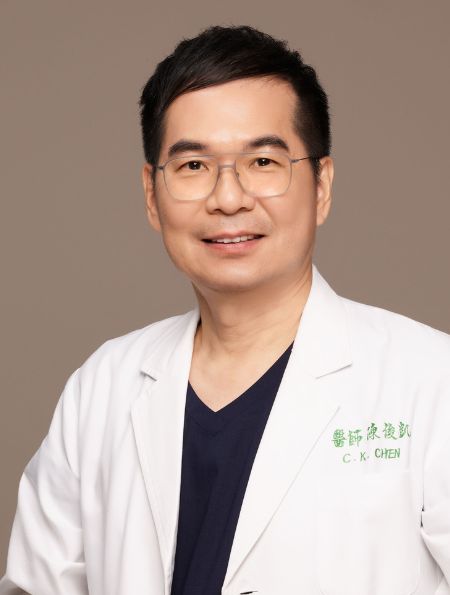
- Dr Chun-Kai Chen is a highly respected fertility specialist with decades of experience, known for pioneering advanced reproductive technologies in Taiwan and offering compassionate, patient-centered care.

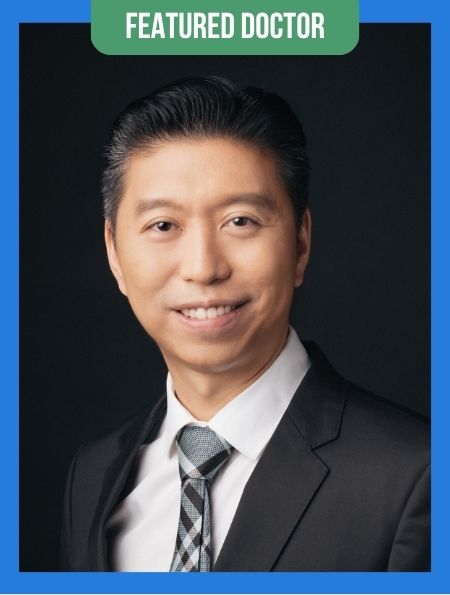
[SG] Featured Doctor- Dr Kevin Koo
Frequently Asked Questions (FAQ)
Can I use Singapore MediSave for IVF treatment in Taiwan?
No. Central Provident Fund (CPF) regulations restrict MediSave withdrawals for assisted reproduction procedures strictly to accredited medical institutions within Singapore. Overseas treatments in Taiwan or Malaysia must be settled out-of-pocket via cash or credit card.
Is PGT-A genetic screening legally allowed in Taiwan?
Yes. Unlike some jurisdictions where genetic testing of embryos faces strict regulatory hurdles, Taiwan’s Assisted Reproduction Act permits Pre-implantation Genetic Testing (PGT-A and PGT-M) when clinically indicated, such as for advanced maternal age, recurrent miscarriages, or known hereditary conditions.
How long must I rest in Taiwan after an embryo transfer before flying back to Singapore?
Most Taiwanese fertility specialists recommend resting at your hotel for 24 to 48 hours following an embryo transfer. Cabin pressurization during a 4.5-hour commercial flight has no recorded negative impact on embryo implantation after this brief resting period.
Contact UsBack To: Female Fertility Main Page
All content on this site is informative only and is not intended to be a substitute for professional medical advice, diagnosis, or treatment, and should never be relied upon for specific medical advice. If you are experiencing a medical emergency, call 995 immediately or go to the nearest Accident & Emergency department.
health365.sg is a member of Group 365Asia.