


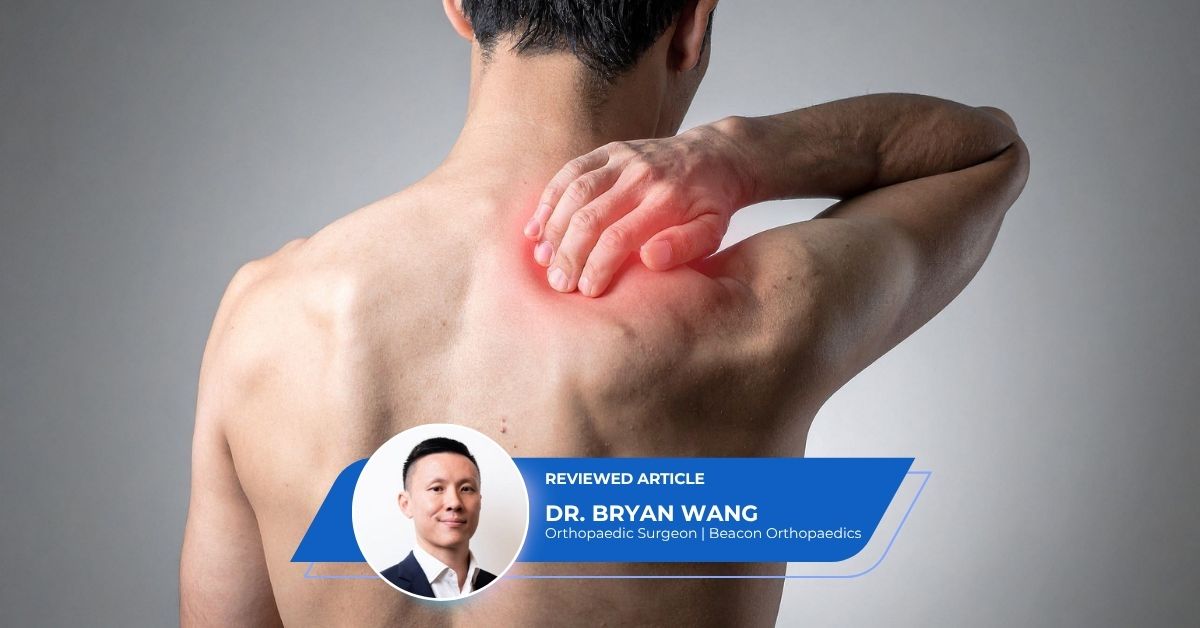
Rotator cuff tears are among the most common shoulder conditions affecting adults of various ages, often arising from sports injuries, repetitive strain, or age-related degeneration. A key concern many patients have is: can a rotator cuff tear heal without surgery? This article explores the healing potential of these injuries, explains why natural recovery is limited, and discusses how a tear may impact daily life, work, and sleep.
Consult An Orthopaedic Specialist On Your Shoulder Condition
Contact UsBack To: Orthopaedic Care In Singapore: Upper Limbs Main Page
Can A Rotator Cuff Tear Heal Without Surgery?
In most cases, the likelihood of a rotator cuff tear healing fully without surgery is very low. This is largely due to the anatomical features of the rotator cuff and the mechanical demands of the shoulder joint.
Why Is Self-Healing Unlikely?
- Limited Blood Supply
The rotator cuff tendons—particularly the supraspinatus—have a poorly vascularised zone near their attachment to bone. This area receives minimal nutrients and healing cells, making natural repair difficult. - Continuous Shoulder Movement
Even small arm movements exert tension on the injured tendon. This persistent mechanical stress prevents the torn edges from stabilising long enough to heal. - Joint Fluid Interference
After a tear, joint fluid can seep into the area and interrupt the formation of scar tissue that is needed for tendon healing.
Symptom Relief Does Not Equal Healing
Rest, physiotherapy, and anti-inflammatory treatments often reduce pain. However, reduced discomfort does not mean the tendon has structurally healed. The tear remains and may enlarge over time, especially with repeated use.
What Are The Different Tear Types And Their Healing Potential?
While complete healing is unlikely, management strategies differ based on the type of tear:
- Partial-Thickness Tears
Only some tendon fibres are torn. Rehabilitation and strengthening can improve symptoms and slow progression, but the tendon itself does not regenerate. - Full-Thickness (Complete) Tears
The tendon is entirely torn. Self-healing is not possible, as the tendon edges typically retract and cannot reattach on their own. - Massive Irreparable Tears
Large tears with significant retraction and fatty degeneration have a very poor prognosis for natural recovery. Surgical outcomes may also be limited due to advanced muscle changes.
What Are The Impacts Of A Rotator Cuff Tear On Daily Life?
Rotator cuff tears can significantly affect sleep, work, exercise, and overall wellbeing.
Sleep Disturbance
Night pain is common. Patients often wake when turning or lying on the affected side, leading to disrupted sleep and daytime fatigue.
Work And Home Limitations
Tasks such as lifting, reaching overhead, cleaning, or carrying bags can become challenging. Occupations requiring repetitive shoulder use like teaching, driving, manual work, or computer-based roles may be particularly affected.
Exercise Restrictions
Sports such as swimming, tennis, weight training, and badminton may trigger pain. Many patients avoid activities they enjoy, which can affect fitness and mood.
Compensatory Problems
To avoid pain, patients often change how they move, which may lead to:
- Shoulder stiffness (frozen shoulder)
- Neck and upper back strain
- Muscle wasting around the shoulder
Emotional Effects
Ongoing pain and reduced mobility can lead to frustration, anxiety, and reduced quality of life.
When Should You Seek Medical Attention?
Not every rotator cuff tear requires surgery, but timely evaluation is essential. You should consult a specialist if you experience:
- Persistent pain after several days of rest and self-care
- Ongoing night pain
- Difficulty lifting the arm or performing overhead tasks
- Marked weakness following an injury
- Symptoms lasting more than two to three weeks
Management should focus on restoring strength, stability, and function.
Active Management Versus Waiting For Spontaneous Recovery
Waiting for a rotator cuff tear to “heal by itself” is usually not advisable. Early assessment helps prevent a small tear from progressing into a larger, more complex problem.
Recommended steps include:
- Accurate Diagnosis – Clinical examination and imaging such as MRI to assess tear size and severity.
- Individualised Treatment – Physiotherapy, injections, or minimally invasive arthroscopic surgery depending on the nature of the tear and patient needs.
- Consistent Rehabilitation – Essential for regaining strength and preventing future injury.
Frequently Asked Questions (FAQs)
Small partial tears may improve in symptoms with physiotherapy and lifestyle adjustments, but the tissue itself does not fully repair. Symptom control is possible even without complete healing.
If symptoms persist after six to twelve weeks of structured physiotherapy, further evaluation may be needed to determine whether surgical treatment is appropriate.
Yes. Without appropriate management, a rotator cuff tear may enlarge, leading to increasing weakness, pain, and restricted movement. Early intervention helps reduce this risk.
Get An Appointment With An Orthopaedic Surgeon
So, can a rotator cuff tear heal without surgery? In most cases, complete natural healing is unlikely due to limited blood supply and ongoing mechanical stress. However, many patients can achieve good function and pain control with proper management, physiotherapy, and guided treatment plans. Early assessment and personalised care by an orthopaedic surgeon provide the best chance of returning to normal activities safely.
Contact Us
This medical content has been reviewed by Dr Bryan Wang, an experienced orthopaedic surgeon in Singapore known for his patient-centred approach, advanced minimally invasive techniques, and comprehensive management of complex shoulder conditions.
Back To: Orthopaedic Care In Singapore: Upper Limbs Main Page
All content on this site is informative only and is not intended to be a substitute for professional medical advice, diagnosis, or treatment, and should never be relied upon for specific medical advice. If you are experiencing a medical emergency, call 995 immediately or go to the nearest Accident & Emergency department.
health365.sg is a member of Group 365Asia.