

From Torn Ligament to Recovery: Treating Sports And Dance Injuries In Singapore – The Big Story

From Torn Ligament to Recovery: Treating Sports And Dance Injuries In Singapore
Among the various musculoskeletal issues affecting athletes and dancers, ligament injuries represent some of the most complex challenges. A torn ligament can instantly halt an individual’s ability to train, compete, or perform routine physical tasks. Understanding how these soft-tissue injuries occur, recognizing early clinical signs, and knowing the available management options are essential steps toward regaining joint function and returning to full activity safely.
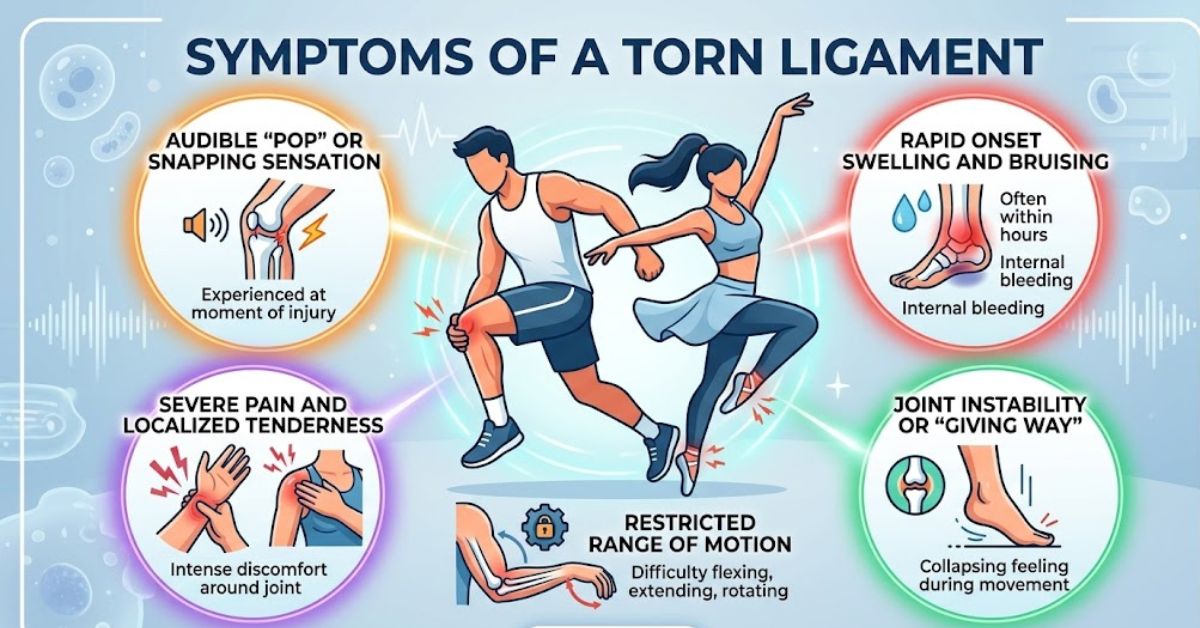
Click to expand infographic.
Torn Ligaments – The Statistics
- High Proportion of Sports Injuries: Ankle injuries account for roughly 40% to 45% of all sports-related injuries in Singapore, with the majority of these ankle injuries diagnosed as ligament sprains or tears.
- Predominance in Active Youth: Most sports injuries in Singapore are sustained by individuals between 5 and 24 years old, reflecting high participation in school sports, competitive leagues, and recreational training.
- Progression to Chronic Instability: Studies show that about 20% of patients who suffer an acute ankle ligament sprain develop chronic joint instability if the ligament fails to heal properly, resulting in recurrent joint rolling, persistent pain, and long-term risk of early secondary osteoarthritis.



How Do Ligament Injuries Occur?
Ligaments are dense, fibrous bands of collagen tissue that connect bone to bone across joints. They provide structural integrity, guiding joint movement, and preventing abnormal or excessive motion. When a joint is pushed beyond its physiological range of motion, the collagen fibers of the ligament are stretched or torn. In clinical practice, ligament injuries (sprains) are classified into three severity grades:
- Grade I (Mild): Microscopic stretching or tear of the ligament fibers without structural instability of the joint.
- Grade II (Moderate): Partial tearing of the ligament, leading to mild-to-moderate joint laxity and painful movement.
- Grade III (Severe): Complete rupture or detachment of the ligament, resulting in significant structural instability and severe functional impairment.
How Do Sports & Dance Dynamics Risk Ligament Injury?
Both sports and dance demand exceptional physical conditioning. However, they present distinct biomechanical risks that contribute to ligament trauma.
1. High-Impact And Field Sports
In court and field sports such as football, basketball, netball, and racket sports, ligament injuries typically occur due to sudden deceleration, sharp pivoting movements, or sudden contact with another player.
- The Knee (ACL and Meniscus): The Anterior Cruciate Ligament (ACL) is frequently ruptured during non-contact pivot-shift movements or landing from a jump with an extended knee. These injuries are often accompanied by meniscal tears or cartilage damage due to joint shearing forces.
- The Ankle (Lateral Ligaments): Inversion ankle sprains occur when the foot rolls inward, stretching or rupturing the Anterior Talofibular Ligament (ATFL) and Calcaneofibular Ligament (CFL).
2. Dance And Classical Movement
Dancers perform complex rotational and hyper-mobile movements, often on rigid surfaces or in specialized footwear (such as pointe shoes).
- Repetitive Stress And Forced Port de Bras / Turnout: Dancers frequently stretch their ligaments to maximum physical limits. Over time, repeated strain can lead to ligamentous laxity or acute tears during forced landings and rapid direction changes.
- Foot And Ankle Complex: The midfoot, first metatarsophalangeal joint, and ankle lateral ligaments are particularly vulnerable to acute ruptures or chronic instability during pointe work and leaps.
What Are The Symptoms Of A Torn Ligament?
Patients who sustain a ligament injury often experience immediate, distinct physical signs. Key indicators of a torn ligament include:
- An Audible “Pop” Or Snapping Sensation: Experienced at the moment of impact or joint twisting.
- Rapid Onset Of Swelling And Bruising: Often occurring within hours due to joint effusion or internal bleeding (hemarthrosis).
- Severe Pain And Localized Tenderness: Intense discomfort around the affected joint, particularly when applying pressure or attempting movement.
- Joint Instability Or “Giving Way”: A feeling that the joint is unsupportive or collapsing under weight-bearing activities.
- Restricted Range Of Motion: Difficulty fully flexing, extending, or rotating the affected limb.
Why Should You Seek Treatment?
The Progression To Chronic Instability
When an acute ligament injury—such as a common ankle sprain or knee sprain—is left untreated or inadequately rehabilitated, the ligament may heal in a lengthened or lax state. This condition can progress to chronic joint instability.
Patients with chronic instability often report recurrent joint rolling, persistent ache after physical activity, and a loss of confidence during lateral movements. Over time, recurring episodes of instability cause abnormal friction within the joint, increasing the risk of cartilage degradation, bone spurs, and early secondary osteoarthritis.
How Is A Torn Ligament Diagnosed?
An accurate diagnosis is required to establish whether a ligament is stretched, partially torn, or completely ruptured, and to check for associated cartilage or bone injuries. Evaluation typically involves:
- Clinical Examination: Specialist physical tests (such as stability and stress tests) to assess joint laxity and ligament integrity.
-
Diagnostic Imaging:
- X-rays: Used to rule out fractures, bone avulsions, or structural misalignments.
- Magnetic Resonance Imaging (MRI): The gold standard non-invasive imaging modality to visualize soft-tissue structures, including full-thickness ligament tears, meniscal damage, and articular cartilage lesions.
What Are The Treatment Options For Torn Ligament?
Treatment strategy depends on the patient’s activity goals, the specific ligament involved, the degree of joint instability, and whether secondary injuries (such as meniscal tears) are present.
1. Conservative And Non-Surgical Management
For Grade I and select Grade II partial ligament tears, conservative management is often the first line of care:
- R.I.C.E Protocol & Immobilisation: Initial rest, icing, compression, and elevation, supported by short-term bracing or taping to protect the healing tissue.
- Structured Rehabilitation: Physical therapy focused on strengthening surrounding dynamic muscle stabilizers, restoring full range of motion, and improving proprioception (joint position sense).
2. Surgical Reconstruction And Keyhole Repair
When complete ligament ruptures occur (Grade III), or when conservative treatment fails to resolve chronic instability, surgical intervention may be recommended. Modern orthopaedic practice prioritizes minimally invasive surgery (keyhole surgery):
- Arthroscopic Ligament Reconstruction: Small keyhole incisions allow the insertion of a miniature camera (arthroscope) and specialized instruments to repair or reconstruct damaged ligaments using tissue grafts.
- Benefits of Minimally Invasive Techniques: Keyhole procedures aim to minimize soft-tissue trauma, reduce postoperative pain, lower the risk of infection, and allow a faster start to structured rehabilitation compared to traditional open surgical methods.
Recovery And Return To Sport Or Dance
Recovery from a ligament injury is a gradual process that requires a structured, criteria-based rehabilitation program. Rather than relying solely on time frames, clearance to return to competitive sports or dance depends on achieving specific clinical benchmarks:
- Full, pain-free range of motion in the affected joint.
- Symmetrical muscle strength compared to the uninjured limb.
- Successful completion of functional agility and balance tests.
- Psychological readiness and confidence in joint stability.
Through timely medical evaluation, appropriate treatment selection, and diligent rehabilitation, active individuals, recreational athletes, and professional dancers can restore joint function, lower the risk of re-injury, and return safely to physical performance.
Where Can You Get Medical Imaging?
When managing ligament injuries, obtaining diagnostic imaging (such as an X-ray or MRI scan) is an essential step to evaluate soft-tissue tears and joint integrity. Patients often assume they must face lengthy waiting periods at public healthcare institutions just to obtain diagnostic scans. However, Singapore offers direct avenues for diagnostic imaging through private diagnostic radiology centers.
Independent imaging centers across Singapore (e.g. AsiaMedic) provide rapid turnaround times for X-ray and MRI scans, allowing patients to swiftly gain visual clarity on the extent of their ligament injury and begin appropriate treatment without delay.
When And Why Should You See An Orthopaedic Surgeon?
While initial symptoms like sudden swelling, sharp pain, or joint “giving way” serve as clear warning signs, many patients continue to rely on temporary rest, ice, or elastic bandages hoping a torn ligament will heal on its own. Delaying specialised care can allow micro-instability to worsen, leading to permanent cartilage wear or secondary structural damage. An Orthopaedic Surgeon is a medical specialist trained in the precise diagnosis, joint preservation, and advanced surgical repair of the musculoskeletal system.
When To Make An Appointment
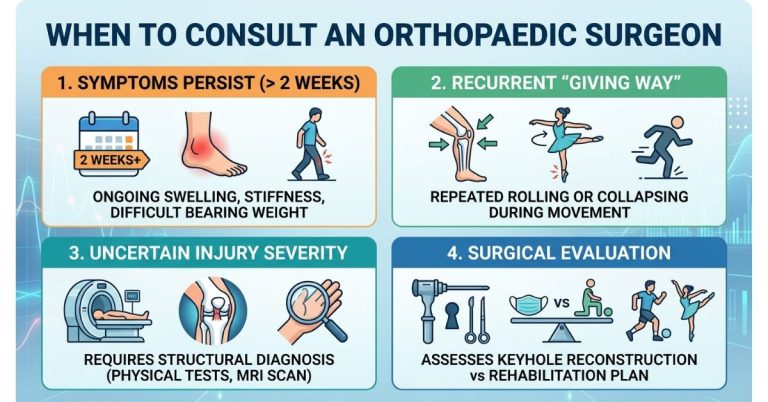
Beyond immediate acute symptoms, you should schedule a consultation with an Orthopaedic Surgeon if:
- Symptoms Persist Beyond Two Weeks: Swelling, stiffness, or difficulty bearing full weight continues despite initial rest and conservative management.
- Recurrent “Giving Way” Episodes: You experience repeated rolling or collapsing of the knee or ankle during routine walking, pivoting, or step-down movements.
- Uncertain Injury Severity: You require an accurate structural diagnosis through physical stress tests and high-definition MRI scans to differentiate a mild strain from a complete rupture.
- Surgical Evaluation: You need an expert assessment to decide whether high-impact sports or dance performance goals necessitate keyhole ligament reconstruction or a structured, conservative rehabilitation pathway.
Why See An Orthopaedic Specialist?
- Comprehensive Joint Preservation: An orthopaedic surgeon evaluates not just the torn ligament, but also co-existing joint injuries—such as meniscus tears or cartilage lesions—preventing long-term joint wear.
- Prevention of Chronic Complications: Timely medical intervention stops repeated joint subluxation, halting the progression toward chronic joint laxity and early secondary osteoarthritis.
- Advanced Minimally Invasive Techniques: Utilizing modern keyhole arthroscopic methods, specialists repair structural damage through tiny incisions, minimizing tissue trauma, reducing postoperative pain, and enabling a faster, safer return to sports and dance.
Looking For A Top Orthopaedic Specialist In Singapore? Consider Dr Kevin Koo (The Bone & Joint Centre)
When seeking comprehensive specialist care for sports injuries, dance trauma, and ligament tears in Singapore, consulting an orthopaedic surgeon with extensive clinical leadership and international fellowship training is paramount.
Dr Kevin Koo, a Senior Consultant Orthopaedic Surgeon and Director at The Bone & Joint Centre, has over 15 years of clinical experience. Dr Koo specialises in Foot and Ankle Surgery, Sports Surgery, Joint Reconstruction, and Minimally Invasive Surgery (Keyhole Surgery) for sports and dance-related conditions affecting the lower and upper limbs.
Comprehensive Treatments Offered By Dr Kevin Koo:
- Arthroscopic Ligament Reconstruction & Repair (Keyhole Surgery): Minimally invasive surgical techniques to repair or reconstruct torn ligaments (such as the ACL in the knee or the ATFL/CFL in the ankle) through tiny incisions. Compared with traditional open surgery, arthroscopic procedures generally result in reduced soft-tissue disruption, less postoperative pain, smaller scars, and a faster recovery trajectory.
- Minimally Invasive Achilles Tendon Repair: Specialised keyhole or percutaneous techniques used to repair acute Achilles tendon tears and severe tendinopathy, minimizing skin incision size, reducing wound healing complications, and allowing early structured rehabilitation.
- Cartilage Repair & Meniscal Surgery: Joint-preserving procedures utilizing advanced arthroscopic techniques to repair torn knee menisci or treat focal articular cartilage defects, preserving natural joint function and preventing long-term degeneration.
- Computer-Guided & Advanced Joint Reconstruction: Utilising modern anatomical planning, precise alignment tools, and modern surgical techniques to address severe joint damage, complex instability, and sports-related joint degeneration to restore stability and mobility.
Academic Qualifications
- Fellow of the Academy of Medicine, Singapore 2015
- Fellow of the Royal College of Surgeons of Edinburgh 2014
- Master of Medicine in Orthopaedic Surgery, National University of Singapore 2013
- Member of the Royal College of Surgeons of Edinburgh 2009
- Bachelor of Medicine, Bachelor of Surgery, National University of Singapore 2003
Articles Reviewed By Dr Kevin Koo
Comprehensive Guide To Sports Knee Injuries Singapore
- April 10, 2026
Achilles Tendon Rupture: The Racket Sport Injury
- April 10, 2026
Comprehensive Guide To Sports Ankle Injuries Singapore
- April 10, 2026
Comment: The row below to be moved to article for healthcare professionals article
Find A Doctor
Verified Healthcare Professionals
We connect you with a network of qualified and experienced doctors who specialise in chronic health conditions, health screening, and longevity.
Trusted Information Source
We pride ourselves on providing accurate, up-to-date, and evidence-based information about each disease, its prevention, and treatment.
Privacy and Security
Your health information and personal data are paramount to us. We will protect your privacy throughout the booking process and beyond.
Convenience at Your Fingertips
Our user-friendly platform allows you to find and book appointments 24/7 from the comfort of your home.
Book An Appointment
Take a proactive step for your health and peace of mind today. If you need to see a Orthopaedic surgeon, our team is here to assist.
Financials
[findDoctor category="financial consultants" countries="Singapore" " limit="15"]
Frequently Asked Questions (FAQs) About Torn Ligament
1. What Is The Difference Between A Ligament Sprain And A Muscle Strain?
A ligament sprain is an injury to the tough, fibrous tissue connecting bone to bone across a joint. A muscle or tendon strain occurs when a muscle or its attaching tendon tissue is overstretched or torn.
2. Can A Completely Torn Ligament Heal On Its Own?
Some ligaments with good blood supply (such as the medial collateral ligament or MCL in the knee) may heal with conservative bracing and rehabilitation. However, complete tears of ligaments located inside joint capsules with limited direct blood supply (such as the Anterior Cruciate Ligament or ACL) typically do not heal spontaneously and may require surgical reconstruction if joint stability is needed.
3. How Soon Can I Return To Exercise After A Ligament Injury?
Return-to-activity timelines vary based on injury severity and treatment approach. Mild sprains may allow a return to light exercise within 2 to 6 weeks, whereas major ligament reconstructions (such as keyhole ACL or ankle lateral ligament repair) generally require 6 to 9 months of progressive rehabilitation before returning to high-impact sports or dance.
4. What Is The Difference Between Arthroscopic Keyhole Surgery And Open Surgery For Torn Ligaments?
Arthroscopic keyhole surgery utilizes a tiny camera and specialized miniature instruments inserted through small incisions around the joint. This technique minimizes disruption to surrounding soft tissues and muscle structures, resulting in smaller scars, lower postoperative pain, and a reduced risk of wound complications compared to traditional open surgery, which requires larger incisions to expose the entire joint.
5. When Should An Active Athlete Or Dancer Consider Surgery Over Rehabilitation?
Surgery is generally recommended when an individual experiences persistent joint instability (“giving way”) that interferes with daily life or sports performance, or when imaging confirms a complete ligament rupture accompanied by repairable meniscal or cartilage damage. High-demand athletes and dancers who require full mechanical joint stability for high-impact pivoting, leaping, or direction changes often opt for surgical reconstruction to protect the joint from long-term secondary damage.
Additional Resources
Foot and Ankle Injuries among Dancers in Singapore | The Bone & Joint Centre
Anterior Cruciate Ligament (ACL) Tear & Injury in Singapore | The Bone & Joint Centre
- Ligament Surgery | Science Direct