


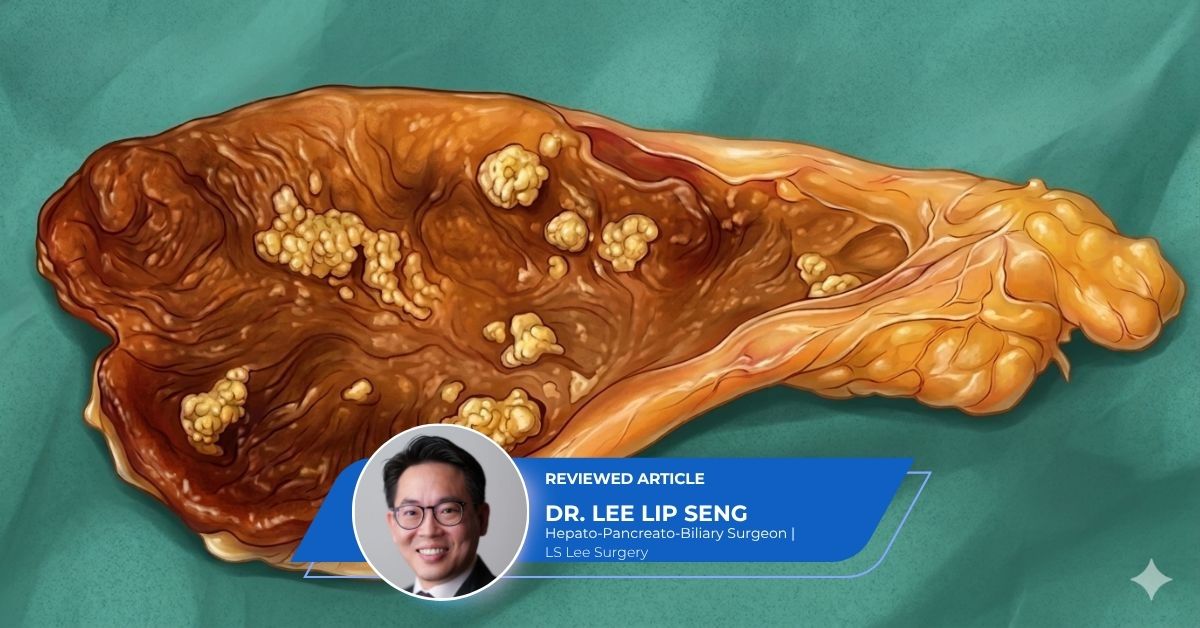
Gallbladder polyps are small, abnormal growths of tissue that protrude from the inner lining of the gallbladder wall. Unlike gallstones, which are loose deposits of cholesterol or bilirubin, polyps are stationary and attached to the organ. While many of these growths are discovered incidentally during routine health screenings or ultrasounds in Singapore, they require a professional evaluation to determine if they pose a long-term risk of malignancy.
Get An Appointment With A Gallbladder Surgeon
Contact UsBack To: Gallbladder Health Main Page
What Are The Different Types Of Gallbladder Polyps?
Not all polyps are the same. In fact, the majority of these growths are not true tumours. Medical professionals generally categorise them into three main types:
- Pseudopolyps (Cholesterol Polyps): These are the most common type, accounting for approximately 60 – 90% of all cases. They are caused by the accumulation of cholesterol crystals on the gallbladder wall. These are benign and do not carry a risk of becoming cancerous.
- Inflammatory Polyps: These are typically associated with chronic inflammation of the gallbladder (cholecystitis) and are also non-cancerous.
- True Polyps (Adenomas): These are actual neoplastic growths. While less common, they have the potential to undergo malignant transformation over time. These are the primary focus for Hepatopancreatobiliary (HPB) surgeons when deciding on a treatment plan.
The Features Of High-Risk Gallbladder Polyps
Because imaging alone cannot always distinguish between a benign cholesterol polyp and a potentially precancerous adenoma, surgeons rely on specific clinical criteria to assess the risk. The size of the growth is the most significant indicator in the management of gallbladder polyps.
What Are The Size Thresholds Of Gallbladder Polyps For Surgery?
- Polyps Smaller Than 6mm: These are generally considered low-risk. In most cases, a “watch and wait” approach is adopted, involving follow-up ultrasounds every six to twelve months to ensure no rapid growth occurs.
- Polyps Between 6mm And 10mm: This range is considered a grey area. If the patient has additional risk factors—such as being over the age of 50 or having primary sclerosing cholangitis—surgery may be discussed. Otherwise, frequent monitoring is strictly required.
- Polyps Larger Than 10mm: There is a documented correlation between polyps exceeding 10mm and an increased risk of gallbladder cancer. Most specialists in Singapore recommend a cholecystectomy for polyps of this size, even if the patient is not experiencing symptoms.
When Is Surgery Necessary?
Beyond the size of the growth, several other factors may lead a surgeon to recommend the removal of the gallbladder:
- Symptomatic Polyps: If a patient experiences “biliary colic” (pain in the upper right abdomen), nausea, or bloating that can be attributed to the polyp, surgery is usually recommended regardless of the size.
- Rapid Growth: If follow-up scans show that a polyp is increasing in size significantly over a short period, it is treated as a suspicious lesion.
- Presence Of Gallstones: If gallbladder polyps coexist with gallstones, the risk of developing gallbladder cancer is statistically higher, and surgical intervention is often advised.
- Sessile Shape: Polyps that are broad-based (sessile) rather than attached by a thin stalk (pedunculated) are often viewed with higher suspicion by surgeons.
Surgical Options: Laparoscopic And Robotic Approaches
The standard treatment for concerning gallbladder polyps is a laparoscopic cholecystectomy. This is a minimally invasive “keyhole” procedure performed under general anaesthesia. The surgeon makes several small incisions in the abdomen to remove the gallbladder in its entirety.
For more complex cases, or when there is a higher suspicion of malignancy, robotic-assisted surgery may be utilised. The robotic platform provides the surgeon with enhanced 3D visualisation and greater precision when dissecting near the liver and major bile ducts. This technology is particularly useful for ensuring clear margins and a safe recovery for the patient.
Post-Operative Outlook
The outcome for patients who undergo surgery for gallbladder polyps is excellent. Since the gallbladder is not an essential organ for survival, most patients return to a normal diet and lifestyle shortly after their recovery. Regular health screenings remain the most effective tool for the early detection and management of these growths.
Get An Appointment With A Gallbladder Surgeon
If you are concerned about gallbladder health or surgeon, make an appointment with a gallbladder specialist for an early consultation and any necessary intervention.
Contact UsBack To: Gallbladder Health Main Page

This medical content has been reviewed by Dr Lee Lip Seng, a highly regarded surgeon who specialises in advanced minimally invasive robotic and laparoscopic techniques for the treatment of complex liver, pancreatic, and gallbladder conditions. Patients frequently seek his care due to his exceptional clinical expertise and a steadfast commitment to delivering compassionate, patient-centred results.
All content on this site is informative only and is not intended to be a substitute for professional medical advice, diagnosis, or treatment, and should never be relied upon for specific medical advice. If you are experiencing a medical emergency, call 995 immediately or go to the nearest Accident & Emergency department.
health365.sg is a member of Group 365Asia.