

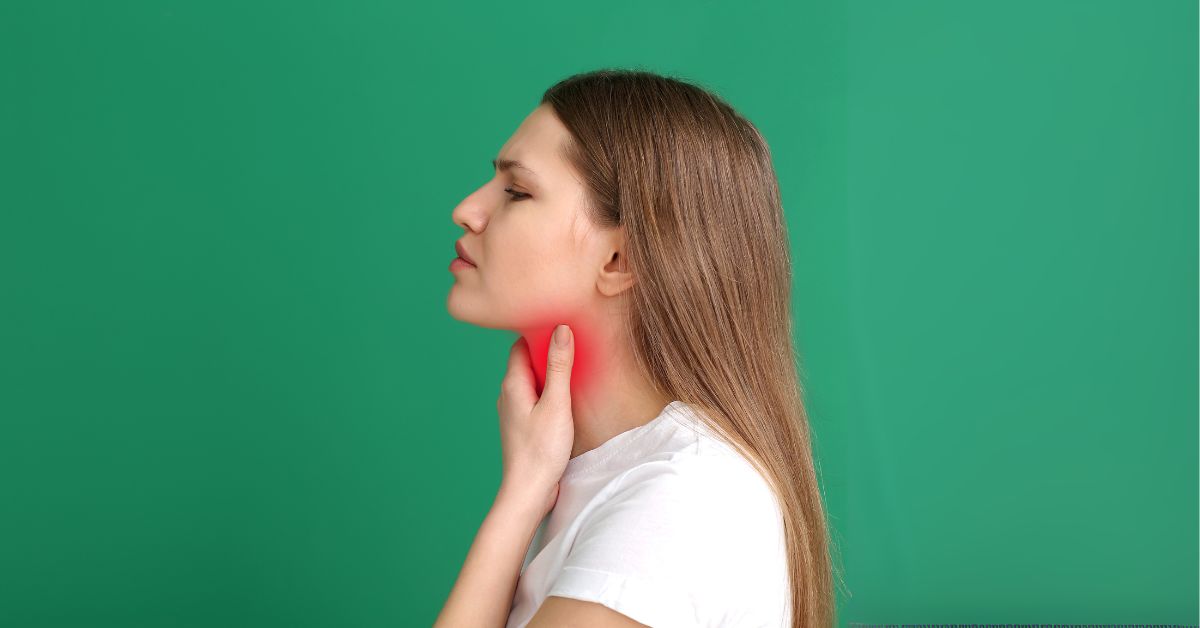
The thyroid gland is a gland located at the base of the neck and shaped like a butterfly. The main functions of thyroid gland includes production of hormones, regulation of metabolism, and regulating our body’s growth and brain development. Thyroid nodules are lumps or abnormal tissue growths within the thyroid gland. These are common, with studies showing that up to 65% of adults may have small nodules when examined by imaging such as ultrasound or autopsy data. Most are benign; only 5–10 % pose a risk of malignancy.
Contact UsLearn More: Thyroid Health Main Page
What Are The Symptoms Of Thyroid Nodules?
Many people do not notice thyroid nodules because they cause no symptoms. However, if a nodule grows large, it can lead to:
- A visible lump or swelling in the front of the neck
- Difficulty swallowing or breathing
- Hoarseness or changes in the voice, especially if nerve involvement occurs.
What Causes Thyroid Nodules And What Are The Risk Factors?
Thyroid nodules can arise from a variety of causes:
- Benign cysts or colloid-filled nodules.
- Hyperplastic growth or adenomas within thyroid tissue.
- Radiation exposure (especially in childhood).
Key risk predictors include older age and female gender. One 2025 global study found 27.4 % prevalence in its cohort—60 % of those with nodules were female, average age ~48 years, versus 43.5 years among those without nodules. Other associated factors: metabolic syndrome, diabetes, hypertension, history of thyroid disease, higher TSH levels, family history, plus overweight/obesity.
Thyroid Nodule Prevalence And Statistics in Singapore
Thyroid nodules are also common in Singapore. It is estimated that around 8 % of women and 2 % of men have nodules large enough to be felt on examination—this translates to roughly 545,000 citizens at any given time.
Thyroid cancer rates in Singapore have also risen. According to the Singapore Cancer Registry, Thyroid cancer is the seventh most common cancer in women (2019-2023). In addition, among women under 50, it is among the top three most common cancers.
How Are Thyroid Nodules Diagnosed?
Diagnosis usually begins with clinical evaluation and thyroid function tests. Key investigations include:
- Ultrasound, to assess size, appearance, and suspicious features such as microcalcifications or hypoechogenicity.
- Fine-needle aspiration cytology (FNAC), which uses a fine needle to sample cells. The Bethesda system categorises cytology into six groups, guiding management—from benign (0–3 % malignancy risk) to malignant (97–99 % risk).
What Are The Treatment And Management Options
Most thyroid nodules are benign and may simply be monitored. If a nodule is benign but causes symptoms (e.g. compression), or is cosmetically concerning, or is found to be malignant, options include:
- Watchful waiting, with regular ultrasound monitoring for benign nodules.
- Radiofrequency ablation (RFA), a minimally invasive procedure to shrink nodules while preserving thyroid function.
- Laser thermal ablation, another non-surgical technique effective for benign nodules causing local symptoms.
- Surgery (partial or total thyroidectomy), especially if malignancy is confirmed or suspected, or if nodules are very large or compressing vital structures.
Learn More: Options For Benign Thyroid Nodule Treatment
Explore Health365.Asia: Thyroid Disorder Treatments
Our Preferred Doctors (General Surgeon) For Thyroid Nodule Treatment
- Dr Tan Wee Boon is a Senior Consultant General Surgeon with highly specialised training in endocrine surgery. He has expertise in both traditional and advanced robotic thyroidectomy. His approach to thyroid health offers patients a comprehensive range of options that include non-surgical treatments as well as minimally invasive surgical techniques.

Dr Tan Wee Boon

[SG] Featured Doctor- Dr Kevin Koo
Watch Interview Video: Dr Tan Wee Boon explains thyroid conditions and their symptoms.
Get An Appointment With A Thyroid Specialist
Thyroid nodules are common, especially among women and older adults. While most nodules are harmless, a small proportion may be cancerous. In Singapore, rising incidence reflects improved detection and awareness. Diagnosis centres on ultrasound and FNAC (with Bethesda categorisation), and treatment is guided by nodule behaviour—ranging from observation, to percutaneous ablation, to surgery for malignant or symptomatic cases. If you suspect a nodule, consult a medical professional promptly for accurate evaluation and peace of mind.
Contact UsFAQs On Thyroid Nodules
No. The vast majority of thyroid nodules are benign (non-cancerous). Only about 5–10 % of nodules carry a risk of malignancy. Ultrasound and fine-needle aspiration cytology (FNAC) are the standard tools used to determine whether a nodule is suspicious or requires further treatment.
Some small nodules, especially cystic ones filled with fluid, may shrink or even disappear naturally. However, most nodules remain stable over time. Regular monitoring with ultrasound is recommended to track changes in size or appearance.
In Singapore, most benign nodules are simply observed with regular check-ups and imaging. For nodules that cause symptoms or cosmetic concerns, minimally invasive procedures such as radiofrequency ablation (RFA) are increasingly popular. Surgery is usually reserved for malignant or very large nodules.
Watch Interview Video: Dr Tan Wee Boon explains thyroid conditions and their symptoms.
Learn More: Options For Benign Thyroid Nodule Treatment
Learn More: Thyroid Disorders Big Story
Back To: Thyroid Health Main Page
All content on this site is informative only and is not intended to be a substitute for professional medical advice, diagnosis, or treatment, and should never be relied upon for specific medical advice. If you are experiencing a medical emergency, call 995 immediately or go to the nearest Accident & Emergency department.
health365.sg is a member of Group 365Asia.