

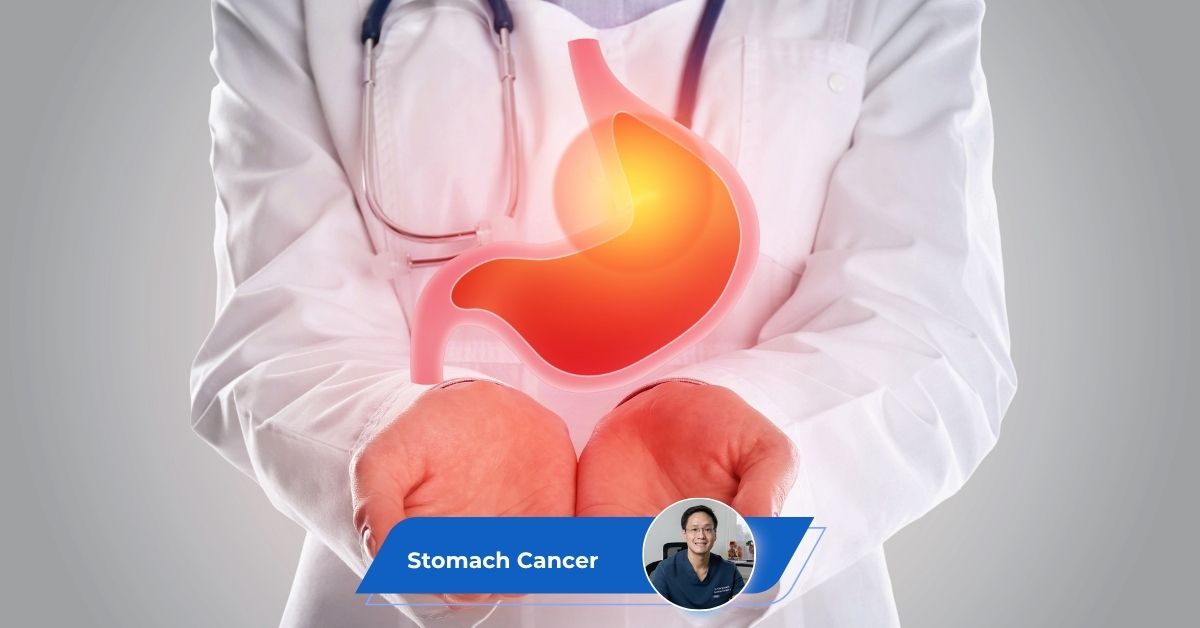
What Is Stomach Cancer?
Stomach cancer, also known as gastric cancer, originates when malignant cells form within the inner mucosal lining of the stomach wall and gradually grow into deeper layers or surrounding structures.
The stomach is a muscular sac located in the upper abdomen that receives food from the oesophagus, secretes digestive juices, and begins breaking down nutrients. Most stomach cancers are adenocarcinomas, which arise from the glandular cells lining the stomach interior. Less common sub-types include Gastrointestinal Stromal Tumours (GISTs), gastric lymphomas, and neuroendocrine (carcinoid) tumours.
When detected at an early stage, localised gastric lesions may be managed or excised via advanced endoscopic procedures or keyhole techniques. However, if left untreated, cancer cells can invade deeper muscular layers, spread to regional lymph nodes, or metastasise to distant organs such as the liver or peritoneum.
Back To: Stomach Conditions Main Page
Stomach Cancer Prevalence In Singapore
Stomach cancer is a significant health concern in Singapore, particularly among older adults and men.
According to data from the Singapore Cancer Registry 2023, stomach cancer is among the top ten most common cancers affecting men in Singapore. Due to the subtle nature of early symptoms, a considerable proportion of stomach cancer cases in Singapore are diagnosed at more advanced stages, underscoring the critical importance of timely diagnostic evaluation and targeted screening for individuals with persistent digestive issues or high-risk profiles. For both men and women, stomach cancer is within the top 10 types of cancer-related deaths in Singapore.
What Are The Causes Of Stomach Cancer & Risk Factors?
Stomach cancer develops when genetic alterations occur in gastric cells, leading to uncontrolled proliferation. While the exact trigger can vary, several established risk factors increase the likelihood of developing gastric cancer:
- Helicobacter Pylori (H. pylori) Infection: Chronic bacterial infection with H. pylori causes long-term inflammation (chronic gastritis) and is one of the strongest recognised risk factors for gastric adenocarcinoma.
- Dietary Factors: High intake of salted, cured, pickled, or smoked foods, as well as diets low in fresh fruits and vegetables, increase risk.
- Tobacco Smoking: Smoking damages the gastric mucosa and increases the risk of upper stomach (cardia) cancers.
- Family History & Genetics: A family history of stomach cancer or hereditary genetic syndromes (such as Hereditary Diffuse Gastric Cancer or Lynch syndrome) raises personal risk.
- Age & Gender: Incidence increases significantly in individuals over the age of 50, with a higher occurrence observed in men.
- Pre-existing Gastric Conditions: Chronic atrophic gastritis, pernicious anaemia, gastric polyps, or previous partial stomach surgery increase long-term risk.
What Are The Symptoms Of Stomach Cancer?
In its earliest stages, stomach cancer often causes no symptoms, or symptoms that closely mimic mild indigestion or common gastric discomfort. As the disease progresses, more distinct symptoms may appear:
- Early / Mild Symptoms:
- Persistent indigestion, heart burn, or abdominal discomfort.
- Feeling bloated or full quickly after eating small amounts of food (early satiety).
- Mild nausea or loss of appetite.
- Advanced Symptoms:
- Unexplained, unintended weight loss.
- Persistent abdominal pain or discomfort, particularly in the upper abdomen.
- Difficulty swallowing (dysphagia) or feeling food getting stuck.
- Vomiting, occasionally containing blood or material resembling coffee grounds.
- Black, tarry stools (melaena) caused by internal bleeding in the stomach.
- Fatigue and weakness secondary to chronic anaemia (low blood count).
How To Prevent This Condition?
While not all cases can be prevented, you can reduce your overall risk of stomach cancer through proactive health and lifestyle habits:
- Screen For And Treat H. Pylori: If you suffer from chronic gastric symptoms, consult a doctor to test for and eradicate H. pylori infection.
- Adopt A Balanced Diet: Consume abundant fresh fruits, vegetables, and whole grains rich in antioxidants, while limiting consumption of preserved, deeply salted, processed, or charcoal-grilled foods.
- Quit Smoking: Eliminating tobacco use significantly lowers the risk of gastric and other digestive tract cancers.
- Maintain A Healthy Weight: Keep a balanced weight through regular physical activity and proper nutrition.
- Seek Early Medical Evaluation: Promptly investigate persistent digestive issues (such as indigestion or upper abdominal pain lasting more than two weeks) rather than relying solely on over-the-counter anti-acids.
What Are The Costs Of Screening & Testing For Stomach Cancer?
Diagnosing and evaluating stomach cancer involves a combination of clinical assessments, endoscopic visual inspections, biopsies, and imaging modalities.
| Diagnostic Test / Procedure | Function & Description | Estimated Cost (Private Sector)* |
| Diagnostic Gastroscopy (Upper GI Endoscopy) | Gold standard procedure using a thin, flexible scope with a camera to visually examine the stomach lining and take tissue biopsies. | S$650 – S$1,100 (MOH Surgeon Fee Benchmark SF701I) |
| Endoscopic Submucosal Dissection (ESD) | Advanced endoscopic resection technique to remove early-stage mucosal stomach lesions or early cancers without open/keyhole surgery. | S$3,400 – S$5,200 (MOH Surgeon Fee Benchmark SF05E) |
| GASTROClear Blood Test | Non-invasive liquid biopsy blood test that screens for stomach cancer risk signals by detecting specific microRNA biomarkers. | S$200 – S$500 |
| CT Scan (Abdomen & Pelvis) | Cross-sectional imaging to assess tumour size, depth of wall invasion, and potential spread to nearby lymph nodes or distant organs. | S$1,000 – S$2,000 |
| PET-CT Scan | Advanced functional imaging to detect distant metastases or evaluate metabolic disease activity before or after treatment. | S$2,500 – S$4,000+ |
*Note: The above surgical fees reflect official Ministry of Health (MOH) Table of Surgical Procedures (TOSP) fee benchmarks or prevailing private sector cost estimates in Singapore (2026). Costs exclude facility fees, anaesthetist fees, hospitalisation charges, and GST. Please consult your chosen clinic or medical centre directly for precise quotations.
Which Doctor For Treatment Of Stomach Cancer?
Comprehensive management of stomach cancer requires a multidisciplinary medical team tailored to the stage and complexity of the condition:
1. General Surgeon / Upper Gastrointestinal Surgeon
An Upper Gastrointestinal (Upper GI) Surgeon is a specialized general surgeon with focused expertise in surgical conditions affecting the oesophagus, stomach, and small bowel. They perform diagnostic endoscopies, advanced resections (such as subtotal or total gastrectomy), and radical lymph node dissections using open, laparoscopic (keyhole), or robotic-assisted techniques.
2. Gastroenterologist
A Gastroenterologist specializes in non-surgical digestive system disorders. They perform diagnostic gastroscopies, manage underlying gastric inflammation or H. pylori infections, and perform therapeutic endoscopies.
3. Medical Oncologist
A Medical Oncologist designs and administers systemic treatment regimens, including neoadjuvant (pre-operative) chemotherapy, adjuvant (post-operative) chemotherapy, targeted therapies, and immunotherapy.
4. Radiation Oncologist
In specific clinical scenarios, a Radiation Oncologist administers targeted radiation therapy, often combined with chemotherapy (chemoradiotherapy), to control local tumour growth or relieve symptoms.
Preferred Doctors For Stomach Cancer Treatment In Singapore
If you are seeking specialist care or screening for stomach cancer, you can consider our Preferred Doctor partners:
Dr Kim Guowei – General Surgeon (Stomach) in Singapore
Dr Kim Guowei is a Senior Consultant General Surgeon practising at Crest Surgical Practice (with clinics at Mount Elizabeth Medical Centre, Gleneagles Medical Centre, and Parkway East Medical Centre). He specialises in Upper Gastrointestinal, Bariatric, and Robotic Surgery.
Articles reviewed by Dr Kim Guowei:
- How Robotics And AI Are Transforming Stomach Surgery In Singapore
- Stomach Cancer Surgery – Advances In Robotic Surgery And Communications Networks Opens Future Possibilities
- Stomach Cancer Treatment – A Novel Treatment That Can Offer Better Outcomes
- Laparoscopic And Robotic Surgery For GERD Treatment In Singapore


Dr Kim Guowei
[SG] Featured Doctor- Dr Wong Weng Kin
Dr Juanda Leo Hartono – Gastroenterologist in Singapore
Dr Juanda Leo Hartono is a Senior Consultant Gastroenterologist and Hepatologist at Mount Elizabeth Hospital, Singapore. He is a UK fellowship-trained (Royal London Hospital), specialising in Inflammatory Bowel Disease, advanced endoscopy, colorectal cancer, and comprehensive liver care.
Articles reviewed by Dr Juanda Leo Hartono:
- Crohn’s Disease Is No Longer Rare in Singapore. Here Is What You Need to Know.
- What Is Inflammatory Bowel Disease?
- Inflammatory Bowel Disease Symptoms And Screening
Dr John Hsiang – Gastroenterologist in Singapore
Dr John Hsiang is a Fellowship-trained gastroenterologist and hepatologist with a research doctorate in liver disease. He sits on the Ministry of Health’s National Hepatitis C Programme Steering Committee, and his audited colonoscopy detection rates are above international minimum standards.
Articles reviewed by Dr John Hsiang:
- Is Your Persistent Bloating Or Acid Reflux Actually H. Pylori?
- How H. Pylori Leads To Gastric Intestinal Metaplasia (GIM) And Stomach Cancer Risk
- Why H. Pylori Treatment Fails: First-Line Vs Second-Line Antibiotics In Singapore

[SG] Featured Doctor- Dr Wong Weng Kin
Resources To Help You Find A Doctor
- Find A Doctor for Surgeons In Singapore For Robotic Stomach Surgery 2026
- 365Asia List Of Best Stomach Surgeons In Singapore
- 365Asia List Of Best Gastroenterologists In Singapore
Which Hospitals And Medical Centres Are There For Screening & Treatment?
Patients in Singapore can access stomach cancer screening, diagnostic workups, and multidisciplinary treatment across both public tertiary hospitals and private medical facilities:
- Public Sector Tertiary Hospitals: Major medical centers—such as National University Hospital (NUH), Singapore General Hospital (SGH), Tan Tock Seng Hospital (TTSH), and the National Cancer Centre Singapore (NCCS)—provide comprehensive public stomach cancer screening, subspecialty surgical oncology, systemic chemotherapy, and radiation services.
- Private Hospitals: For private surgical and oncological care, patients can consult upper GI specialists within established hospital hubs, including Mount Elizabeth Hospital (Orchard and Novena), Gleneagles Hospital, Parkway East Hospital, Mount Alvernia Hospital, and Farrer Park Hospital.
- Ambulatory & Screening Centres: Day-surgery centres and ambulatory endoscopy clinics across Singapore offer dedicated diagnostic gastroscopy and cancer screening services in convenient outpatient settings.
Explore: Find A Hospital resources.
What Is The Cost Of Stomach Cancer Treatment In Singapore?
The total cost of treating stomach cancer depends on disease stage, surgical technique (open, laparoscopic, or robotic-assisted), length of hospital stay, and requirement for adjunct systemic therapies.
Below are the official Ministry of Health (MOH) Table of Surgical Procedures (TOSP) benchmark surgeon fees for primary stomach cancer procedures in the private sector (2026):
| Treatment / Procedure | Clinical Description & Sub-Conditions Benefiting | Estimated Surgeon Fee Benchmark (Private Sector)* |
| Partial / Subtotal Gastrectomy with Radical Lymphadenectomy (MOH TOSP Code: SF709S) | Removal of the lower or affected portion of the stomach along with regional lymph node clearance. Recommended for early-to-intermediate stage cancers in the lower stomach. Benefits significantly from Robotic Surgery. | S$13,500 – S$20,400 |
| Total Gastrectomy with Radical Lymphadenectomy (MOH TOSP Code: SF710S) | Surgical removal of the entire stomach and radical lymph node dissection, followed by reconstruction connecting the oesophagus directly to the small intestine. Required for mid-to-upper stomach cancers or diffuse-type tumors. Benefits significantly from Robotic Surgery. | S$14,600 – S$23,300 |
| Endoscopic Submucosal Dissection (ESD) (MOH TOSP Code: SF705E) | Organ-sparing endoscopic excision of early, superficial stomach lesions confined to the mucosal layer without abdominal incisions. | S$3,400 – S$5,200 |
| Systemic Chemotherapy / Targeted Therapy | Medical treatment using systemic anti-cancer medications administered in cycles to shrink tumours before surgery or eliminate residual cells post-surgery. | S$3,000 – S$10,000+ per cycle (varies by drug regimen) |
*Note: Figures reflect MOH benchmark surgeon fees for single surgical TOSP codes in Singapore (2026). Total hospital bill sizes will include additional charges such as anaesthetist fees, operating theatre facility fees, ward charges, medical consumables, ICU stays, and GST. Consult your doctor or hospital admissions desk for complete bill estimates.
What Conditions Benefit From Robotic Stomach Surgery?
Surgical removal of stomach cancer involves not only resecting the stomach tissue but also performing meticulous D2 radical lymph node dissection around major vascular structures in the abdomen. Robotic-assisted surgical systems (such as the da Vinci Surgical System) offer distinct technical advantages for complex upper GI sub-conditions:
- Mid-to-Upper Gastric Adenocarcinomas Requiring Total Gastrectomy: Reconstructing the digestive tract (oesophagojejunostomy) deep in the upper abdomen requires high technical precision. Robotic wristed instruments allow stable, multi-angle suturing in tight anatomical spaces.
- Advanced Cancers Requiring Extensive Radical Lymphadenectomy: Filtering out natural hand tremors and providing 10x magnified 3D high-definition visualization enables precise dissection around major blood vessels (such as the celiac axis and splenic artery), minimizing blood loss and reducing surgical complications.
- Overweight or Bariatric Patients with Gastric Tumours: Thick abdominal fat tissues can make traditional keyhole instruments rigid and cumbersome. Robotic articulation provides the dexterity needed to navigate challenging abdominal anatomy safely.
What Are The Insurance And Financing Considerations For This Condition?
Health & Hospitalisation (H&S) Insurance
- MediShield Life: Singapore’s mandatory basic health insurance covers all Singaporeans and Permanent Residents for surgical procedures and hospitalisation, subject to claim limits under the Table of Surgical Procedures (TOSP) and standard deductibles/co-insurance.
- Integrated Shield Plans (IPs): Private insurance IPs provide expanded coverage for Class A/B1 wards in public hospitals or private hospital stays, substantially reducing out-of-pocket expenses for major cancer operations.
- Critical Illness (CI) Insurance: CI insurance policies provide a lump-sum cash payout upon a confirmed diagnosis of major cancer, helping cover living expenses, rehabilitation, or lost income during recovery.
Find A Financial Adviser
If you are looking for a financial adviser to help navigate the complexities of insurance claims and financial planner for medical contingencies, you can consider our Preferred Financial Adviser partners:


Find A Panel Doctor
If you wish to consult a specialist on your insurance provider’s approved panel, check panel listings provided by your insurer.
Read: Health Insurance & Panel Doctor Networks
MediSave Usage & Government Subsidies
- Government Subsidies: Eligible Singaporeans receiving care in subsidised public hospital wards receive direct government subsidies ranging from 50% to 80% for inpatient stays, diagnostic scans, and surgical procedures.
- Inpatient & Surgical MediSave: MediSave can be withdrawn for inpatient hospital bills and surgical procedures up to designated withdrawal limits based on the TOSP complexity classification.
- Outpatient MediSave & Cancer Scan Limits: Patients can withdraw from MediSave for outpatient diagnostic imaging scans (such as CT or MRI scans) up to annual limits, as well as approved outpatient cancer treatments under the MediSave Cancer Care scheme.
Financial Assistance (MediFund & Support Schemes)
- MediFund: A safety net fund for needy Singaporean patients who face financial difficulty paying remaining medical bills after subsidies, MediShield Life, and MediSave drawdowns. Applications can be submitted through hospital Medical Social Services.
- Cancer Support Funds & Trust Funds: Voluntary welfare organizations and public healthcare cluster trust funds provide financial support for lower-income cancer patients requiring specialized medications or treatment support.
FAQs
Stomach cancer is frequently termed a “silent killer” because its early stages rarely produce obvious or distinct symptoms. Early signs—such as mild indigestion, bloating, or early satiety—are easily mistaken for routine gastric discomfort or acid reflux. Consequently, many patients do not seek medical evaluation until the tumour has grown larger or spread, making early diagnostic gastroscopy crucial for high-risk individuals.
The definitive method for diagnosing stomach cancer is an upper gastrointestinal endoscopy (gastroscopy) accompanied by tissue biopsy. During a gastroscopy, a specialist inserts a thin, flexible tube with a camera into the stomach to examine the inner lining directly. Any suspicious lesions or ulcers are biopsied and examined by a pathologist under a microscope to confirm cancer cells.
Both laparoscopic and robotic surgeries are minimally invasive keyhole techniques that utilise small abdominal incisions rather than large open cuts. However, robotic surgery provides 3D high-definition visualisation, 360-degree wristed instrument movement, and tremor filtration. This enhanced precision is especially beneficial when performing intricate lymph node dissections around major blood vessels and complex tissue suturing during total or partial gastrectomy.
Yes. If stomach cancer is detected at a very early, superficial stage (confined entirely to the innermost mucosal layer without lymph node involvement), it can often be excised using Endoscopic Submucosal Dissection (ESD). ESD is an organ-preserving procedure performed through a gastroscope without external abdominal incisions.
Diagnostic gastroscopy performed for medical investigation of symptoms (such as stomach pain or bleeding) is eligible for MediShield Life, Integrated Shield Plan, and MediSave claims under inpatient or day-surgery guidelines. However, routine screening gastroscopy in asymptomatic individuals is generally not claimable under MediSave or MediShield Life and must be self-funded or covered by personal executive health screening benefits.
Get An Appointment With A Stomach Surgeon
If you wish to schedule a consultation or diagnostic gastroscopy with a specialist, click the link below.
Additional Resources
- Understanding Gastric Cancer in Singapore: Symptoms, Causes, Diagnosis, and Treatment Options | Crest Surgical Practice
- Stomach Cancer Screening – In Singapore, Endoscopy Is The Gold Standard Screening Tool | Juanda Leo Gastroenterology & Liver Clinic
- Stomach Cancer | Richmond Gastroenterology Centre
- Transforming stomach cancer care: 6 recent innovations | Mayo Clinic
- Radiation Therapy (Radiotherapy) in Singapore | National Cancer Centre of Singapore
All content on this site is informative only and is not intended to be a substitute for professional medical advice, diagnosis, or treatment, and should never be relied upon for specific medical advice. If you are experiencing a medical emergency, call 995 immediately or go to the nearest Accident & Emergency department.
health365.sg is a member of 365Asia.