

Inside IBD -The Big Story

Inside IBD - What Happens Inside Matters To Your Health
Inflammatory Bowel Disease (IBD) is a chronic condition that many Singaporeans are still unfamiliar with. In this Big Story, learn what IBD is and its symptoms, causes, treatments, and costs.
Two Main Types Of IBD
There are two main types of IBD:
- Crohn’s Disease – Can affect any part of the digestive tract from the mouth to the anus.
- Ulcerative Colitis – Affects only the large intestine (colon) and rectum.
What Are The Symptoms of IBD And How Do You Screen For It?
Click to find out more about IBD symptoms and screening.
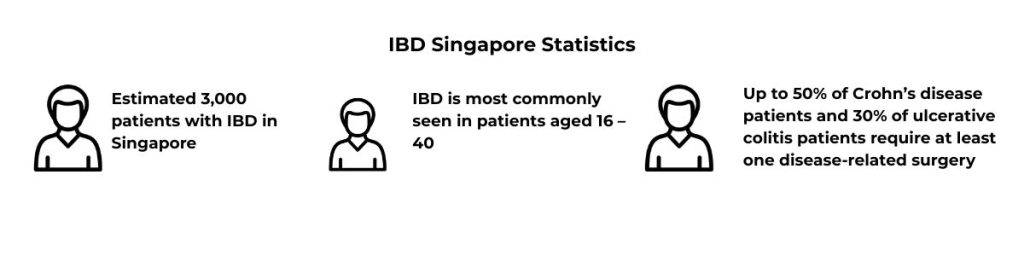
Singapore Statistics For IBD
IBD was once considered rare in Asia, including Singapore. In recent years however, Singapore has seen a steady rise in IBD cases. There are an estimated 3,000 patients with this condition in Singapore today, most commonly seen in teenagers and young adults aged 16 – 40 (Source: SGH).
As much as 50% of Crohn’s disease patients and 30% of ulcerative colitis patients require at least one disease-related surgery in their lifetime.
Early recognition and diagnosis are essential to prevent long-term complications such as bowel obstruction or malnutrition.
Who Is At Risk For IBD?
A combination of genetic, immune, and environmental factors and contribute to increased changes of developing IBD:
1. Genetic Factors
People with a family history of IBD. Certain genes may make people more susceptible to abnormal immune responses in the intestines.
2. Environmental Triggers
Diet, pollution, and the use of antibiotics may alter gut bacteria, triggering inflammation in susceptible individuals. Modern urban living — including processed food intake and low-fibre diets — may increase risk.
3. Lifestyle & Other Risk Factors
- Smoking: Increases risk of Crohn’s disease and worsens symptoms.
- Stress: Can aggravate flare-ups, though not a direct cause.
4. Age
Most people are diagnosed between 16 and 40 years old.
5. Ethnicity
IBD is more common among people of European and East Asian descent, though rising across all groups.
Learn More About IBD
How To Find The Best Gastroenterologist In Singapore
When it comes to your gut health, you naturally would like to find the best gastroenterologist in Singapore. How would you identify such a doctor? Find out from our Guide To Finding The Best Gastroenterologist In Singapore.
Comment: The row below to be moved to article for healthcare professionals article
Find A Doctor
Verified Healthcare Professionals
We connect you with a network of qualified and experienced doctors who specialise in chronic health conditions, health screening, and longevity.
Trusted Information Source
We pride ourselves on providing accurate, up-to-date, and evidence-based information about each disease, its prevention, and treatment.
Privacy and Security
Your health information and personal data are paramount to us. We will protect your privacy throughout the booking process and beyond.
Convenience at Your Fingertips
Our user-friendly platform allows you to find and book appointments 24/7 from the comfort of your home.
Our Preferred Doctors You Can Consider For IBD Diagnosis And Treatment:

Powered by Find by 365Asia



[SG] Featured Doctor- Dr Kevin Koo
Orthopaedic Surgeon In Singapore
Untreated Inflammatory Bowel Disease can cause lasting damage. Watch for these symptoms : persistent abdominal pain, diarrhea, bloody stool, weight loss, and anemia.
Dr Juanda Leo Hartono
Book An Appointment
Take a proactive step for your health and peace of mind today. If you need to see a doctor about gut health, your health risks, or IBD treatments, our team is here to assist.
Financials
[findDoctor category="financial consultants" countries="Singapore" " limit="15"]
Related Content



FAQs - Test Your Knowledge About Inflammatory Bowel Disease
IBD refers to a group of chronic conditions that cause inflammation of the digestive tract. The two main types are Ulcerative Colitis, which affects the colon and rectum, and Crohn’s Disease, which can affect any part of the digestive tract. Both conditions require ongoing management to control inflammation and symptoms.
Although their symptoms can seem similar, IBD (Inflammatory Bowel Disease) and IBS (Irritable Bowel Syndrome) are very different. IBD involves chronic inflammation and can lead to tissue damage, whereas IBS is a functional bowel disorder without inflammation or structural changes.
Currently, there is no cure for IBD, but modern treatments can effectively control inflammation, reduce flare-ups, and help patients achieve long-term remission. Some severe cases may require surgery, but most people live full, active lives with proper management.
Treatment options in Singapore include:
- Anti-inflammatory and immune-modulating medications
- Biologic therapies that target specific inflammation pathways
- Dietary and lifestyle adjustments to reduce triggers
- Surgery, when necessary, for complications or severe disease
With the right treatment plan and support, most people with IBD lead healthy lives. It’s important to:
- Take medications as prescribed
- Maintain a balanced diet and stay hydrated
- Manage stress through relaxation or exercise
- Attend regular check-ups with your specialist
Additional Resources
- Is It Just a Stomach Bug, or Could It Be IBD (Inflammatory Bowel Disease)? | Juanda Leo Gastroenterology Liver Clinic
- IBD vs IBS: Critical Differences You Should Know | Juanda Leo Gastroenterology Liver Clinic
- The Role of Colonoscopy in Inflammatory Bowel Disease | National Institutes Of Health
- Ulcerative Colitis Diagnosis | NHS
- Can Crohn’s disease be fatal? | Medical News Today
- Inside Johnson & Johnson’s decades-long quest to develop effective treatments for IBD | J&J
.