

Is It Aging Or Andropause? Why Men Have Low Libido – The Big Story

Is It Aging Or Andropause? Why Men Have Low Libido
Many Singaporean men in their 40s and 50s notice a gradual, frustrating shift in their daily energy, motivation, and sex drive. When intimacy slows down or energy wanes, the most common response is to write it off as an inevitable part of getting older, excessive work stress, or just a hectic lifestyle.
However, a persistent drop in sex drive is often not just standard aging. In many cases, it points to Andropause—often referred to as male menopause—a medical condition driven by clinically low testosterone levels.
Andropause In Singapore - Statistics And Associations
Data from local clinical studies highlights that hormonal decline is a common medical reality for middle-aged Singaporeans:
- 1 In 4 Men Affected: The Society for Men’s Health (Singapore) reports that about 26% of Singaporean men aged 45 and above suffer from some degree of testosterone deficiency.
- Accelerated Decline: While testosterone naturally decreases by about 1% every year after age 30 to 40, modern urban lifestyle factors—such as high work stress, chronic sleep deprivation, and sedentary desk jobs—can accelerate this drop.
- Connected To Metabolic Well-Being: Andropause frequently goes hand-in-hand with metabolic disorders and its associated conditions, including high blood sugar, elevated cholesterol levels, and high blood pressure.
- Sexual Performance Impact: Erectile dysfunction affects up to 70% of men diagnosed with metabolic condition. Approximately 30% of these men have underlying, coexisting low testosterone.
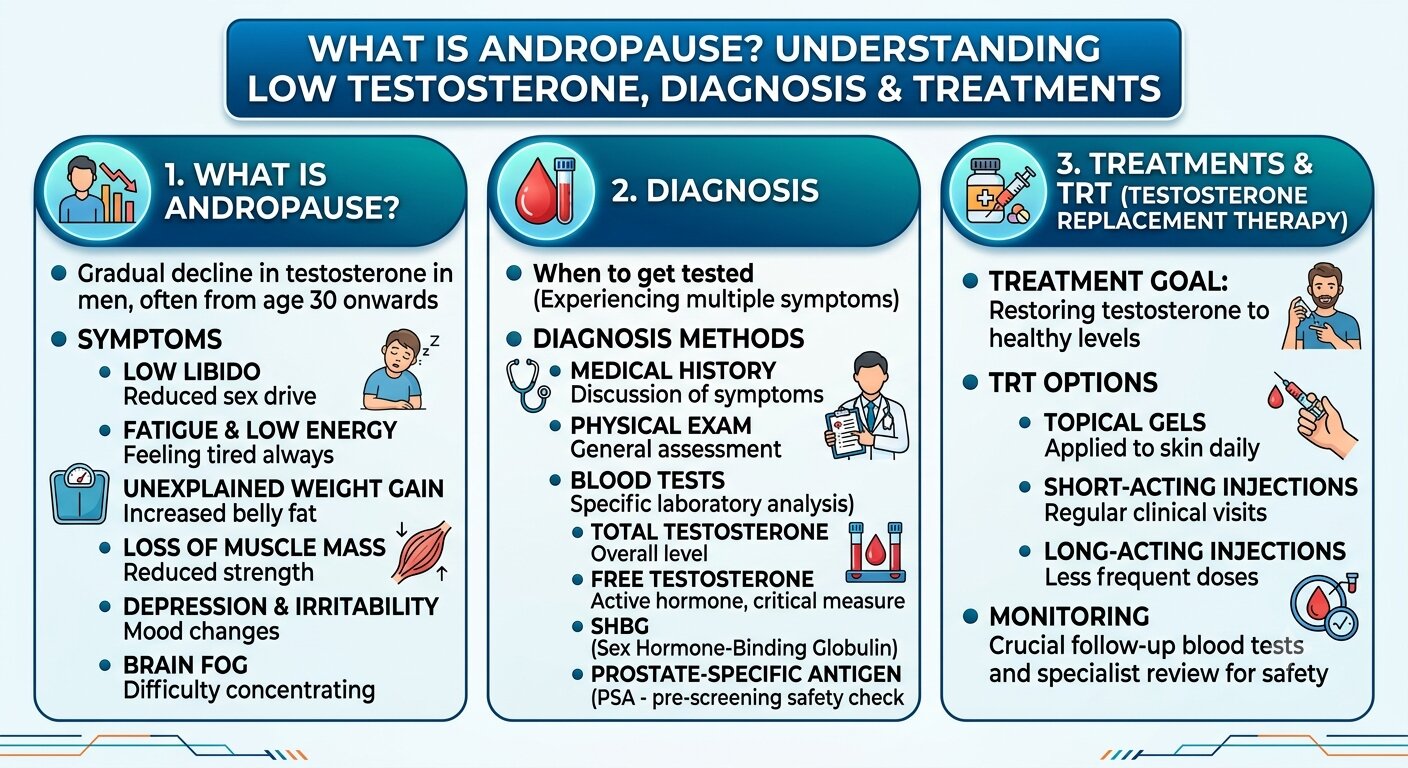
Click to expand infographic.

Powered by Find by 365Asia


[SG] Featured Doctor- Dr Kevin Koo
Orthopaedic Surgeon In Singapore
What Is Andropause And Low Testosterone?
Andropause is a term used to describe age-related declines in testosterone levels that may cause symptoms in men.
Testosterone is the primary male hormone responsible for regulating sex drive, muscle mass, fat distribution, bone density, and mood stability. Starting around the age of 30, a man’s testosterone levels naturally decline by approximately 1% each year.
For many men, this natural drop remains manageable. But for roughly 1 in 4 men over 40 in Singapore, the decline dips into clinical deficiency, leading to Andropause. Unlike female menopause, which happens rapidly, Andropause is a gradual hormonal decline that sneaks up over years, making the symptoms easy to misattribute.
What Are The Key Symptoms Of Andropause?
While low libido is often the first symptom that prompts men to seek answers, testosterone deficiency impacts the entire body. Possible symptoms include:
- Reduced Libido And Sexual Function: Fewer spontaneous erections, decreased sexual desire, or lower performance satisfaction.
- Unexplained Weight Gain: An increase in visceral abdominal fat that is resistant to diet and regular exercise.
- Loss Of Muscle Mass And Strength: Reduced physical stamina and decreased recovery speed after workouts.
- Chronic Energy Crashes: Persistent mid-day fatigue and sluggishness despite getting a full night’s sleep.
- Mood Swings And Brain Fog: Increased irritability, mild depressive symptoms, and difficulty concentrating at work.
| Symptom Category | Common Sign | Underlying Biological Mechanism |
| Sexual Health | Low sex drive, weaker erections | Lower androgen receptor stimulation in central nervous system |
| Metabolic Health | Visceral belly fat accumulation | Shift in metabolic rate and insulin sensitivity due to hormonal drop |
| Mental Vitality | Irritability, cognitive slowness | Reduced neurosteroid action of testosterone in key brain regions |
What Are Andropause Diagnosis And Treatment Options?
Andropause is assessed through a combination of symptoms, medical history and blood tests to determine whether testosterone levels are clinically low. Treatment depends on the underlying cause and may include lifestyle changes, treatment of contributing conditions and, in suitable men with confirmed testosterone deficiency, testosterone replacement therapy (TRT).
Step 1: Accurate Medical Diagnosis
Because symptoms like fatigue and low sex drive can overlap with other health conditions, proper clinical screening is essential.
- Comprehensive Blood Screening: A blood test measured early in the morning—when testosterone levels naturally peak—evaluates Total Testosterone, Free Testosterone (the active hormone available to tissues), and key biomarkers like sex hormone-binding globulin (SHBG).
- Overall Health Assessment: Evaluating blood glucose, cholesterol levels, liver function, and prostate health (PSA testing) to ensure treatment suitability and safety.
Step 2: Understanding Testosterone Replacement Therapy (TRT)
For men diagnosed with clinical hypogonadism or Andropause, Testosterone Replacement Therapy (TRT) is the primary medical intervention designed to restore circulating testosterone back to healthy, optimal physiological levels.
TRT works by replenishing the hormone your body no longer produces in adequate amounts, alleviating both physical and sexual symptoms over time.
| TRT Delivery Method | How It Works | Primary Benefits |
| Topical Gels | Applied daily to clean, dry skin on the shoulders or upper arms. | Delivers steady, consistent hormone absorption mimicking natural daily cycles. |
| Short-Acting Injections | Administered intramuscularly every 2 to 3 weeks. | Cost-effective; provides predictable hormone elevation. |
| Long-Acting Injections | Administered intramuscularly every 10 to 14 weeks. | Requires very few clinic visits; provides stable, long-term hormone levels without frequent spikes. |
Step 3: What To Expect From TRT
When supervised by a Men’s Health specialist, TRT is carefully tailored and monitored through routine follow-up blood tests. Men undergoing treatment typically notice progressive improvements:
- First 3 To 6 Weeks: Enhancements in libido, sexual function, and day-to-day energy levels.
- First 3 To 6 Months: Improvements in mood, reduction in brain fog, increased lean muscle mass, and gradual reduction in visceral abdominal fat.
- Long-Term Benefits: Better bone mineral density, improved insulin sensitivity, and enhanced overall quality of life.
Step 4: Lifestyle Optimisation
TRT is most effective when integrated with healthy lifestyle practices. Combining medical therapy with structured strength training, adequate sleep, stress management, and a nutrient-dense diet maximises biological results and long-term vitality.
Where Can You Get Andropause Diagnosis And Treatment?
In Singapore, men have access to specialized clinics that focus specifically on men’s health, hormonal optimization, and confidential clinical care.
- Specialised Men’s Health Clinics: Private medical practices dedicated exclusively to male health provide discrete, comprehensive diagnostics and tailored treatment plans. These clinics offer direct access to doctors experienced in handling sensitive concerns like low libido, erectile dysfunction, and hormonal decline.
- General Practitioner (GP) Clinics & Public Hospitals: Primary care doctors can perform preliminary health screenings and blood tests, referring patients to endocrinologists or urologists for specialized care when necessary.
When Should You See A Men’s Health Specialist?
You do not need to wait until symptoms severely disrupt your daily life before seeking medical advice. Consulting a men’s health specialist early can prevent long-term metabolic complications and restore your vitality much sooner.
The Andropause Checklist: Key Red Flags
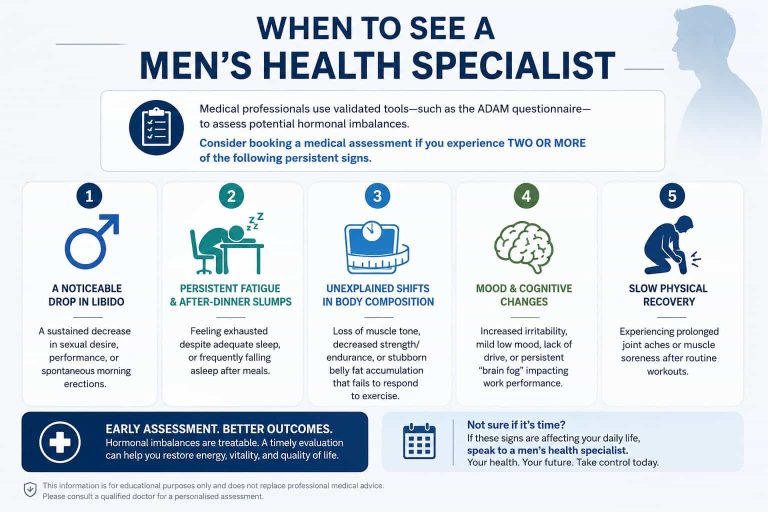
Medical professionals use validated clinical frameworks—such as the Androgen Deficiency in the Aging Male (ADAM) questionnaire—to evaluate potential hormonal imbalances. You should consider booking a medical assessment if you experience two or more of the following persistent signs:
- A Noticeable Drop In Libido: A sustained decrease in sexual desire, performance, or spontaneous morning erections.
- Persistent Fatigue & After-Dinner Slumps: Feeling exhausted despite adequate sleep, or frequently falling asleep after meals.
- Unexplained Shifts In Body Composition: Loss of muscle tone, decreased strength/endurance, or stubborn belly fat accumulation that fails to respond to exercise.
- Mood & Cognitive Changes: Increased irritability, mild low mood, lack of drive, or persistent “brain fog” impacting work performance.
- Slow Physical Recovery: Experiencing prolonged joint aches or muscle soreness after routine workouts.
Why Primary Care GP Visits May Fall Short
While visiting a general practitioner is a reasonable first step, routine health screeners in Singapore often measure basic full blood counts and standard cholesterol panels, omitting dedicated male hormone profiles.
| Feature | Routine GP Health Screening | Specialized Men’s Health Assessment |
| Hormone Scope | Basic health check; rarely measures Free Testosterone or SHBG. | Comprehensive panel including Total & Free Testosterone, Prolactin, Estradiol, and SHBG. |
| Privacy & Discretion | Shared multi-disciplinary setting. | Dedicated private environment geared specifically toward sensitive male health concerns. |
| Treatment Focus | General disease screening. | Targeted hormone optimisation, advanced TRT protocols, and long-term vitality management. |
Consulting a dedicated Men’s Health specialist ensures that subtle hormonal deficiencies are accurately detected using early-morning blood diagnostics, giving you a clear, personalised blueprint to regain your energy and confidence.
Looking For A Men’s Health Specialist In Singapore? Consider Dr Kenneth Lee (Dr Plus For Men)
Dr Kenneth Lee is the Medical Director of Dr Plus Aesthetics Clinic. He is a men’s health doctor in Singapore.
Dr Lee graduated with a Bachelor of Medicine and Bachelor of Surgery in the United Kingdom. He trained in general medicine, general surgery, paediatrics, emergency medicine and community medicine in London before returning to Asia to pursue his career.
He found his interests in anti-aging, aesthetic, and regenerative medicine eventually and began his journey towards becoming an aesthetic doctor. Dr Lee offers treatment for erectile dysfunction and screenings for sexually transmitted diseases (STDs).
Dr Lee is registered with the General Medical Council, United Kingdom, Singapore Medical Council, and Malaysia Medical Council. He is also an associate Alumni of Harvard University..
Academic Qualifiations
- MBBCh (Cardiff University, United Kingdom)
- GDipFP Dermatology (NUS, Singapore)
- Diploma in Aesthetic Medicine AAAM (United States)
- Professional Dip Aesthetic Medicine (AAA | EIU, Paris)
- Cert on Practical Andrology (Men’s Health) (Singapore)
Articles Reviewed By Dr Kenneth Lee
Rash On Penis – Causes And Treatments
- May 28, 2026
Adult Circumcision Singapore – An Essential Guide
- August 19, 2025
Erectile Dysfunction In Singapore: Symptoms, Causes, And Diagnosis
- December 11, 2024
Comment: The row below to be moved to article for healthcare professionals article
Find A Doctor
Verified Healthcare Professionals
We connect you with a network of qualified and experienced doctors who specialise in chronic health conditions, health screening, and longevity.
Trusted Information Source
We pride ourselves on providing accurate, up-to-date, and evidence-based information about each disease, its prevention, and treatment.
Privacy and Security
Your health information and personal data are paramount to us. We will protect your privacy throughout the booking process and beyond.
Convenience at Your Fingertips
Our user-friendly platform allows you to find and book appointments 24/7 from the comfort of your home.
Additional Resources
Book An Appointment
Take a proactive step for your health and peace of mind today. If you need to see a Men’s Health specialist, our team is here to assist.
Financials
[findDoctor category="financial consultants" countries="Singapore" " limit="15"]
Frequently Asked Questions (FAQs) About Andropause And Low Testosterone
1. What Is The Difference Between Andropause And Female Menopause?
Female menopause involves a sudden drop in estrogen levels and a complete shutdown of ovulation, usually occurring within a short timeframe. In contrast, Andropause involves a slow, progressive decline in testosterone—typically about 1% per year after age 30. Because male hormone levels drop gradually over many years, symptoms often manifest slowly, making them easy to confuse with normal aging or work stress.
2. Can Low Testosterone Be Restored Naturally Through Diet And Exercise Alone?
For mild age-related drops, optimizing lifestyle factors—such as weight lifting, 7–8 hours of quality sleep, reducing alcohol consumption, and managing stress—can help optimize natural hormone production. However, if blood diagnostics confirm clinical testosterone deficiency (hypogonadism), lifestyle changes alone are usually insufficient to restore levels to optimal ranges, making medical evaluation and therapy necessary.
3. How Long Does Testosterone Replacement Therapy (TRT) Take To Show Results?
Most men report initial improvements within 3 to 6 weeks, beginning with enhanced sexual desire, better morning energy, and improved mood. Physical changes—such as noticeable reductions in visceral belly fat, increases in lean muscle mass, and improved metabolic health markers—typically develop over 3 to 6 months of continuous, doctor-monitored therapy.
4. Is Testosterone Replacement Therapy Safe For Long-Term Use?
When prescribed and monitored by a men’s health specialist, TRT is a well-established, safe medical treatment. Safety depends on regular follow-up appointments, including periodic blood checks to monitor red blood cell count (haematocrit), lipid panels, and prostate-specific antigen (PSA) levels to ensure your hormones remain balanced safely.
5. Do Over-The-Counter “Testosterone Boosters” Work?
No. Most commercially available “t-boosters” sold online or in retail shops contain unverified herbal ingredients that lack rigorous clinical evidence proving they increase physiological testosterone levels. Furthermore, unregulated supplements carry risks of contamination or organ toxicity. Genuine hormone deficiency requires accurate medical diagnosis and prescribed clinical care.
Additional Resources
Natural Testosterone Boosters Vs. TRT In Singapore: A Comprehensive Guide | Dr Plus
Testosterone therapy: Potential benefits and risks as you age | Mayo Clinic
- Male menopause (androgen deficiency in the ageing male) | The British Association of Urological Surgeons