

Knee Pain – The Big Story

Knee Pain – The Big Story
Knee pain is one of the most common health complaints today, often caused by the simple “wear and tear” of daily life. For many people, the biggest worry is needing a major operation like a total knee replacement. Fortunately, a modern non-surgical treatment of knee pain can often help manage symptoms and keep you moving without the need for surgery.
Common Causes Of Persistent Knee Pain
Identifying the root cause of discomfort is the first step in selecting an appropriate non-surgical treatment of knee pain. Specialists typically categorise these causes as follows:
- Degenerative Osteoarthritis: A “wear-and-tear” condition where the protective cartilage within the knee joint gradually diminishes.
- Articular Cartilage Defects: Specific, localised “potholes” in the cartilage caused by sports injuries or trauma.
- Systemic Inflammation: Chronic swelling within the joint that can accelerate the breakdown of healthy tissue.
Are You At Risk For Knee Pain?
While anyone can experience joint discomfort, certain factors significantly increase the likelihood that knee pain will become a chronic, life-altering issue:
- Advancing Age: The risk of developing knee conditions like osteoarthritis increases naturally as we age. By age 75, approximately 50% of individuals report some level of knee discomfort due to the natural thinning of cartilage over decades.
- Excess Body Weight: This is one of the most critical modifiable risk factors. Carrying extra weight places significant mechanical stress on the knee joints. For every kg of body weight gained, the knees experience four kg of extra pressure during ordinary activities like walking.
- Previous Joint Injuries: A history of “old” injuries—such as a torn ligament (ACL) or a meniscus tear from years ago—greatly increases the risk. Even if the injury was treated, it can lead to “post-traumatic arthritis” nearly a decade earlier than in those without such a history.
- Gender: Research consistently shows that women are more likely to develop chronic knee pain than men. This is often attributed to differences in bone structure (a wider pelvis creating a different “Q-angle” for the knee), muscle strength, and hormonal changes during menopause that can affect joint health.
- Occupational Stress: Jobs that require repetitive kneeling, heavy lifting, or long hours of standing (such as construction, nursing, or farming) can cause “overuse” injuries. Constant pressure on the joint can lead to chronic inflammation or bursitis.
- Muscle Weakness: The muscles surrounding the knee, particularly the quadriceps and hamstrings, act as “shock absorbers.” If these muscles are weak, the knee joint takes the full force of every step, accelerating the wear and tear of the cartilage.
- Genetic Predisposition: Some individuals inherit a tendency to develop joint issues or may be born with slight bone misalignments (such as being bow-legged or knock-kneed) that cause the joint to wear unevenly.
Non-Surgical Treatment Of Knee Pain In Thailand
When standard pain relief is no longer enough, patients must choose a path that fits their specific level of joint wear. Modern medicine now offers a “bridge” between basic physical therapy and major surgery.
The Advanced Cellular Protocol In Thailand
For those seeking a high-intensity non-surgical treatment of knee pain, specialised clinics in Thailand offer advanced cellular therapies. This option is often considered by patients who have not found relief from standard local injections and wish to avoid the operating theatre.
- Lab-Expanded Stem Cells: Unlike many basic treatments, these protocols use a high-tech laboratory to “multiply” Mesenchymal Stem Cells (MSCs). This allows for a much larger dose—often tens of millions of active cells—to be delivered directly into the knee joint in a single session.
- Younger Biological Source: Many international programmes utilise umbilical cord-derived cells. These “Day 0” cells are often more potent and have a higher ability to reduce inflammation than “adult” cells harvested from an older patient’s own body.
- Non-Invasive Delivery: Despite the high concentration of cells, the procedure is a simple injection. There is no surgery, no general anaesthesia, and most patients can return to light activities almost immediately.
A Note On Regulation: It is important to note that these specific lab-expanded and umbilical cord-derived therapies are not currently approved by the Ministry of Health (MOH) for standard clinical use in Singapore. They are elective options available in Thailand that patients may consider as part of a wider regenerative plan.
What Are The Singapore Treatment Options?
Singaporean orthopaedic specialists provide a highly regulated “Ladder of Care.” This allows patients to start with simple, non-invasive methods and move toward surgical options only when absolutely necessary.
Level 1: Standard Non-Surgical Injections
For mild-to-moderate knee wear, these clinic-based treatments are the standard first step:
- APS (Autologous Protein Solution): A concentrated “anti-inflammatory” injection made from your own blood. It acts as a biological dampener to reduce pain and protect the joint for up to two years.
- Viscosupplementation: A thick, lubricating fluid (Hyaluronic Acid) injected into the joint to act as a shock absorber and “oil” for a stiff knee.
- PRP (Platelet-Rich Plasma): Using your own healing platelets to calm minor inflammation and support the repair of small tissue tears.
Level 2: Joint-Preserving Surgical Options
When a non-surgical treatment of knee pain is no longer sufficient, but a total replacement is not yet required, surgeons may suggest “joint-preserving” operations:
- Autologous Chondrocyte Implantation (ACI): This is a surgical procedure where your own cartilage cells are harvested, grown in a lab, and then surgically replanted into a specific “pothole” or defect in the knee.
- Osteotomy: A surgery where the bone is reshaped to shift the body’s weight away from the damaged part of the knee joint.
Level 3: Joint Replacement Surgery
The final step on the ladder is a Partial or Total Knee Replacement. This major operation involves removing the damaged bone surfaces and replacing them with metal and plastic implants. While highly effective, it is usually reserved for cases where all other biological and non-surgical options have been exhausted.
Making An Informed Decision
The best non-surgical treatment of knee pain depends entirely on your current stage of joint health. Many patients find success by combining the diagnostic expertise of a Singapore surgeon with the advanced cellular protocols found in Thailand.
Learn More About Knee Pain And Treatment Options
Comment: The row below to be moved to article for healthcare professionals article
Find A Doctor
Verified Healthcare Professionals
We connect you with a network of qualified and experienced doctors who specialise in chronic health conditions, health screening, and longevity.
Trusted Information Source
We pride ourselves on providing accurate, up-to-date, and evidence-based information about each disease, its prevention, and treatment.
Privacy and Security
Your health information and personal data are paramount to us. We will protect your privacy throughout the booking process and beyond.
Convenience at Your Fingertips
Our user-friendly platform allows you to find and book appointments 24/7 from the comfort of your home.
Our Preferred Doctors You Can Consider For Knee Pain Treatment
- Dr Diana Chan is pain specialist whose personal experience with chronic injury allows her to offer deeply empathetic, patient-centric care. She has extensive expertise in performing over 500 advanced, minimally invasive interventional procedures. Dr Chan integrates modern clinical interventions with traditional techniques like acupuncture to restore quality of life.
Singapore
- Dr Ananda Vella is an orthopaedic surgeon with over 20 years of experience treating a wide range of lower limb, sports and general orthopaedic conditions. His expertise includes minimally invasive and arthroscopic techniques for foot and ankle problems, knee and hip conditions, and sports injuries.
- Dr Diana Chan is pain specialist whose personal experience with chronic injury allows her to offer deeply empathetic, patient-centric care. She has extensive expertise in performing over 500 advanced, minimally invasive interventional procedures. Dr Chan integrates modern clinical interventions with traditional techniques like acupuncture to restore quality of life.

Powered by Find by 365Asia


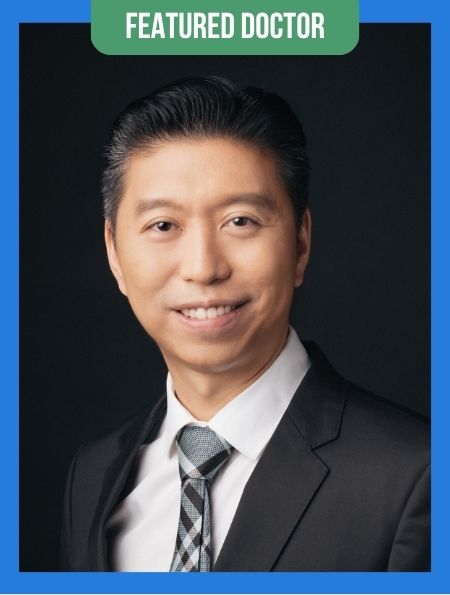
[SG] Featured Doctor- Dr Kevin Koo
Orthopaedic Surgeon In Singapore
Find The Best Doctors In Singapore
When it comes to your joint and knee health, you naturally would like to find the best orthopaedic doctor in Singapore. Find out how and get a head start from our article on Finding The Best Orthopaedic Doctor In Singapore.
If instead you are looking for a pain management specialist, you can refer to this guide on Finding The Best Pain Management Specialist In Singapore.
Book An Appointment
Take a proactive step for your health and peace of mind today. If you need to see a doctor about knee pain, our team is here to assist.
Financials
[findDoctor category="financial consultants" countries="Singapore" " limit="15"]
Related Content


FAQs On Knee Pain
Not necessarily. While “bone-on-bone” indicates advanced cartilage loss, many patients at this stage still find significant relief through biological treatments. The goal of a non-surgical treatment of knee pain in advanced cases is to “quiet down” the intense inflammation and thicken the joint fluid. While it may not perfectly regrow a brand-new joint, it can often reduce pain enough to delay or entirely avoid a metal-and-plastic knee replacement.
“Young” cells from umbilical cord tissue are often preferred in Thai protocols because they have not been exposed to the aging process or environmental toxins. These cells are screened rigorously for safety and are considered “immunologically privileged,” meaning the body typically accepts them without rejection. They often possess a more vigorous “signalling” ability to jumpstart the healing process compared to older cells harvested from a patient’s own bone marrow.
Because these are non-surgical treatments, the actual injection typically takes less than 30 minutes. Most patients choose to stay for 2 to 3 days to allow for a follow-up observation and to enjoy a brief period of rest before flying home. There is no “hospitalisation” required, and you are usually encouraged to walk gently immediately after the procedure.
Currently, APS (Autologous Protein Solution) is widely considered the “gold standard” for non-surgical treatment in Singapore clinics. It is particularly effective because it goes beyond simple lubrication; it uses a concentrated “super-plasma” from your own blood to physically block the proteins that cause pain and cartilage breakdown. It is an excellent choice for patients looking for a scientifically proven, MOH-approved option that can provide relief for 12 to 24 months.
The Singapore Ministry of Health (MOH) and the Health Sciences Authority (HSA) maintain some of the strictest medical regulations in the world. Currently, they classify lab-expanded and umbilical cord-derived stem cells as “investigational.” This is primarily because Singaporean regulators require a very high threshold of long-term, large-scale clinical data conducted within their own framework before a treatment is moved from the “research” category to “mainstream” clinical use.
While clinics in Thailand operate under the approval of the Thai Ministry of Public Health and follow international manufacturing standards, Singapore’s approach is more conservative, focusing on “minimally manipulated” cells (like those used in same-day local injections). Many patients consider the Thailand option as an elective alternative when they have exhausted local options and wish to explore advanced regenerative protocols that are still undergoing the multi-year approval process in Singapore.
Additional Resources
- What Are Stem Cells? A Simple Guide to How They Work | Miracle Regenerative Centre
- Orthopedic Stem Cell Therapy | Miracle Regenerative Centre
- Questions to Ask an Orthopaedic Doctor About Your Knee Surgery | OrthoCare Orthopaedics & Sports Medicine
- Guide To Knee Arthroscopy in Singapore | OrthoCare Orthopaedics & Sports Medicine
- Joint & Soft Tissue Pain Treatments in Singapore | Advanced Pain Specialists
.