

Piles (haemorrhoids) is an uncomfortable and distressing condition that can affect people of various ages. When conservative measures such as dietary changes, increased fibre intake and improved bowel habits are insufficient, patients turn to surgical options. In Singapore, laser piles treatment is an emerging effective and minimally invasive approach. This article will explore what laser piles treatment involves, its benefits, suitability, procedure and recovery, and what you can expect in terms of outcomes.
Need An Appointment With A Colorectal Surgeon?
Contact UsBack To: Colon & Rectal Cancer Main Page
Back To: Anorectal Conditions Main Page
Back To: Surgical Treatments Main Page
What Is Laser Piles Treatment?
Laser piles treatment uses focused light energy (laser) to target enlarged haemorrhoidal tissue. The aim is to seal off or shrink the abnormal veins supplying the haemorrhoids, thereby alleviating symptoms such as bleeding, pain or prolapse. It is referred to as laser haemorrhoidoplasty (as opposed to hemorrhoidectomy) as it does not involve cutting or excision; instead, it works by shrinking the hemorrhoidal tissue and reducing its prolapse.
Compared to traditional haemorrhoid surgery, the laser approach is designed to minimise tissue damage, reduce the extent of surgical trauma and resulting in a quicker and more comfortable recovery.
Why Consider Laser Treatment In Singapore?
There are several reasons why patients in Singapore might choose laser piles treatment:
- Minimally invasive: Because the laser targets tissue precisely, the surrounding healthy tissue is relatively spared compared to open excision.
- Reduced bleeding and trauma: The laser can seal vessels as it cuts or ablates, which helps to limit postoperative bleeding risk.
- Shorter recovery time: Many laser procedures are done as day surgery or with short hospital stays, with patients often resuming light activities within days.
- Modern facilities and specialist care: Singapore offers access to experienced colorectal surgeons and advanced treatment centres. For example, the team at Colorectal Clinic Associates boasts decades of collective experience in colorectal conditions.
Who Is A Suitable Candidate?
Not everyone with haemorrhoids is suitable for laser treatment. Generally, candidates include those who:
- Have symptomatic internal haemorrhoids (for example bleeding or prolapse) typically of Grade II or Grade III.
- Have tried conservative treatments (dietary fibre, fluid intake, sitz baths, lifestyle modification) without sufficient relief.
- Are keen on a minimally invasive option and are willing to follow post-operative care and lifestyle adjustments.
However, for more severe cases such as those involving large, permanently prolapsed haemorrhoids (Grade IV), thrombosed haemorrhoids or in patients with complex medical conditions, traditional surgery might still be recommended.
What Happens During The Procedure?
Although specifics vary by surgeon and centre, the typical steps of laser piles treatment include:
- Anesthesia and preparation – The patient may receive local, regional or general anaesthesia depending on the case.
- Assessment and access – A specialist uses an anoscope or proctoscope to visualise the haemorrhoids and assess the prolapse or vessels supplying the haemorrhoids.
- Laser application – A fibre or probe is inserted and laser energy is applied to seal or vaporise the haemorrhoidal tissue and feeding vessels. This may include a mucopexy (lifting the prolapsed tissue) or other adjuncts. A fibre or probe is inserted, and laser energy is applied to seal or vaporise the hemorrhoidal tissue and its feeding vessels. This is usually accompanied by a mucopexy, which lifts and secures the prolapsed tissue.
- Post-procedure monitoring – Many patients can go home the same day or after a short hospital stay.
Recovery protocols are clearly outlined: rest for 3-5 days, avoid heavy lifting or straining for 4–6 weeks, and follow dietary and lifestyle advice to prevent recurrence.
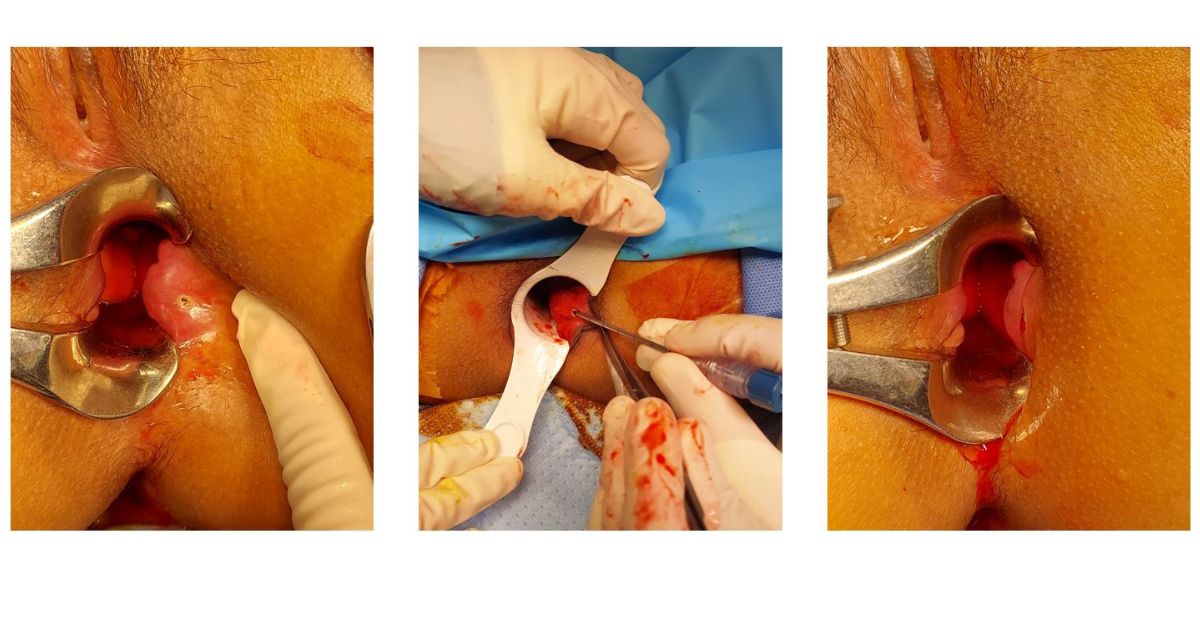
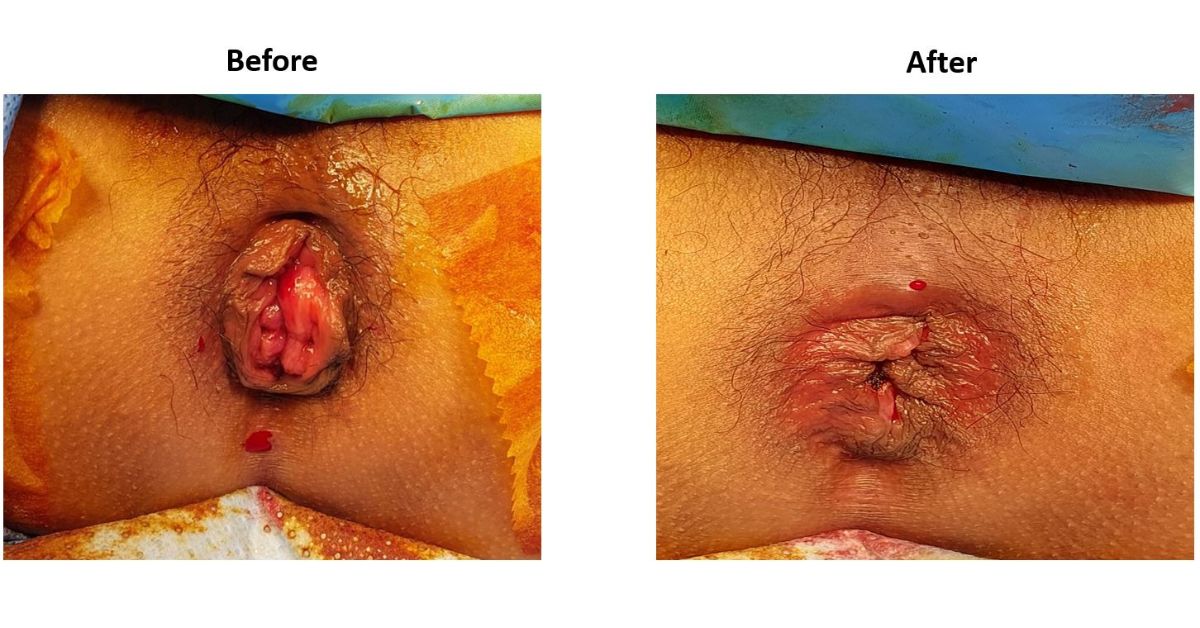


Surgery Images Courtesy Of Dr Daniel Lee
What Should You Expect In Recovery?
- Downtime: Many patients resume light activities within 1–2 days, though full recovery may take a few weeks.
- Pain management: Some discomfort or mild pain is common; pain relief and stool softeners are often prescribed.
- Wound and area care: Sitz baths, hygiene, and keeping the area clean are important.
- Lifestyle adjustments: A high-fibre diet, adequate hydration, regular activity and avoiding prolonged toilet sitting are key to reducing recurrence.
Are There Any Risks?
As with all surgical interventions, laser piles treatment carries some risks, including:
- Bleeding or infection (though rates are lower compared to more invasive surgery)
- Anaesthetic complications (depending on anaesthesia type)
- Anal stenosis (narrowing), recurrence of haemorrhoids, or, very rarely, incontinence.
It is essential to have a detailed consultation with a colorectal specialist to assess your suitability and understand the specific risks and benefits for your case.
Our Preferred Doctors (Colorectal Surgeons)



[SG] Featured Doctor- Dr Kevin Koo
Get An Appointment With A Colorectal Surgeon
For patients in Singapore seeking relief from symptomatic piles, laser treatment offers a modern, minimally invasive option with the potential for less pain, faster recovery and effective outcomes. Nevertheless, success depends on correct patient selection, expert surgical technique and commitment to post-operative care and lifestyle measures. If you are experiencing persistent symptoms of haemorrhoids or piles, consult a qualified colorectal specialist to determine whether laser piles treatment might be right for you.
Contact UsBack To: Colon & Rectal Cancer Main Page
Back To: Anorectal Conditions Main Page
Back To: Surgical Treatments Main Page
Reference: What Are Haemorrhoids? | Colorectal Clinic Associates
Frequently Asked Questions (FAQs)
Laser treatment uses focused light energy to precisely target and seal haemorrhoidal tissue and vessels, often resulting in smaller wounds, less bleeding and quicker recovery compared to conventional excision surgery. However, traditional surgery may still be required for more advanced cases.
Most patients can return to light activities within 1–2 days, though heavy lifting and strenuous exercise should typically be avoided for 4–6 weeks. Full recovery and optimal tissue healing may take a few weeks.
Yes, recurrence is possible. Underlying causes such as chronic constipation, straining, low-fibre diet, prolonged sitting and lack of exercise must be addressed to reduce the risk of recurrence
All content on this site is informative only and is not intended to be a substitute for professional medical advice, diagnosis, or treatment, and should never be relied upon for specific medical advice. If you are experiencing a medical emergency, call 995 immediately or go to the nearest Accident & Emergency department.
health365.sg is a member of Group 365Asia.