


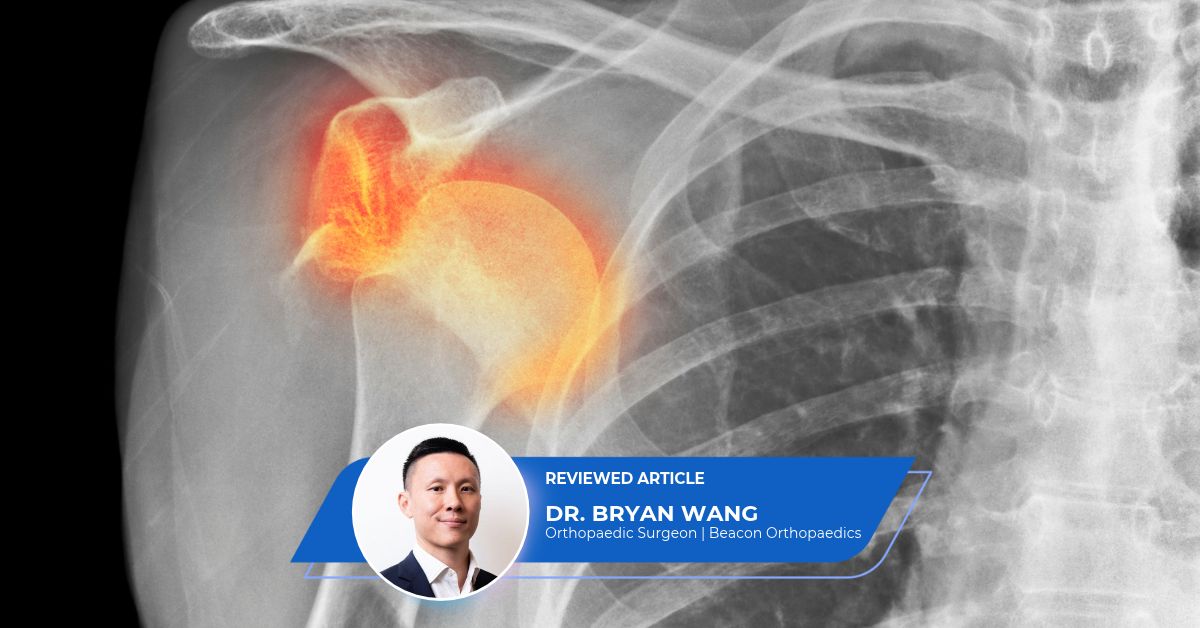
A shoulder dislocation can be painful and disruptive. Some patients experience problems long after the initial injury. For instance, the shoulder may slip out of place, feel as though it is about to give way, or become unstable during sports and everyday movements. This is known as shoulder instability.
Rehabilitation can help some patients regain shoulder control. However, repeated dislocations may indicate damage to the structures that keep the joint stable.
Dr Bryan Wang, an orthopaedic surgeon at Beacon Orthopaedics (at Gleneagles Hospital), can assess shoulder instability and explain whether non-surgical treatment or shoulder stabilisation surgery may be appropriate.
Back To: Orthopaedic Care In Singapore: Upper Limbs
What Is Shoulder Instability?
The shoulder is a ball-and-socket joint. The rounded head of the upper arm bone fits into a relatively shallow socket in the shoulder blade, allowing a wide range of movement.
The joint relies on several structures to remain stable, including the labrum, ligaments, joint capsule and rotator cuff muscles.
Shoulder instability occurs when the joint does not remain securely positioned during movement. It may develop after an injury, repeated overhead activities or, in some people, naturally loose ligaments.
There are two related terms worth understanding:
- Dislocation: The ball of the upper arm bone moves completely out of the socket.
- Subluxation: The joint moves partially out of position and may slip back into place.
Both can cause pain, apprehension or a feeling that the shoulder is giving way.
Why Does The Shoulder Keep Dislocating?
After a dislocation, the labrum or ligaments may be stretched or torn. The labrum is a rim of cartilage that helps deepen the socket and provides attachment for supporting structures.
If these tissues do not provide sufficient stability, another dislocation may occur. Some injuries also involve damage to the bone around the socket or the head of the upper arm bone.
Repeated episodes can cause further structural damage, potentially making subsequent treatment more complex.
However, not every case is caused by a traumatic injury. Some people have naturally loose ligaments or multidirectional instability, in which the shoulder moves excessively in more than one direction. These cases may require a different treatment approach from instability caused by a specific traumatic event.
What Are The Signs Of Shoulder Instability?
Symptoms can vary, but common signs include:
- Repeated shoulder dislocations or partial dislocations.
- A sensation that the shoulder is slipping or coming out of place.
- Fear or discomfort when the arm is raised or rotated into certain positions.
- Pain during sports, overhead movements or activities involving the affected arm.
- Reduced confidence in using the shoulder.
If your shoulder repeatedly gives way, do not assume that strengthening exercises alone will resolve the problem. An assessment can help establish whether there is underlying structural damage.
How Is Shoulder Instability Diagnosed?
An orthopaedic assessment usually begins with a discussion of how the problem started, how many episodes have occurred and which movements trigger symptoms.
The clinician may examine shoulder movement, strength, ligament laxity and signs of instability. The examination can also help distinguish traumatic instability from problems associated with generally loose ligaments.
Imaging may be recommended depending on the findings.
X-rays can identify certain bone injuries and confirm the position of the joint. Magnetic resonance imaging (MRI) may help assess the labrum and other soft tissues. Computed tomography (CT) may be useful when the surgeon needs to assess bone damage or bone loss around the joint.
Not everyone needs every test. Imaging is selected according to the clinical question and the information required for treatment planning.
Can Shoulder Instability Be Treated Without Surgery?
Yes. Non-surgical treatment may be appropriate for some patients, particularly after an initial dislocation or when instability is associated with ligament laxity rather than a major structural injury.
Treatment may include:
- Activity modification: Temporarily avoiding positions or movements that trigger instability.
- Physiotherapy: Improving rotator cuff strength, shoulder blade control and coordination.
- Pain management: Using suitable measures to manage discomfort during recovery.
- Gradual return to activity: Reintroducing more demanding movements as strength and control improve.
Physiotherapy can improve the muscles’ ability to support the joint, but it cannot necessarily repair a torn labrum or restore lost bone.
The choice between rehabilitation and surgery depends on the injury, recurrence history, physical demands and the patient’s goals.
When Is Shoulder Stabilisation Surgery Considered?
Surgery may be discussed when dislocations recur, instability continues despite appropriate rehabilitation or imaging shows structural damage that is unlikely to be adequately addressed through non-surgical treatment alone.
The decision also depends on age, sporting activities, occupation and the risk of another episode. Some younger or highly active patients may require an earlier discussion of surgical options, depending on their injury and individual recurrence risk.
The aim of surgery is to improve stability by addressing the structures responsible for the problem. It is not simply a matter of tightening every shoulder ligament.
What Does The Operation Involve?
Depending on the injury, surgery may involve repairing the labrum and ligaments, tightening the joint capsule or addressing bone loss. Some procedures can be performed arthroscopically through small incisions using a camera and specialised instruments. Other cases may require an open procedure or a bone-based stabilisation technique.
The appropriate operation depends on the pattern of instability and the amount of structural damage. A surgeon should explain why a particular procedure is recommended and what alternatives are available.
What Is Recovery Like After Shoulder Stabilisation Surgery?
Recovery usually involves temporary protection of the shoulder, followed by a structured rehabilitation programme.
The early phase focuses on protecting the repair and maintaining movement within the permitted limits. Exercises then progress towards restoring range of motion, strength and shoulder control.
Returning to contact sports, overhead activities or heavy lifting may take several months and requires clearance based on the procedure and recovery progress. Regaining confidence in the shoulder is also important.
No operation can eliminate every risk of future instability. Patients should understand the expected benefits, possible complications and rehabilitation commitments before deciding on treatment.
When Should You Seek Urgent Care?
A shoulder that is currently dislocated requires urgent medical attention. Do not try to force the joint back into place yourself, as this may worsen an associated fracture or damage nerves and blood vessels.
Seek emergency care if the shoulder looks deformed after an injury, pain is severe, or the arm becomes numb, cold, pale or unusually weak.
Repeated episodes that have already resolved still warrant assessment, particularly if instability is affecting work, sleep or sport.
Treatment Costs And Insurance In Singapore
The cost of treating shoulder instability in Singapore depends on the diagnosis, recommended treatment and where care is provided. An initial specialist consultation, imaging, medication and physiotherapy generally have different costs from an operation performed at a private hospital or day surgery centre.
If surgery is recommended, the total bill may include the surgeon’s fees, anaesthetist’s fees, hospital or day surgery facility charges, implants or other surgical materials where required, medication and follow-up care. Rehabilitation costs should also be considered when estimating the overall expense.
Before proceeding with private treatment, ask for an estimated breakdown of the expected fees and any additional charges that may apply. Singapore’s Ministry of Health (MOH) publishes hospital bill information and fee benchmarks that can help patients understand typical charges for eligible procedures and compare estimated costs.
Can Insurance Cover Treatment?
Depending on your policy, private medical insurance may cover some or all of the eligible costs of specialist consultations, investigations, surgery and hospitalisation. Coverage is not automatic and depends on your plan’s benefits, exclusions, limits and applicable terms.
In Singapore, an Integrated Shield Plan may provide additional coverage beyond MediShield Life, including coverage for eligible treatment at private hospitals, depending on the plan selected. Employer-provided medical insurance may also offer benefits, but the extent of coverage varies.
Before scheduling surgery, check with your insurer whether the proposed treatment is covered, whether pre-authorisation is available, and whether you need to use a panel specialist or an approved medical facility. Ask about deductibles, co-payment requirements, claim limits and any exclusions that may apply. Even if your insurer provides pre-authorisation, you may still have out-of-pocket expenses.
You can find further information about Integrated Shield Plans on the MOH website.
What If You Are Paying Out Of Pocket?
If you are paying privately without insurance coverage, or if your policy covers only part of the bill, ask the clinic or hospital for an estimate before committing to treatment. It may also be helpful to discuss suitable non-surgical alternatives, where clinically appropriate, and understand the likely costs of follow-up consultations and rehabilitation.
The most appropriate treatment should be determined by your clinical needs, not cost alone. Understanding the expected expenses and your insurance benefits in advance can help you make a more informed decision with your treating doctor.
Insurance coverage and treatment costs vary between patients, providers and policies. Confirm your individual benefits and estimated charges with the relevant healthcare provider and insurer before proceeding.
Frequently Asked Questions
Some patients improve with rehabilitation and activity modification. However, recurrent dislocations or significant structural damage may require further treatment. An assessment helps determine whether the shoulder is likely to benefit from non-surgical management.
No. Many first-time dislocations can initially be managed without surgery, depending on the injury and the patient’s circumstances. Surgery becomes more relevant when instability recurs or when associated damage makes stabilisation advisable.
Many patients can return to sport, but the timing depends on the procedure, healing and rehabilitation progress. Contact sports and activities that place the shoulder in vulnerable positions require particular care and should only resume after appropriate clinical clearance.
Arrange An Assessment
If your shoulder repeatedly slips out of place or feels unstable during daily activities or sport, a specialist assessment can help identify the cause and clarify your treatment options.
Dr Bryan Wang at Beacon Orthopaedics can evaluate shoulder instability and discuss an appropriate management plan.Click the button below to get assistance arranging an appointment with Dr Bryan Wang.
Contact MedicalTravel.asia
This medical content has been reviewed by Dr Bryan Wang, an experienced orthopaedic surgeon in Singapore known for his patient-centred approach, advanced minimally invasive techniques, and comprehensive management of complex shoulder conditions.
Back To: Orthopaedic Care In Singapore: Upper Limbs
All content on this site is informative only and is not intended to be a substitute for professional medical advice, diagnosis, or treatment, and should never be relied upon for specific medical advice. If you are experiencing a medical emergency, call 995 immediately or go to the nearest Accident & Emergency department.
health365.sg is a member of 365Asia.