


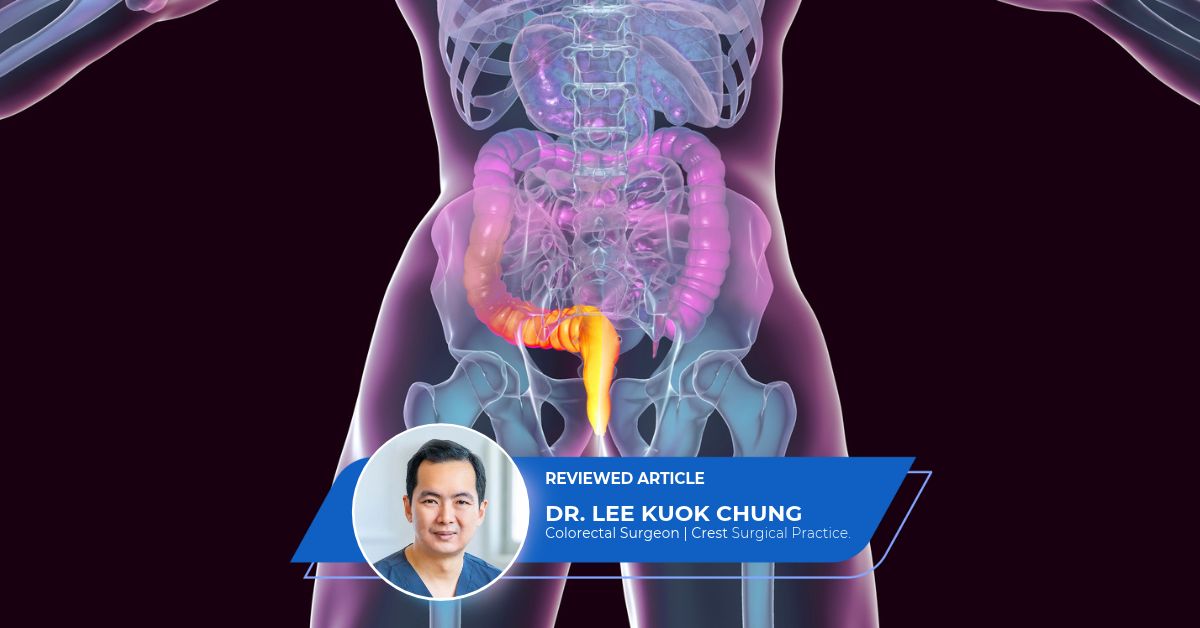
Haemorrhoids and anal fistulas are common conditions that can cause discomfort, bleeding, swelling or discharge around the anus. Although they affect the same general area, they have different causes and require different approaches to treatment.
Many people with haemorrhoids can be managed without surgery, particularly when symptoms are mild. An established anal fistula, however, often requires a procedure to address the abnormal tunnel and reduce the risk of repeated infection. Understanding the diagnosis and available treatments can help patients discuss whether an operation is necessary and what recovery may involve.
Back To: Anorectal Conditions Main Page
Haemorrhoids And Anal Fistulas Are Not The Same
Haemorrhoids are normal vascular cushions in the anal canal that help with closure. They become symptomatic when swollen, inflamed or displaced.
Internal haemorrhoids may cause bright red bleeding during bowel movements or protrude through the anus. External haemorrhoids may cause a tender lump, particularly if a blood clot forms within them.
An anal fistula is a small channel connecting the inside of the anal canal or rectum to the skin near the anus. It commonly develops after an anal gland becomes infected and an abscess forms. Even after an abscess has been drained, a tunnel may remain.
Symptoms can include recurrent swelling, pain, discharge of pus or blood, and a small opening in the skin near the anus.
Because the conditions have different causes and treatments, a diagnosis should be made before deciding on treatment. Rectal bleeding should not automatically be attributed to haemorrhoids, particularly if it is persistent, recurrent or accompanied by a change in bowel habits, unexplained weight loss or anaemia.
When Do Haemorrhoids Need Treatment?
Mild haemorrhoid symptoms may improve with measures that reduce constipation and straining. These include eating sufficient fibre, drinking adequate fluids, responding to the urge to pass stool and avoiding prolonged sitting on the toilet.
A clinician may recommend medication to relieve symptoms, although creams and suppositories do not remove the underlying haemorrhoidal tissue.
If symptoms continue, an examination can help determine the type and grade of haemorrhoids and whether another cause is present. Internal haemorrhoids may be treated with outpatient procedures.
One option is rubber band ligation. This involves placing a small band around the base of an internal haemorrhoid, cutting off its blood supply so that the tissue shrinks and eventually falls away. Other options may include injection sclerotherapy or infrared treatment, depending on the findings and local practice.
Surgery may be considered when haemorrhoids are large, prolapse significantly, cause persistent symptoms or do not respond to less invasive treatment.
The recommendation depends on the severity of symptoms, examination findings and the patient’s preferences after discussing the potential benefits, limitations and risks.
What Does Haemorrhoid Surgery Involve?
A haemorrhoidectomy involves removing haemorrhoidal tissue. It may be recommended for larger or more advanced haemorrhoids, including those with significant external components.
The procedure is usually performed under anaesthesia. Pain and discomfort during recovery are important considerations, particularly during bowel movements. The care team will provide advice on pain relief, wound care and keeping stools soft.
Other procedures may be suitable for selected patients. Haemorrhoidal artery ligation aims to reduce blood flow to the haemorrhoids, sometimes with a procedure to reposition prolapsing tissue.
Stapled haemorrhoidopexy is another option for selected internal prolapsing haemorrhoids. It has different risks and recurrence considerations compared with excisional surgery, and it is not appropriate for every pattern of haemorrhoidal disease.
No procedure guarantees that haemorrhoids will never recur. The choice should reflect the pattern of disease, symptoms, previous treatment and the balance between recovery, recurrence and potential complications.
Patients should ask what procedure is being proposed, why it is considered appropriate and what recovery is likely to involve.
When Does An Anal Fistula Need Surgery?
Anal fistulas usually persist because the tunnel remains connected to the anal canal. Repeated episodes of swelling and discharge may occur if the external opening closes while infection remains inside.
Antibiotics may be used for an associated infection, but they do not usually eliminate an established fistula. Similarly, draining an abscess can treat the collection of pus but may not remove the underlying fistula tract.
Surgery is commonly recommended to treat a persistent fistula. Before deciding on the procedure, the surgeon assesses the position of the tunnel, whether it branches, and how much of the anal sphincter it crosses.
Examination under anaesthesia may be needed. Imaging, such as magnetic resonance imaging (MRI), may be considered for complex, recurrent or difficult-to-assess fistulas.
The anal sphincter muscles are essential for controlling bowel movements. A procedure that divides too much muscle can increase the risk of impaired bowel control. For this reason, the safest approach depends on the fistula’s anatomy rather than using the same operation for every patient.
Common Anal Fistula Procedures
A fistulotomy involves opening the fistula tract along its length so that it can heal from the base. It is often suitable for a simple, low fistula that involves little sphincter muscle.
It can be effective in appropriately selected cases, but it is not suitable for every fistula. Dividing a substantial amount of sphincter muscle can affect anal continence, so the surgeon must assess the tract carefully before recommending this approach.
For a fistula that crosses more anal sphincter muscle, a surgeon may recommend a seton. This is a thread or drain passed through the tract and left in place to keep it open and allow ongoing drainage.
A loose seton can help control infection and prevent repeated abscess formation while a further treatment plan is considered. It does not necessarily cure the fistula by itself.
Other sphincter-preserving procedures may include a ligation of the intersphincteric fistula tract (LIFT) procedure, which aims to close the fistula tract in the space between the sphincter muscles, or an advancement flap, which covers the internal opening with tissue from the rectum.
These techniques may be considered for selected complex fistulas. Their suitability and outcomes vary, and recurrence can occur. The surgeon should explain why one option is preferred and whether more than one procedure may be needed.
What Are The Risks And Recovery Considerations?
The risks of haemorrhoid treatment depend on the procedure. They may include pain, bleeding, infection, temporary difficulty passing urine and recurrence. Less commonly, complications can include narrowing of the anal canal or problems with bowel control.
Recovery after excisional haemorrhoid surgery can be uncomfortable. Keeping stools soft and avoiding straining are important parts of aftercare. Patients should follow the advice given about pain relief, diet, bowel habits and wound care.
Fistula surgery carries risks such as bleeding, infection, recurrence and changes in continence. The risk of bowel control problems depends partly on how much sphincter muscle is involved and whether it is divided.
Some complex fistulas need staged treatment, meaning more than one procedure may be required. A seton may be used initially to control drainage before another operation is considered.
Patients should follow the surgeon’s instructions about wound care, bathing, pain relief, bowel habits and follow-up. New fever, worsening pain, increasing swelling or heavy bleeding should be reported promptly. Severe or ongoing bleeding, significant weakness or feeling faint warrants urgent medical assessment.
When Should You Seek Medical Assessment?
Arrange a medical assessment for recurrent anal pain, bleeding, discharge, a persistent lump or symptoms that do not settle.
A clinician may examine the area and, depending on age, symptoms and risk factors, recommend further tests to exclude other causes. Persistent rectal bleeding should be investigated rather than assumed to be haemorrhoids.
Seek urgent care for severe pain with fever or rapidly increasing swelling, which may indicate an abscess. Heavy bleeding, dizziness or fainting also requires urgent assessment. A painful swelling near the anus can sometimes need prompt drainage.
For people with a fistula, delaying assessment may allow repeated infection or abscess formation. Early assessment can help define the anatomy and discuss a treatment plan that aims to control infection while preserving sphincter function.
Questions To Ask Before A Procedure
Before proceeding with treatment, patients may wish to ask:
- What is the diagnosis, and how was it confirmed?
- Are there non-surgical options?
- What procedure is being proposed and what is it intended to achieve?
- If I have a fistula, does it cross the anal sphincter?
- What is the risk of affecting bowel control?
- Could a seton or staged procedure be needed?
- What will recovery involve, and when can I resume normal activities?
- How will recurrence be monitored?
Tell the clinician about medicines that affect bleeding, allergies, previous operations and medical conditions that may influence anaesthesia or healing. It is also useful to discuss constipation, diarrhoea and current bowel habits, as these may affect recovery planning.
For haemorrhoids, ask whether office-based treatment is reasonable before surgery and what the expected recovery and recurrence considerations are for the proposed procedure.
For a fistula, ask how the surgeon plans to protect the sphincter and what alternatives exist if the tract is complex.
The right treatment is based on an accurate diagnosis and an individual assessment. A consultation should provide a balanced explanation of the options, risks, limitations and expected follow-up.
Related Content
Health365 Preferred Doctor You Can Consider
Dr Lee Kuok Chung of Crest Surgical Practice is a health365 Preferred Doctor whose clinical focus includes benign colorectal and perianal conditions, including haemorrhoids and anal fistula surgery.
Patients experiencing persistent haemorrhoid symptoms, recurrent anal swelling or discharge may wish to discuss their symptoms and treatment options with a colorectal surgeon. A consultation can help establish the diagnosis and clarify whether lifestyle measures, office-based treatment or surgery may be appropriate. For anal fistulas, the discussion may include the tract’s relationship to the anal sphincter and the options available to manage the condition while considering bowel control.
Further information about Dr Lee’s clinical background is available through his health365 doctor profile. Patients can discuss the purpose of a proposed procedure, its risks and alternatives, and what recovery may involve.
Contact MedicalTravel.asiaFrequently Asked Questions
No. Many cases improve with bowel habit changes, medication for symptoms or outpatient procedures such as rubber band ligation. Surgery is considered for selected patients with persistent, large or prolapsing haemorrhoids and significant bleeding. bowel function after surgery.
Most established anal fistulas do not heal reliably on their own. Antibiotics may treat an associated infection but usually do not close the tunnel. The recommended procedure depends on its anatomy and sphincter involvement.
It can, particularly if a significant amount of sphincter muscle must be divided. The surgeon assesses the tract and may recommend a sphincter-preserving or staged approach to reduce this risk. No procedure can guarantee that continence will be unaffected.

This medical content has been reviewed by Dr Lee Kuok Chung, a highly experienced colorectal surgeon specialising in minimally invasive and robotic surgery for colorectal cancer and complex perianal conditions. He is also one of the few surgeons in Singapore skilled in advanced endoscopic techniques such as EMR and ESD, allowing large polyps and early cancers to be removed without major surgery.
Back To: Anorectal Conditions Main Page
All content on this site is informative only and is not intended to be a substitute for professional medical advice, diagnosis, or treatment, and should never be relied upon for specific medical advice. If you are experiencing a medical emergency, call 995 immediately or go to the nearest Accident & Emergency department.
health365.sg is a member of 365Asia.