


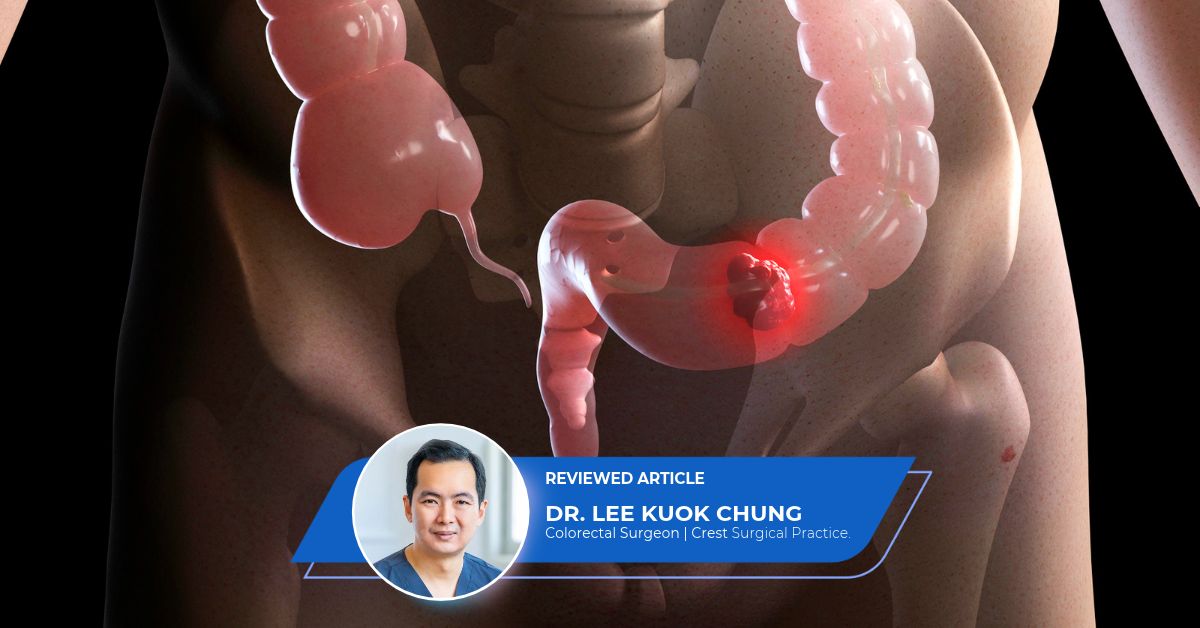
One of the concerns patients may have after a diagnosis of rectal cancer is whether surgery will affect their ability to control bowel movements or require them to live with a permanent stoma. These are important considerations, particularly when the tumour is located close to the anus.
In some cases, the surgeon can remove the affected part of the rectum while preserving the anal sphincter muscles. In others, removing the anus and sphincter may be necessary to achieve adequate cancer clearance. The decision depends on the tumour’s characteristics, the patient’s anatomy and the likely functional outcome after surgery.
Back To: Colorectal Cancer & Other Conditions Main Page
What Does Sphincter Preservation Mean?
The anal sphincter is a group of muscles that helps control the passage of stool and gas. In rectal cancer surgery, preserving the sphincter means removing the cancer while leaving these muscles and the anus in place, if this can be done safely.
When the tumour can be removed with an adequate margin and the sphincter is not involved, a surgeon may be able to perform a sphincter-preserving operation such as a low anterior resection.
In this operation, the surgeon removes the part of the rectum containing the cancer and reconnects the colon to the remaining rectum or anal canal. The connection is called an anastomosis.
A very low join may be associated with changes in bowel function. Some patients experience frequent bowel movements, urgency, clustering of stools or difficulty distinguishing gas from stool. These symptoms are sometimes grouped under the term low anterior resection syndrome (LARS).
The degree and duration of these changes vary between individuals. Some people experience improvement over time, while others may continue to have symptoms that affect their daily activities.
What Determines Whether The Sphincter Can Be Preserved?
The tumour’s position is important, but distance from the anus is not the only factor. The surgeon must assess whether the tumour extends into the sphincter muscles, whether nearby structures are involved and whether a clear margin can be achieved while preserving the muscles.
Pelvic magnetic resonance imaging (MRI) is commonly used to assess the tumour’s relationship to the rectal wall, surrounding tissues and sphincter complex. The findings are considered alongside colonoscopy, biopsy and other staging investigations.
The patient’s baseline bowel control, general health and ability to cope with a very low bowel join may also influence the recommendation.
The aim is to balance cancer clearance with function. Preserving the sphincter is not beneficial if it means leaving cancer behind or creating an operation with an unacceptable risk of complications. In some circumstances, removing the anus and sphincter is the safer cancer operation.
What Is A Low Anterior Resection?
A low anterior resection removes the part of the rectum containing the cancer while preserving the anus and sphincter muscles. The colon is then connected to the remaining rectum or anal canal.
The operation may be performed using an open, laparoscopic or robotic-assisted approach, depending on the patient and the surgical team.
If the bowel join is very low, the surgeon may recommend a temporary ileostomy. In this operation, a loop of small bowel is brought through an opening in the abdominal wall to form a stoma. Stool passes into a pouch attached to the skin rather than travelling through the new bowel join.
Diverting stool can reduce the consequences of a leak from the join, although it does not eliminate the risk of leakage.
The temporary stoma is usually considered for reversal after the join has healed and the patient has recovered sufficiently. The timing depends on the operation, any additional cancer treatment and follow-up assessments.
Reversal is not guaranteed. Complications, poor healing, recurrence or a change in the patient’s health may mean that the stoma needs to remain.
When Might A Permanent Colostomy Be Needed?
An abdominoperineal resection (APR) may be recommended when the tumour involves the anal sphincter or is so close to it that preserving the muscles would not allow an adequate cancer margin.
The operation removes the rectum, anus and sphincter muscles. The end of the colon is brought through an opening in the abdominal wall to form a permanent colostomy. Stool is collected in a pouch attached to the skin.
A permanent stoma may also be considered when a safe and functional bowel join is unlikely, or when other medical or surgical factors make sphincter preservation unsuitable.
The recommendation should be explained in relation to the cancer findings and the expected function after surgery. The decision is not based solely on whether the operation is performed using robotic, laparoscopic or open techniques.
A stoma nurse can explain how the stoma works, how to care for the surrounding skin, how to choose and change appliances, and how to manage daily activities.
Many people adapt to living with a stoma with education and support, but it is understandable to have concerns about body image, clothing, work, travel and relationships. These concerns should be discussed before surgery where possible.
Can Treatment Before Surgery Help Preserve The Sphincter?
For some locally advanced rectal cancers, chemotherapy and radiotherapy before surgery can shrink the tumour. This may improve the chance of removing the cancer with clear margins and can influence the type of operation that is possible.
The treatment plan depends on the MRI stage, tumour features and the patient’s overall health.
A smaller tumour does not automatically mean that the sphincter can be preserved. The original tumour location, involvement of the sphincter and response to treatment all matter. The surgeon must still be confident that the cancer can be removed adequately.
In selected patients who have a complete clinical response after neoadjuvant treatment, a specialist team may discuss close surveillance without immediate surgery. This approach requires strict selection and intensive monitoring because residual cancer or regrowth may occur.
It is not a general alternative to surgery and must be considered within an experienced multidisciplinary service. Patients should ask what follow-up would involve and what would happen if signs of cancer were detected later.
Does Robotic Surgery Make Sphincter Preservation More Likely?
Robotic surgery provides the surgeon with a magnified, three-dimensional view and articulated instruments that can be useful when operating deep in the pelvis. These features may assist dissection in a confined space.
However, the surgical platform does not change the biological extent of the cancer or make it safe to preserve sphincter muscles that are involved by tumour.
The choice between robotic, laparoscopic and open surgery should be based on the planned operation, the patient’s anatomy and health, and the surgeon’s assessment.
Evidence does not support promising that robotic surgery will prevent a permanent stoma or improve every outcome compared with other approaches. Patients can ask why a particular approach is recommended, what factors determine whether a bowel join is possible, and what circumstances might lead the surgeon to recommend APR instead.
What Are The Possible Effects On Bowel Function?
Even when the anus and sphincter are preserved, bowel function may not return to its previous pattern. A low bowel join can reduce the rectum’s storage capacity.
Patients may experience more frequent bowel movements, urgency, difficulty emptying completely or episodes of leakage. These symptoms can affect daily routines and quality of life.
The care team may recommend dietary adjustments, medication, pelvic floor rehabilitation or other measures depending on the symptoms. Recovery can take time, and the pattern may improve, although some changes can persist.
The possibility of bowel function changes should be discussed before the operation, rather than only after symptoms develop. Patients may wish to ask what support is available if urgency or frequency affects work, travel or social activities.
Other risks of rectal surgery include bleeding, infection, bowel obstruction, anastomotic leak, blood clots and injury to nearby structures. Pelvic nerve injury can affect bladder or sexual function. The surgeon should discuss the risks relevant to the proposed operation and the patient’s individual circumstances.
Questions To Discuss With The Surgeon
Useful questions include:
- Where exactly is the tumour in relation to the anal sphincter?
- Does MRI show anal sphincter involvement?
- Is a sphincter-preserving operation appropriate from an oncological perspective?
- What type of bowel join is planned?
- Is a temporary ileostomy likely?
- Under what circumstances might a permanent colostomy be needed?
- What bowel function might I expect after surgery?
- Would treatment before surgery change the options?
It is also reasonable to ask whether the case has been discussed by a multidisciplinary team and whether a second opinion would help.
The aim is to understand the reasoning behind the recommendation, not to pursue sphincter preservation at any cost. Cancer clearance and a safe, realistic functional outcome are central to the decision.
Related Content
- Colorectal Surgery In Singapore: Keyhole / Laparoscopic Surgery For Colorectal Cancer Treatment
- How Does Robotic Colorectal Surgery Improve Outcomes For Patients?
Health365 Preferred Doctor You Can Consider
Dr Lee Kuok Chung of Crest Surgical Practice is a Health365 Preferred Doctor whose clinical focus includes robotic colorectal surgery, particularly for colorectal cancer.
For patients concerned about whether rectal cancer surgery will require a temporary or permanent stoma, a consultation with a colorectal surgeon can help clarify the relationship between the tumour and the anal sphincter, and whether a sphincter-preserving operation may be appropriate. The discussion can also cover the potential effects on bowel function and the circumstances in which a permanent colostomy may be recommended.
Further information about Dr Lee’s clinical background is available through his health365 doctor profile. Patients can discuss their MRI findings, proposed operation, treatment alternatives and likely recovery with a specialist.
Contact MedicalTravel.asiaFrequently Asked Questions
No. Some low rectal tumours can be removed with a sphincter-preserving operation. The decision depends on tumour involvement, the ability to obtain clear margins and the expected bowel function after surgery.
No. Reversal is considered when the bowel join has healed and the patient is fit for another operation. Complications, further treatment or other health factors may prevent reversal.
No. Robotic instruments may assist the surgeon in the pelvis, but they cannot make sphincter preservation safe when the cancer involves the sphincter or adequate margins cannot otherwise be achieved.

This medical content has been reviewed by Dr Lee Kuok Chung, a highly experienced colorectal surgeon specialising in minimally invasive and robotic surgery for colorectal cancer and complex perianal conditions. He is also one of the few surgeons in Singapore skilled in advanced endoscopic techniques such as EMR and ESD, allowing large polyps and early cancers to be removed without major surgery.
Back To: Colorectal Cancer & Other Conditions Main Page
All content on this site is informative only and is not intended to be a substitute for professional medical advice, diagnosis, or treatment, and should never be relied upon for specific medical advice. If you are experiencing a medical emergency, call 995 immediately or go to the nearest Accident & Emergency department.
health365.sg is a member of 365Asia.