


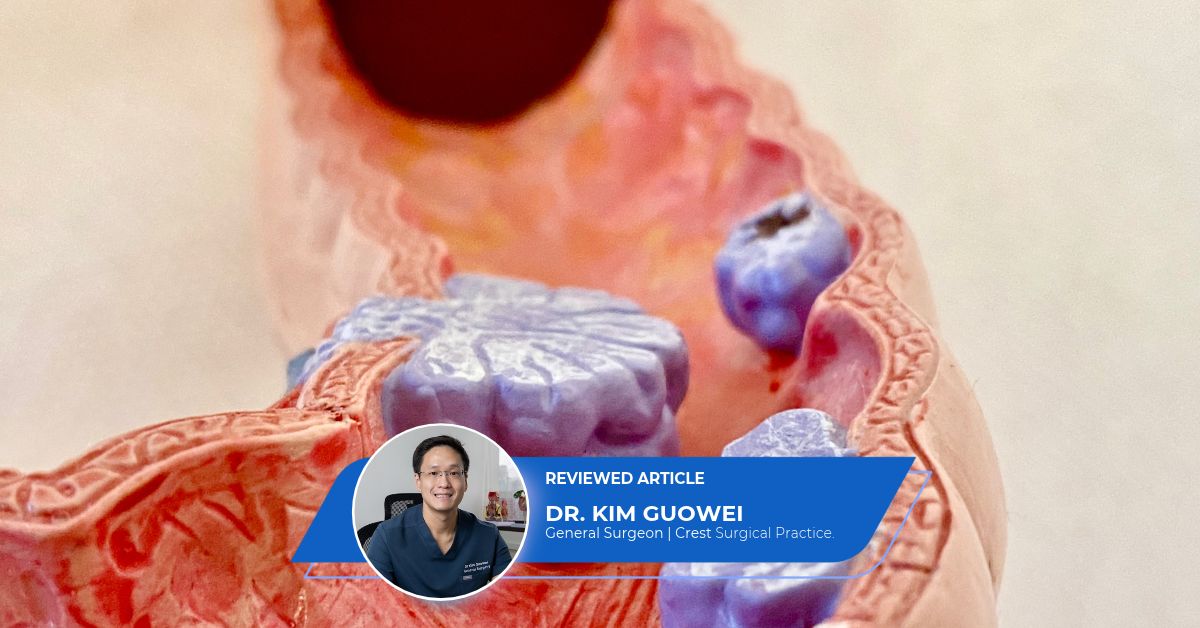
Upon receiving a diagnosis of stomach cancer or oesophageal cancer, patients and their families may have questions about how serious the condition is, whether surgery will be necessary and what treatment is likely to involve. Although the next steps can vary, understanding the assessment process can help patients prepare for discussions with their healthcare team.
Back To: Stomach Cancer Main Page
What Is The Difference Between Stomach And Oesophageal Cancer?
Stomach cancer, also known as gastric cancer, develops in the stomach. Oesophageal cancer develops in the oesophagus, the muscular tube that carries food from the throat to the stomach.
Both cancers can affect swallowing, eating and digestion, although symptoms vary. Oesophageal cancer may cause progressive difficulty swallowing, while stomach cancer may be associated with persistent indigestion, early fullness, abdominal discomfort, unexplained weight loss or bleeding.
These symptoms can also occur with non-cancerous conditions. They do not, by themselves, confirm cancer. Investigations such as an upper gastrointestinal endoscopy, also known as an oesphagogastroduodenoscopy (OGD) or gastroscopy, and biopsy are commonly used to establish a diagnosis.
The location of a tumour matters because it affects which treatments may be suitable and what type of surgery might be considered.
Related Content: You Are At Increased Risk For Oesophageal Cancer If You Get Flushed From Alcohol Consumption
What Happens After A Cancer Diagnosis?
Once cancer has been confirmed, the next step is usually to determine its stage and whether it can be removed surgically.
1. Confirming The Diagnosis
During an upper gastrointestinal endoscopy, a doctor passes a flexible instrument with a camera through the mouth to examine the oesophagus, stomach and the beginning of the small intestine. Tissue samples may be taken for laboratory examination. This is a safe, comfortable and simple investigation that is done as a day procedure under sedation.
The biopsy helps establish the type of cancer. Depending on the findings, additional tests may be needed to characterise the tumour and guide treatment decisions.
2. Determining The Cancer Stage
Staging describes how far the cancer has developed. Doctors assess factors such as the depth of tumour invasion, whether nearby lymph nodes are involved and whether the cancer has spread to other parts of the body.
Tests may include computed tomography (CT) scans, Positron Emission Tomography–Computed Tomography (PET-CT) scans, endoscopic ultrasound or other investigations selected according to the clinical situation.
Staging is important because treatment for an early cancer confined to the superficial layers of the digestive tract may differ substantially from treatment for a cancer that has spread more deeply or to distant organs.
Related Content: Health365 Guide To Medical Imaging For Cancer Screening In Singapore
3. Assessing General Health And Fitness For Treatment
The healthcare team will also consider the patient’s medical history, nutritional status, other illnesses and ability to tolerate treatment.
This assessment is particularly important when major surgery is being considered. Stomach and oesophageal operations can affect eating patterns and nutritional needs, so preparation and recovery planning form part of the overall treatment process.
Does Every Patient Need Surgery?
No. The most appropriate treatment depends on the cancer’s stage, location and biological characteristics.
For selected early-stage cancers, an advanced endoscopic procedure like an endoscopic submucosal dissection (ESD) or endoscopic mucosal resection (EMR) may be sufficient. This involves removing the abnormal tissue through an endoscope rather than making abdominal or chest incisions.
For other cancers, surgery may be recommended to remove the tumour and nearby lymph nodes. Some patients receive chemotherapy or other treatment before surgery to help manage the disease. Additional treatment after surgery may also be recommended according to the final pathology findings.
When cancer has spread to distant organs, treatment may focus on controlling the disease, relieving symptoms and maintaining quality of life. Surgery may still have a role in selected circumstances, but it is not automatically the main treatment.
The options should be discussed with the relevant specialists, including the roles of medical oncology, radiation oncology, gastroenterology and surgery where appropriate.
When Might Robotic Or Minimally Invasive Surgery Be Considered?
If an operation is recommended, patients may wish to understand whether it can be performed using conventional open surgery, laparoscopic surgery or a robotic approach.
In robotic surgery, the surgeon controls specialised instruments from a console. The system provides a magnified, three-dimensional view and allows precise instrument movements within the operating field.
Laparoscopic surgery also uses small incisions and a camera, while open surgery involves a larger incision to access the area being treated.
Minimally invasive approaches may be suitable for selected patients with stomach or oesophageal cancer. However, suitability depends on the tumour’s location and extent, the operation required, the patient’s health and the surgical team’s assessment. Open surgery may be more appropriate in some circumstances.
The use of a robotic system does not, by itself, establish that an operation will produce a better cancer outcome. However, recent studies have shown that robotic gastrectomy can confer better results and outcomes, thus improving safety. The aim is to choose an approach that allows the necessary cancer operation to be performed safely and appropriately.
What Questions Should You Ask Your Cancer Surgeon Regarding Stomach Or Oesophageal Cancer Treatment?
Before deciding on treatment, patients may wish to ask:
- What type and stage of cancer do I have?
- Has the cancer spread to lymph nodes or other organs?
- Is endoscopic treatment an option, or is surgery recommended?
- Would chemotherapy or another treatment be needed before or after surgery?
- What are the benefits, limitations and risks of the proposed operation?
- Am I suitable for robotic or laparoscopic surgery?
- How might treatment affect my eating, digestion and recovery?
- Would a second opinion be helpful before proceeding?
Patients should also ask how the different specialists involved in their care will coordinate treatment.
Understanding Your Treatment Options
A stomach or oesophageal cancer diagnosis does not automatically mean that one particular operation is required. Investigations, staging and discussion with the appropriate specialists help determine which options are reasonable for an individual patient.
Health365 Preferred Doctor Your Can Consider
Dr Kim Guowei is a general surgeon at Crest Surgical Practice whose clinical practice includes upper gastrointestinal surgery, stomach and oesophageal cancer surgery, robotic surgery and advanced endoscopy. His health365 Preferred Doctor page provides further information about his clinical background.
Patients who have received a diagnosis may wish to arrange a specialist consultation to review their investigation results, understand the available treatment options and discuss the next steps. Individual recommendations can only be made after an appropriate clinical assessment.
Contact MedicalTravel.asiaFrequently Asked Questions
Tests may include a biopsy, CT scans, PET-CT scans, endoscopic ultrasound or other investigations, depending on the suspected cancer type and stage. These help doctors determine how far the cancer has developed, whether lymph nodes or other organs may be involved, and which treatments may be appropriate.
No. Treatment depends on the cancer’s type, stage, location and the patient’s general health. Some early cancers may be treated with endoscopic procedures such as ESD or EMR, while others may require surgery, chemotherapy, radiotherapy or other treatments. A specialist assessment helps determine the appropriate approach.
A second opinion may help you better understand your diagnosis, the proposed operation, alternative treatments and the potential risks and benefits. It may be particularly useful if you are uncertain about the recommended treatment or would like to understand whether minimally invasive or robotic surgery is an option in your case.
This medical content has been reviewed by Dr Kim Guowei, a highly skilled upper gastrointestinal, bariatric and robotic surgeon known for his expertise in robotics and advanced endoscopic techniques. He offers comprehensive care for complex digestive disorders, from traditional open surgery to minimally invasive procedures.
Back To: Stomach Cancer Main Page
All content on this site is informative only and is not intended to be a substitute for professional medical advice, diagnosis, or treatment, and should never be relied upon for specific medical advice. If you are experiencing a medical emergency, call 995 immediately or go to the nearest Accident & Emergency department.
health365.sg is a member of 365Asia.