

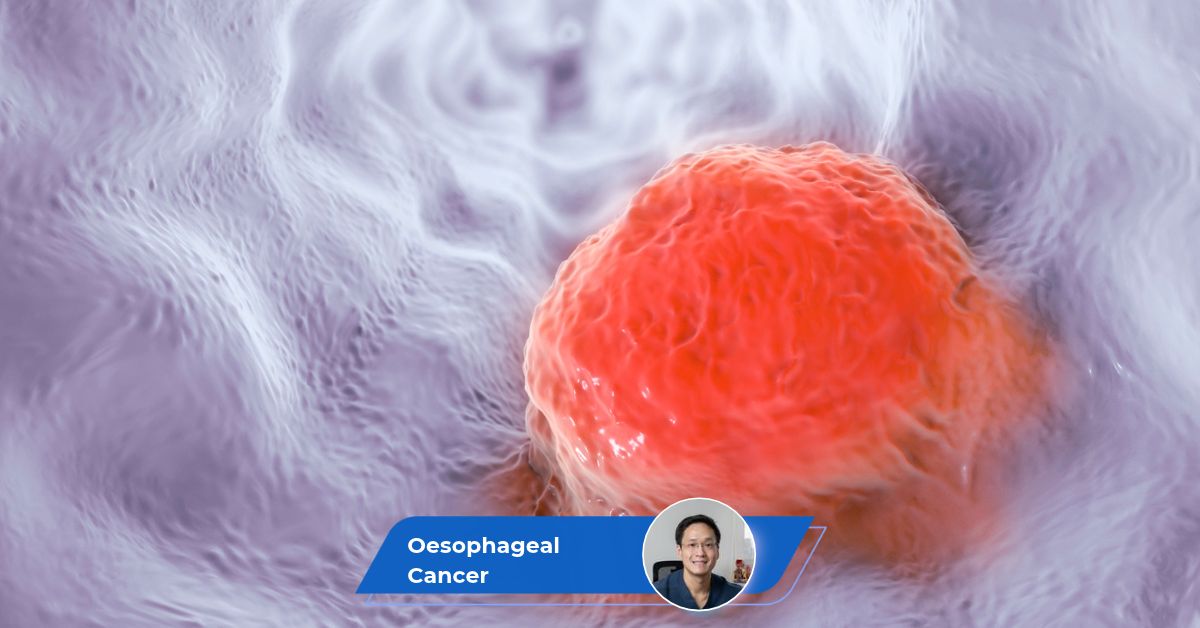
Health365 Guide To Oesophageal Cancer And Treatment Cost In Singapore | 2026
What Is Oesophageal Cancer?
Oesophageal cancer occurs when abnormal cells in the lining of the oesophagus (the muscular tube that carries food and liquids from the throat to the stomach) grow uncontrollably and form a malignant tumour.
The two main histological types of oesophageal cancer are:
- Squamous Cell Carcinoma (SCC): Develops from the flat squamous cells lining the upper and middle sections of the oesophagus.
- Adenocarcinoma (AC): Develops in the glandular cells of the lower oesophagus near the stomach junction, frequently linked to chronic acid reflux and Barrett’s oesophagus.
Back To: Oesophageal & Stomach Conditions Main Page
Oesophageal Cancer Prevalence In Singapore
According to the Singapore Ministry of Health, cancer remains the leading cause of death in Singapore (accounting for 26.6% of all deaths in 2025). Oesophageal cancer is less common than colorectal or stomach cancer locally, with approximately 234 new cases and 220 deaths reported annually in Singapore (as reported by The Singapore Medical Association citing WHO data). However, it carries a high mortality rate because early-stage tumours frequently produce no noticeable symptoms. Men are three to four times more likely to develop oesophageal cancer than women, with incidence rising sharply in older adults.
What Are The Causes Of Oesophageal Cancer & Risk Factors?
Oesophageal cancer develops when chronic irritation or genetic factors damage the DNA of oesophageal cells. Major risk factors include:
- Smoking And Tobacco Use: Tobacco smoke introduces carcinogens that directly damage the oesophageal lining, substantially increasing the risk of squamous cell carcinoma.
- Heavy Alcohol Consumption & Alcohol Flushing: Regular alcohol intake irritates oesophageal tissue. Individuals who experience facial flushing after drinking alcohol—a genetic enzyme deficiency affecting roughly one-third of Singaporeans—accumulate acetaldehyde (a probable human carcinogen), placing them at significantly higher risk.
- Chronic Gastro-Oesophageal Reflux Disease (GORD): Persistent stomach acid refluxing into the lower oesophagus causes ongoing inflammation and cellular changes.
- Barrett’s Oesophagus: A condition in which the normal lining of the lower oesophagus changes due to long-term acid reflux, strongly predisposing patients to oesophageal adenocarcinoma.
- Obesity: Excess body weight increases intra-abdominal pressure and acid reflux, raising the risk of adenocarcinoma.
- Dietary Habits: Diets low in fresh fruits and vegetables, or frequent consumption of extremely hot beverages and preserved foods, increase susceptibility.
- Medical & Family History: A personal history of head and neck cancers, prior chest radiotherapy, caustic oesophageal injury, achalasia, or rare hereditary syndromes (such as Peutz-Jeghers syndrome or Cowden syndrome) elevates risk.
What Are The Symptoms Of Oesophageal Cancer?
Early-stage oesophageal cancer rarely causes symptoms. As the tumour grows and narrows the food pipe, symptoms become progressively more noticeable and may include:
- Difficulty Swallowing (Dysphagia): A sensation that food is sticking in the throat or chest, typically starting with solid foods before progressing to softer foods and liquids.
- Painful Swallowing (Odynophagia): Discomfort or a burning pain when swallowing food or drinks.
- Unintentional Weight Loss: Rapid weight loss resulting from reduced food intake and cancer-related metabolic changes.
- Persistent Heartburn Or Indigestion: Worsening acid reflux or upper abdominal discomfort that does not improve with standard antacids.
- Chest Pain Or Pressure: A burning, aching, or squeezing sensation behind the breastbone.
- Chronic Cough Or Hoarseness: A persistent cough or voice changes if the tumour affects nearby nerves or airways.
- Regurgitation Or Vomiting: Bringing up undigested food or saliva.
- Signs Of Upper Gastrointestinal Bleeding: Vomiting blood or passing dark, tarry stools (melaena), which can lead to anaemia and fatigue.
How To Prevent This Condition?
While not every case of oesophageal cancer can be prevented, you can lower your risk through targeted lifestyle and medical measures:
- Quit Smoking: Avoiding all forms of tobacco dramatically lowers your risk of squamous cell carcinoma.
- Limit Alcohol Intake: Reduce or avoid alcoholic beverages, particularly if you experience alcohol-induced facial flushing.
- Manage Acid Reflux Effectively: Seek medical treatment for persistent heartburn or GORD to prevent chronic oesophageal inflammation and Barrett’s oesophagus.
- Maintain A Healthy Weight: Achieving a healthy body mass index reduces reflux pressure and lowers adenocarcinoma risk.
- Adopt A Nutrient-Rich Diet: Eat a balanced diet rich in fresh fruits and vegetables, and allow scalding hot drinks to cool before consuming.
- Undergo Targeted Surveillance: Individuals diagnosed with Barrett’s oesophagus or those with high-risk family histories should consult a specialist regarding periodic endoscopic monitoring.
What Are The Costs Of Screening & Testing For Oesophageal Cancer?
In Singapore, population-wide screening for oesophageal cancer is not routinely recommended for average-risk individuals, but targeted diagnostic investigations are essential for symptomatic or high-risk patients. Private-sector diagnostic and staging costs generally range from S$500 to S$3,000+, guided by Ministry of Health (MOH) Fee Benchmarks (as of 1 June 2026) and prevailing private market rates:
| Screening / Diagnostic Test | Function & Description | Estimated Cost / MOH Fee Benchmark (Private Sector)* |
|---|---|---|
| Upper GI Endoscopy (Gastroscopy) With/Without Biopsy (TOSP: SF701I) | A thin, flexible camera (endoscope) is passed through the mouth under sedation to examine the oesophagus and collect tissue samples (biopsy) for laboratory confirmation. | Surgeon Fee Benchmark: S$650–S$1,100 Anaesthetist Fee Benchmark: S$550–S$800 Day Surgery Hospital Fee Benchmark: S$1,000–S$1,700 |
| Endoscopic Ultrasound (EUS) | Combines endoscopy with ultrasound imaging to assess how deeply the tumour has invaded the oesophageal wall and whether nearby lymph nodes are involved. | S$1,500–S$3,000+ (varies by hospital facility and biopsy needs) |
| Computed Tomography (CT) Scan | Cross-sectional X-ray imaging of the chest, abdomen, and pelvis to evaluate tumour size and check for spread to adjacent organs. | From S$500–S$1,200+ |
| PET-CT Scan | Whole-body metabolic and anatomical scan used to detect distant metastases and guide accurate cancer staging. | From S$1,800–S$2,500+ |
*Note: Surgeon, anaesthetist, and hospital fee benchmarks above reflect official MOH Fee Benchmarks (surgeon/anaesthetist benchmarks effective 1 June 2026; day surgery hospital benchmark effective 15 June 2023). Actual private-sector bills vary depending on facility charges, sedation type, histology/laboratory fees, and case complexity. Note that routine screening gastroscopy without medical indication is not MediSave or MediShield Life claimable. Please verify exact quotations directly with your chosen clinic or hospital.
Related Content: 365Asia List Of Top Radiologists In Singapore
Which Doctor For Treatment Of Oesophageal Cancer?
Because oesophageal cancer requires precise staging and multimodal care, management typically involves a multidisciplinary team of specialists:
- Upper Gastrointestinal & General Surgeon: An Upper Gastrointestinal (Upper GI) Surgeon specialises in diagnosing and surgically treating conditions of the oesophagus and stomach. They perform diagnostic and therapeutic advanced endoscopy—such as Endoscopic Submucosal Dissection (ESD) for early-stage lesions—as well as minimally invasive, robotic, or open oesophagectomy to remove oesophageal tumours.
- Gastroenterologist: A Gastroenterologist specialises in digestive tract disorders and frequently conducts the initial diagnostic upper GI endoscopy (gastroscopy) and biopsy when patients present with swallowing difficulties or persistent reflux. They also perform endoscopic ultrasound (EUS) for local staging and palliative oesophageal stenting.
- Medical Oncologist: A Medical Oncologist plans and administers systemic drug therapies, including chemotherapy, targeted therapy, and immunotherapy. For locally advanced oesophageal cancer, systemic therapy is often given before surgery (neoadjuvant therapy) to shrink the tumour or after surgery (adjuvant therapy) to lower recurrence risk.
- Radiation Oncologist: A Radiation Oncologist designs targeted high-energy radiation treatment plans. Radiotherapy is frequently combined with chemotherapy (chemoradiotherapy) either prior to surgery or as definitive non-surgical treatment for patients unable to undergo major operations.
Preferred Doctors For Oesophageal Cancer Treatment In Singapore
If you are seeking a specialist for oesophageal cancer evaluation, advanced endoscopy, or surgery, you may consider our Preferred Doctor partner:
Dr Kim Guowei – General Surgeon in Singapore
Dr Kim Guowei is a Senior Consultant General Surgeon at Crest Surgical Practice with subspecialty expertise in Upper Gastrointestinal Surgery, Bariatric and Metabolic Surgery, Robotic Surgery, and Advanced Endoscopy. An accomplished advanced endoscopist and Da Vinci Xi robotic console surgeon, Dr Kim performs intricate minimally invasive procedures including Endoscopic Submucosal Dissection (ESD) for early oesophageal and stomach cancers, as well as minimally invasive and robotic upper gastrointestinal cancer surgery.
Articles Reviewed Or Featuring Dr Kim Guowei:
- You Are At Increased Risk For Oesophageal Cancer If You Get Flushed From Alcohol Consumption
- Stomach Or Oesophageal Cancer Diagnosis – What Happens Next
- Early Stomach Or Oesophageal Cancer Removal Without Major Surgery
- Oesophageal Cancer Surgery: What Is An Oesophagectomy, And Can It Be Done Using Minimally Invasive Or Robotic Techniques?

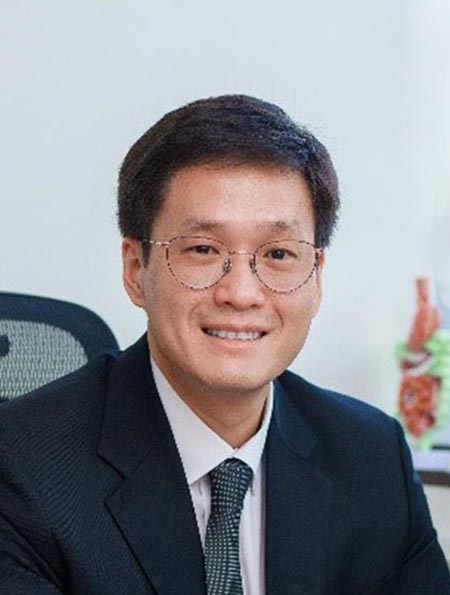
Dr Kim Guowei
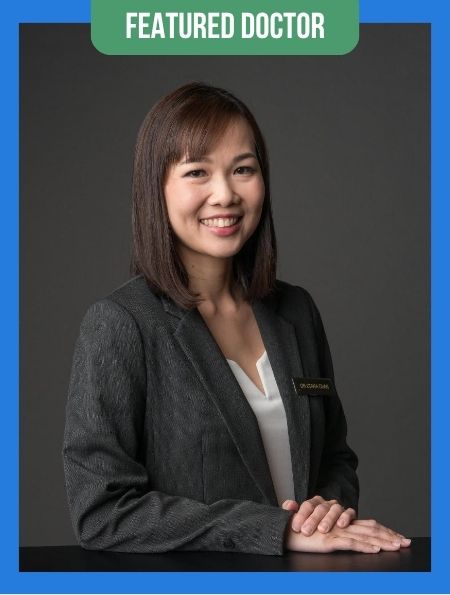
[SG] Featured Doctor- Dr Diana Chan
Resources To Help You Find A Doctor
- 365Asia: Find A Doctor for Surgeons In Singapore For Robotic Stomach Surgery 2026
- 365Asia List of Top 10 Stomach Surgeons In Singapore
Which Hospitals And Medical Centres Are There For Screening & Treatment?
Patients in Singapore can access oesophageal cancer diagnostics, multidisciplinary tumour boards, and surgical or oncological care across both public and private healthcare institutions:
- Public Sector: National cancer centres and tertiary public hospitals—including the National Cancer Centre Singapore (NCCS), National University Cancer Institute, Singaporehttps://www.ncis.com.sg/ (NCIS), Singapore General Hospital (SGH), National University Hospital (NUH), and Tan Tock Seng Hospital (TTSH)—provide subsidised diagnostic endoscopy, chemoradiotherapy, and upper gastrointestinal oncologic surgery.
- Private Sector: Private specialist clinics and surgical centres located at Mount Elizabeth Hospital (Orchard and Novena), Gleneagles Hospital, Farrer Park Hospital, and Mount Alvernia Hospital offer diagnostic gastroscopy, advanced endoscopic resection, robotic surgery, and private oncology services. Patients seeking outpatient diagnostic imaging (such as CT or PET-CT scans) can also utilise dedicated ambulatory imaging centres such as AsiaMedic, RadLink, and Lifescan Imaging.
Explore: 365Asia Find A Hospital resources.
What Is The Cost Of Oesophageal Cancer Treatment In Singapore?
Treatment costs for oesophageal cancer depend heavily on the stage at diagnosis, whether endoscopic or surgical resection is required, and the length of hospitalisation. The table below outlines official MOH Surgeon and Anaesthetist Fee Benchmarks (for single-coded procedures, effective 1 June 2026) in the private sector:
| Treatment / Procedure (MOH TOSP Code) | Description & Clinical Purpose | MOH Fee Benchmark (Private Sector Surgeon / Anaesthetist)* |
|---|---|---|
| Endoscopic Mucosal Resection (EMR) / Complicated Polypectomy (SF813E) | Endoscopic removal of superficial abnormal mucosal tissue or early-stage lesions without external incisions. | Surgeon Fee: S$1,200–S$1,900 Anaesthetist Fee: S$650–S$950 |
| Endoscopic Submucosal Dissection (ESD) (SF705E) | Advanced endoscopic technique that precisely dissects and removes early-stage oesophageal tumours confined to the inner lining in a single piece. | Surgeon Fee: S$3,400–S$5,200 |
| Endoscopic Oesophageal Stent Placement (SF807E) | Insertion of a self-expanding metal stent via endoscopy to keep a narrowed oesophagus open and relieve swallowing difficulties. | Surgeon Fee: S$1,900–S$4,800 Anaesthetist Fee: S$750–S$1,200 |
| Oesophagectomy – Allison / Ivor-Lewis Operation (SF804E) | Major surgical resection removing the cancerous portion of the oesophagus and nearby lymph nodes, reconnecting the remaining oesophagus to the stomach. | Surgeon Fee: S$14,800–S$22,300 |
| Total Oesophagectomy (SF809E) | Complete surgical removal of the oesophagus with reconstruction of the digestive tract, typically performed for extensive or mid-to-upper oesophageal tumours. | Surgeon Fee: S$18,800–S$26,500 |
| Chemotherapy, Radiotherapy & Immunotherapy | Systemic drug therapies and targeted radiation administered before surgery (neoadjuvant), after surgery (adjuvant), or as definitive/palliative care. | Varies by drug regimen, number of cycles, and Cancer Drug List (CDL) subsidy/claim limits |
*Note: The figures above represent official MOH Surgeon and Anaesthetist Fee Benchmarks (effective 1 June 2026) for professional fees only and exclude hospital ward charges, ICU stay, consumables, surgical implants/staplers, pathology, and multi-procedure adjustments. Please consult your specialist and hospital financial counsellor for a personalised estimated bill.
Treatment for oesophageal cancer is tailored to the tumour’s stage, location, cell type, and the patient’s overall fitness. Common treatment modalities include:
Endoscopic Treatments (For Very Early-Stage Cancer)
- Endoscopic Submucosal Dissection (ESD) & Endoscopic Mucosal Resection (EMR): For cancers detected at Stage 0 or Stage I that have not spread into deeper muscle layers or lymph nodes, an advanced endoscopist can remove the lesion through the mouth using specialised endoscopic instruments, preserving the oesophagus.
Surgical Procedures
- Oesophagectomy (Minimally Invasive, Robotic, Or Open): For resectable Stage I to Stage III tumours, surgeons remove the affected section of the oesophagus along with surrounding lymph nodes and pull the stomach (or a segment of intestine) up to reconstruct the swallowing pathway. Minimally invasive and robotic-assisted techniques use smaller incisions to enhance surgical precision and support recovery.
Systemic & Radiation Therapies
- Neoadjuvant / Adjuvant Chemoradiotherapy: Combining chemotherapy and radiation therapy before surgery helps shrink locally advanced tumours and improve surgical clearance, while post-operative therapy reduces recurrence risk.
- Targeted Therapy & Immunotherapy: Used alongside chemotherapy for specific tumour biomarkers (such as HER2 or PD-L1 expression) in advanced or metastatic oesophageal cancer.
Palliative & Supportive Care
- Oesophageal Stenting & Nutritional Support: For patients with advanced obstruction who are not surgical candidates, endoscopic stent placement, palliative radiotherapy, or feeding tube support helps maintain nutrition and swallowing comfort.
Additional Resources On Costs
- Chemotherapy and Other Costs of Cancer Treatment in Singapore
- Financial Planning For Cost Of Medical Treatment
- MediSave And Medishield Life Coverage For Overseas Singaporeans
What Are The Insurance And Financing Considerations For This Condition?
Health & Hospitalisation (H&S) Insurance
- MediShield Life: Singapore’s national basic health insurance scheme automatically covers all Singapore Citizens and Permanent Residents for life, regardless of age or pre-existing medical conditions. It provides coverage for eligible inpatient hospitalisation, surgery and outpatient cancer treatments, including treatment for oesophageal cancer. This may include oesophagectomy (surgical removal of part or all of the oesophagus), hospital investigations and eligible cancer treatments such as chemotherapy and radiotherapy. Coverage is subject to applicable claim limits, deductibles, co-insurance and other scheme conditions. MediShield Life provides its highest level of coverage for subsidised treatment in Class B2/C wards at public hospitals. Its maximum claim limit is S$200,000 per policy year, with no lifetime claim limit.
- Integrated Shield Plans (IPs): For patients seeking treatment in Class A/B1 public hospital wards or private hospitals, Integrated Shield Plans provide additional coverage on top of MediShield Life. Depending on the insurer and policy, these plans can offer substantially higher annual claim limits, potentially reaching S$1 million or more, and cover a larger proportion of eligible hospitalisation and surgical expenses. They may also provide additional coverage for outpatient cancer drug treatments on the Cancer Drug List (CDL), subject to the individual policy’s limits and conditions.
- Critical Illness (CI) Insurance: Unlike hospitalisation insurance, which reimburses eligible medical expenses, CI insurance provides a lump-sum cash payout when the insured is diagnosed with a specified critical illness that meets the policy’s definition. Oesophageal cancer may qualify under the major cancer definition if it is an invasive malignant tumour confirmed through histological examination and meets the policy’s requirements. Some policies also offer early-stage critical illness coverage, although eligibility depends on the specific definitions and exclusions. The payout can help offset loss of income, ongoing living expenses, rehabilitation, caregiving and other non-medical costs during recovery.
Find A Financial Adviser
If you are looking for a financial adviser to help navigate the complexities of insurance claims and financial planning for medical contingencies, you can consider our Preferred Financial Adviser partners:

Find A Panel Doctor
Looking for a doctor on the panel of your insurance provider? The following may be useful:
Read: Health Insurance & Panel Doctor Networks
MediSave Usage & Government Subsidies
- Government Subsidies: Subsidised Singaporean patients receiving cancer care at public hospitals and national cancer centres (such as NCCS or NCIS) receive means-tested government subsidies of up to 50% to 80% on hospitalisation, surgery, diagnostic investigations, and subsidised cancer drugs.
- Inpatient & Surgical MediSave Withdrawal: MediSave can be used towards inpatient hospital charges (up to S450perday,orS450 per day, or S450perday,orS300 per day for approved day surgeries) and surgical operation fees based on the MOH Table of Surgical Procedures (TOSP) complexity grading (ranging from S250forTable1AuptoS250 for Table 1A up to S250forTable1AuptoS7,550 for Table 7C).
- Outpatient Cancer Scans & Treatment: Cancer patients may withdraw up to S$600 per year from MediSave for outpatient diagnostic CT, MRI, or PET scans required for cancer staging and monitoring, alongside monthly MediSave limits for CDL-listed cancer drugs and radiotherapy sessions.
Financial Assistance (MediFund & Support Schemes)
- MediFund: A government endowment safety net for eligible Singapore Citizens who face financial hardship paying remaining medical bills even after subsidies, MediShield Life, and MediSave. Applications are assessed through Medical Social Workers at public healthcare institutions.
- Singapore Cancer Society (SCS): Provides financial assistance schemes (such as the SCS Cancer Treatment Fund and Welfare Aid), subsidised cancer rehabilitation, psychosocial counselling, and nutritional support for needy cancer patients in Singapore.
- Hospital & Institutional Cancer Funds: Public health clusters and national cancer centres administer dedicated patient support funds (such as the NCCS Cancer Fund and NUHS Fund) to assist lower-income patients with out-of-pocket medication, nutritional milk feeds, and supportive care costs.
FAQs
The oesophagus is a flexible, muscular tube that can stretch easily around a growing tumour. Consequently, early-stage oesophageal cancer rarely causes noticeable pain or obstruction. Symptoms such as difficulty swallowing (dysphagia) typically appear only after the tumour has narrowed a significant portion of the food pipe, by which time the disease may already be locally advanced.
Yes. Facial flushing after alcohol consumption—often called “Asian flush”—is caused by a genetic deficiency in the enzyme aldehyde dehydrogenase 2 (ALDH2), which prevents the body from breaking down acetaldehyde efficiently. Acetaldehyde is a known carcinogen that damages DNA in the oesophageal lining. Individuals with alcohol flushing who drink alcohol regularly face a substantially elevated risk of developing squamous cell oesophageal cancer compared to non-flushers.
Yes, in carefully selected early-stage cases. When oesophageal cancer is detected at Stage 0 or Stage I and remains confined to the superficial inner mucosal layers without lymph node spread, an experienced advanced endoscopist can remove the tumour through the mouth using Endoscopic Submucosal Dissection (ESD) or Endoscopic Mucosal Resection (EMR). This preserves the oesophagus and avoids major open or thoracic incisions.
Diagnosis begins with an upper gastrointestinal endoscopy (gastroscopy), during which a doctor examines the oesophageal lining with a camera and takes tissue biopsies to confirm the cancer cell type. Once confirmed, staging investigations—including Endoscopic Ultrasound (EUS), CT scans of the chest and abdomen, and a PET-CT scan—are performed to assess tumour depth, lymph node involvement, and whether the cancer has spread to distant organs.
In traditional open oesophagectomy, surgeons make larger incisions in the chest and abdomen to remove the diseased oesophagus and reconnect the digestive tract. In minimally invasive (laparoscopic/thoracoscopic) or robotic-assisted oesophagectomy, surgeons operate through small keyhole incisions using high-definition 3D cameras and precision instruments. While suitability depends on tumour location, stage, and patient anatomy, minimally invasive and robotic approaches generally reduce surgical trauma, blood loss, and post-operative pain while supporting faster recovery.
Get An Appointment
If you are experiencing persistent swallowing difficulties, chronic acid reflux, or wish to consult a specialist regarding oesophageal cancer screening or treatment, click the button below for assistance.
Contact MedicalTravel.asiaAdditional Resources
- Robotic Surgery – Precision and Innovation in General Surgery | Crest Surgical Practice
- Esophageal Cancer | National University Cancer Institute Singapore
- Esophageal cancer | Mayo Clinic
- Surgery to remove your oesophagus | Cancer Research UK
- Surgery for Esophageal Cancer | American Cancer Society