

Pancreatic Cancer – The Big Story

Pancreatic Cancer: Silent, Aggressive, Deadly – The Big Story
Overview Of Pancreatic Cancer- What You Need To Know About This Disease
Pancreatic cancer occurs when abnormal cells in the pancreas (a gland situated behind the stomach that produces digestive enzymes and hormones) grow uncontrollably. It is often referred to as a “silent” disease because symptoms rarely appear in the early stages. Consequently, many patients are only diagnosed when the cancer has already progressed or spread to other organs.
In Singapore, pancreatic cancer is one of the most lethal malignancies. According to the Singapore Cancer Registry Annual Report 2023, it has the lowest five-year age-standardised relative survival (ASRS) rate among the ten most frequent cancers, recorded at 12.9% for males and 15.2% for females for the period of 2019-2023.
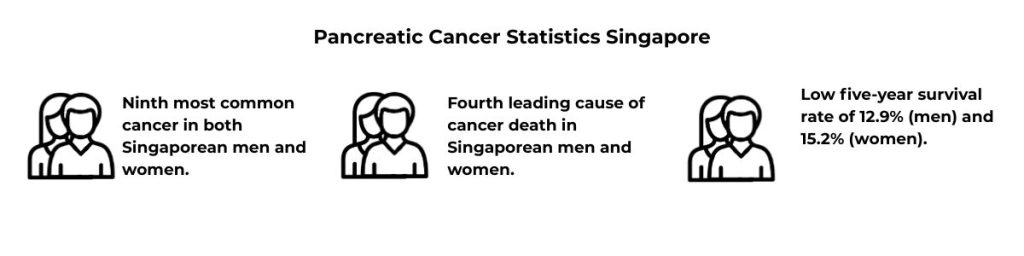
Pancreatic Cancer Statistics
Data from the Singapore Cancer Registry (2019-2023) highlights the significant impact of this disease:
- Incidence: It ranks as the ninth most common cancer in both Singaporean men and women.
- Mortality Ranking: Pancreatic cancer is the fourth leading cause of cancer death in Singaporean men and women.
- Survival Rates: The five-year survival rate remains critically low, at 12.9% (men) and 15.2% (women), reflecting the aggressive nature of the disease and the frequency of late-stage diagnosis.
Pancreatic Cancer Symptoms To Watch For
Early-stage pancreatic cancer typically does not cause noticeable signs. As the tumour grows, patients may experience:
- Jaundice: Yellowing of the eyes and skin, often accompanied by dark urine.
- Abdominal or Back Pain: Persistent pain in the upper abdomen that may radiate to the back.
- Unexplained Weight Loss: Significant loss of appetite and weight without a clear cause.
- Digestive Issues: Including nausea, vomiting, or changes in stool (such as pale or oily stools).
- New-onset Diabetes: Especially when it occurs in an older individual without a family history of the condition.
What Are The Risk Factors?
While the exact cause of most pancreatic cancers is not fully understood, several factors may increase an individual’s risk:
- Age: The risk increases significantly as people grow older, with most cases diagnosed in those over 60.
- Smoking: Smokers are significantly more likely to develop pancreatic cancer than non-smokers.
- Chronic Conditions: Long-standing diabetes and chronic pancreatitis (inflammation of the pancreas) are known risk factors.
- Family History: A history of pancreatic cancer or certain genetic syndromes (e.g., BRCA2 gene mutation) can increase risk.
- Obesity: Maintaining a high body mass index (BMI) is associated with an elevated risk.
Pancreatic Cancer Diagnosis And Treatment Options In Singapore
Diagnosis often involves a combination of imaging tests (such as CT scans, MRI, or ultrasound), endoscopic procedures, and biopsies to confirm the presence of cancerous cells.
Treatment plans depend on the stage of the cancer and the patient’s overall health:
- Surgery: If the cancer is localised, procedures such as the Whipple operation may be performed to remove the tumour.
- Chemotherapy: Use of drugs to kill cancer cells, often used before or after surgery, or as a primary treatment for advanced cases.
- Radiotherapy: High-energy beams used to target and destroy cancer cells.
- Palliative Care: Focused on relieving symptoms and improving the quality of life for patients with advanced disease.
Learn More About Pancreatic Cancer
Find The Best Pancreas Surgeon In Singapore
When it comes to your pancreatic health, you naturally would like to find the best pancreas surgeon in Singapore. Find out how and get a head start from our article on Finding The Best Pancreas Surgeon In Singapore.
Comment: The row below to be moved to article for healthcare professionals article
Find A Doctor
Verified Healthcare Professionals
We connect you with a network of qualified and experienced doctors who specialise in chronic health conditions, health screening, and longevity.
Trusted Information Source
We pride ourselves on providing accurate, up-to-date, and evidence-based information about each disease, its prevention, and treatment.
Privacy and Security
Your health information and personal data are paramount to us. We will protect your privacy throughout the booking process and beyond.
Convenience at Your Fingertips
Our user-friendly platform allows you to find and book appointments 24/7 from the comfort of your home.
Our Preferred Doctor You Can Consider For Pancreas Cancer Surgery
- Dr Lee Lip Seng is a highly regarded surgeon who specialises in advanced minimally invasive robotic and laparoscopic techniques for the treatment of complex liver, pancreatic, and gallbladder conditions. Patients frequently seek his care due to his exceptional clinical expertise and a steadfast commitment to delivering compassionate, patient-centred results.



No product found.
Book An Appointment
Take a proactive step for your health and peace of mind today. If you need to see a doctor about pancreatic cancer, our team is here to assist.
Financials
[findDoctor category="financial consultants" countries="Singapore" " limit="15"]
Related Content





FAQs On Pancreatic Cancer
Common symptoms include:
- Persistent abdominal or back pain
- Unexplained weight loss
- Jaundice (yellowing of the skin or eyes)
- Fatigue
- Changes in stool or appetite
If you notice any of these signs, don’t delay — early evaluation by a pancreatic specialist can make all the difference.
Risk factors include:
- Smoking
- Family history of pancreatic or other cancers
- Diabetes
- Chronic pancreatitis
- Age over 60
Understanding your risk can help you take preventive steps or get screened earlier.
Diagnosis usually involves a combination of:
- Imaging tests (CT, MRI, endoscopic ultrasound)
- Blood tests (like CA 19-9 tumor markers)
- Biopsy
If you’re at high risk or have symptoms, your doctor may refer you to a pancreatic surgeon or cancer specialist for further evaluation.
Yes, especially when caught early. Treatment options include:
- Surgery (such as the Whipple procedure)
- Chemotherapy
- Radiation therapy
A multidisciplinary approach involving a pancreatic surgeon improves outcomes and survival rates.
If you’ve been diagnosed with a pancreatic mass or have suspicious symptoms, you should consult a pancreatic surgeon right away. Specialists can provide a more accurate diagnosis and offer advanced treatment options, including minimally invasive surgical techniques.
Additional Resources
- Pancreatic Cancer | Dr Lee Lip Seng
- Pancreatic cancer | Mayo Clinic
- Pancreatic cancer | Cleveland Clinic
- Pancreatic cancer | Healthhub
.