

Piles-The Big Story

Piles Singapore: Because Sitting Shouldn’t Hurt
Piles Singapore – Medically known as haemorrhoids, piles are a common condition that affects about 1 in 3 people in Singapore.
There are two main types of piles:
- Internal piles: Located inside the rectum, often painless but may cause bleeding during bowel movements.
- External piles: Found under the skin around the anus, often painful and may cause itching or swelling.
Find out about piles treatment, including modern methods such as laser surgery. You do not have to sit and suffer in silence.
What Are The Symptoms Of Piles?
Symptoms of piles may include:
- Bright red bleeding during bowel movements.
- Anal itching or irritation.
- Pain or discomfort while sitting.
- Anal swelling or lumps.
- Mucus discharge after passing stool.
- A feeling of incomplete evacuation.
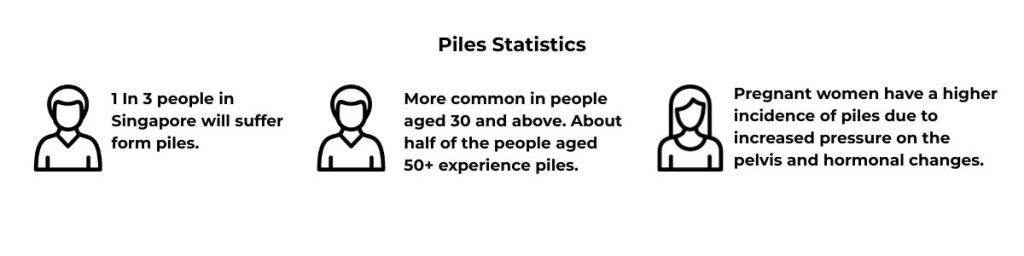
Singapore Statistics For Piles
Statistics from SingHealth indicates that :
- An estimated one in three Singaporeans will experience piles in their lifetime.
- Piles is more common in adults aged 30 and above. About 50% of people aged 50 and above will experience piles symptoms.
- Pregnant women have a higher incidence of piles due to increased pressure on the pelvis and hormonal changes.
What Are The Common Causes Of Piles And Who Is At Risk?
What Causes Piles?
Piles develop when the veins around the anus become under pressure and swell. Common causes include:
- Chronic constipation or diarrhoea.
- Low-fibre diet.
- Pregnancy.
- Prolonged sitting.
- Obesity.
- Ageing.
- Heavy lifting.
Who Is At Risk For Developing Piles?
While piles can affect anyone, certain risk factors increase susceptibility:
- Family history.
- Pregnancy and childbirth.
- Sedentary lifestyle.
- Chronic constipation.
- Low-fibre diet.
- Older age.
Recognising these risk factors can help in piles prevention.
Learn More About Piles
Find The Best Colorectal Surgeon In Singapore
When it comes to your colorectal health, you naturally would like to find the best colorectal surgeon in Singapore. How would you identify such a doctor? Find out from our Guide To Finding The Best Colorectal Surgeon In Singapore.
Comment: The row below to be moved to article for healthcare professionals article
Find A Doctor
Verified Healthcare Professionals
We connect you with a network of qualified and experienced doctors who specialise in chronic health conditions, health screening, and longevity.
Trusted Information Source
We pride ourselves on providing accurate, up-to-date, and evidence-based information about each disease, its prevention, and treatment.
Privacy and Security
Your health information and personal data are paramount to us. We will protect your privacy throughout the booking process and beyond.
Convenience at Your Fingertips
Our user-friendly platform allows you to find and book appointments 24/7 from the comfort of your home.
Our Preferred Doctor You Can Consider For Piles Treatment
Dr Daniel Lee is a highly experienced colorectal surgeon in Singapore, known for his expertise in minimally invasive techniques such as laparoscopic colorectal surgery, TAMIS, and advanced laser procedures for piles, fistulas, and pilonidal disease. Dr Lee is trusted for handling even the most challenging cases.

Powered by Find by 365Asia


[SG] Featured Doctor- Dr Kevin Koo
Orthopaedic Surgeon In Singapore
If you’re experiencing persistent pain, bleeding, or swelling from piles, it’s a good time to consult a colorectal surgeon. Early evaluation helps us rule out other conditions and tailor a treatment plan that fits your needs. Most treatments today are quick, effective, and far more comfortable than patients expect, so there’s no need to suffer in silence.
Dr Daniel Lee
Book An Appointment
Take a proactive step for your health and peace of mind today. If you need to see a doctor about piles treatment, our team is here to assist.
Financials
[findDoctor category="financial consultants" countries="Singapore" " limit="15"]
Related Content




FAQs - Test Your Knowledge About Piles
Piles occur when increased pressure in the veins of the rectum or anus causes them to swell. Common causes include chronic constipation, straining during bowel movements, pregnancy, obesity, and prolonged sitting. A low-fibre diet and lack of physical activity also contribute to the condition
Treatment depends on the severity of the condition. Options include:
- Lifestyle changes: Increasing fibre intake, staying hydrated, and exercising regularly.
- Medications: Creams, ointments, or suppositories to relieve pain and itching.
- Minimally invasive procedures: Rubber band ligation, sclerotherapy, or infrared coagulation.
- Surgical treatments: For severe cases, procedures such as haemorrhoidectomy, stapled haemorrhoidopexy, or laser piles treatment may be recommended.
In most cases, piles are not dangerous or life-threatening. They are a common condition that can cause discomfort, pain, or bleeding, but they rarely lead to serious complications. However, if left untreated, piles can become thrombosed (clotted), prolapsed, or cause anaemia due to chronic bleeding. Persistent symptoms should always be evaluated by a doctor to rule out other colorectal conditions such as polyps or cancer.
No. Most mild and moderate piles can be treated without surgery using dietary adjustments, topical medications, and clinic-based procedures. Surgery is usually recommended only when piles are large, prolapsed, or keep returning despite other treatments.
Laser piles treatment is a modern, minimally invasive procedure where a laser beam is used to shrink the haemorrhoidal tissue. It causes less bleeding, minimal pain, and allows faster recovery compared to traditional surgery. Many patients return to normal activities within a few days after the procedure.
Additional Resources
- Tips to Avoid Developing Haemorrhoids | Colorectal Clinic Associates
- Rectal Prolapse vs Hemorrhoids: Key Differences Explained | Ark Surgical Clinic
- Piles (Haemorrhoids): A Common Problem in Singapore | SingHealth
- Clinical Outcomes and Effectiveness of Laser Treatment for Hemorrhoids: A Systematic Review | National Library Of Medicine
- Hemorrhoids During Pregnancy | Cleveland Clinic
.