

Hawker Culture, Fatty Liver & Gallstones: Singapore’s Metabolic Interconnection – The Big Story

Hawker Culture, Fatty Liver & Gallstones: Singapore’s Metabolic Interconnection
Understanding Singapore’s Metabolic Health Triad
In Singapore, digestive and hepatic health issues are frequently viewed as isolated conditions. However, clinical literature and modern Hepatopancreatobiliary (HPB) practice reveal a profound biological connection between daily dietary habits, Non-Alcoholic Fatty Liver Disease (now called Metabolic Dysfunction-Associated Steatotic Liver Disease – MASLD), and gallstone formation.
With local hawker cuisine often centered around refined carbohydrates, saturated fats, and rich gravies, fat accumulation in the liver is escalating rapidly. When the liver becomes metabolically stressed, it alters bile secretion—creating a direct path to cholesterol gallstones.
Understanding this metabolic connection, securing timely diagnostic imaging, and consulting an experienced HPB surgical specialist can shorten your recovery pathway and prevent severe abdominal complications.
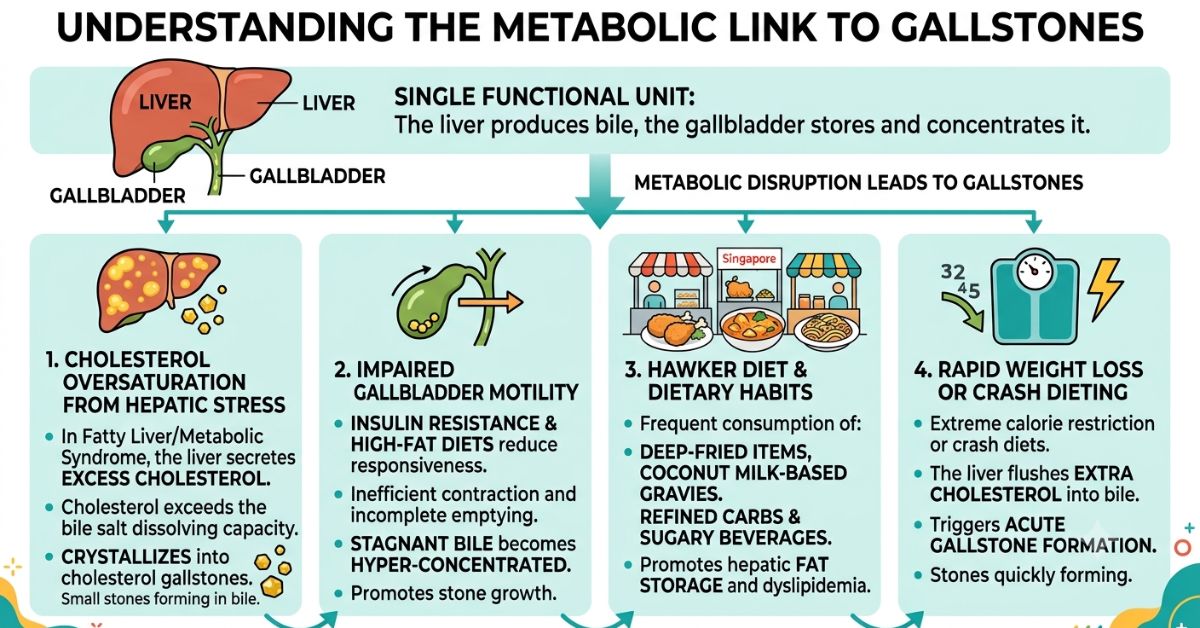
Click to expand infographic.
Gallstones & Fatty Liver In Singapore – The Statistics
The burden of metabolic liver and gallbladder conditions in Singapore represents a growing public health priority.
- High Fatty Liver Prevalence: Studies indicate that up to 40% of Singaporean adults suffer from NAFLD / MASLD – significantly above global historic averages, driven by rising rates of obesity and metabolic syndrome.
- Co-Occurrence in Surgery: Clinical studies tracking patients undergoing gallbladder removal (cholecystectomy) in Singapore show that fatty liver prevalence among these patients rose from 40% to 56.6% over a single decade, highlighting how closely these two conditions co-exist.
- Adult Gallstone Prevalence: Approximately 10% to 20% of adults in Singapore develop gallstones, with roughly 20% of affected individuals progressing to symptomatic pain or structural blockages.
- Metabolic Syndrome Correlation: Individuals with metabolic syndrome (a cluster of dyslipidemia, central obesity, hypertension, and elevated blood sugar) face a 2-fold higher risk of developing gallstones compared to metabolically healthy individuals.



What Causes The Metabolic Link to Gallstones?
The liver and gallbladder work as a single functional unit. The liver produces bile juice, and the gallbladder stores and concentrates it. When metabolic disruption occurs, stone formation accelerates.
1. Cholesterol Oversaturation from Hepatic Stress
In individuals with fatty liver disease or metabolic syndrome, the liver secretes excessive cholesterol into the bile. When cholesterol levels exceed the dissolving capacity of bile salts, it crystallises into cholesterol gallstones.
2. Impaired Gallbladder Motility
Insulin resistance and high-fat dietary patterns can decrease gallbladder responsiveness. When the gallbladder does not contract efficiently or empty completely, stagnant bile becomes hyper-concentrated, promoting stone growth.
3. Hawker Diet & Dietary Habits
Singapore’s vibrant hawker culture offers convenience, but regular consumption of deep-fried items, coconut milk-based gravies, refined carbs, and sugary beverages promotes hepatic fat storage and dyslipidemia.
4. Rapid Weight Loss or Crash Dieting
Attempts to quickly reverse weight gain or fatty liver through extreme calorie restriction or sudden crash diets cause the liver to flush extra cholesterol into bile, paradoxically triggering acute gallstone formation.
What Are The Key Symptoms Of Gallstones?
If you experience the following symptoms, you may have gallstones.
- Stomach Pain After Meal
One of the most common symptoms of gallstones is stomach pain after a meal. This pain, known as biliary colic, typically occurs in the upper right abdomen and can be severe. It often starts suddenly and may last from a few minutes to several hours. The pain is usually triggered by eating fatty or greasy foods, which stimulate the gallbladder to contract and release bile. - Nausea and Vomiting
Alongside stomach pain after a meal, nausea and vomiting are frequent symptoms. These symptoms occur because the gallstones block the bile ducts, preventing bile from flowing properly and causing digestive disturbances. - Jaundice
Jaundice, characterised by yellowing of the skin and eyes, can occur if a gallstone blocks the common bile duct. This blockage prevents bile from being excreted, leading to a buildup of bilirubin in the blood. - Fever and Chills
If a gallstone causes an infection in the gallbladder, known as cholecystitis, it can lead to fever and chills. This condition requires immediate medical attention to prevent complications. - Back Pain
Pain from gallstones can radiate to the back, particularly between the shoulder blades. This referred pain is due to the shared nerve pathways between the gallbladder and other parts of the body. - Indigestion and Bloating
Indigestion, bloating, and gas are common symptoms that can accompany gallstones. These symptoms are often exacerbated after eating, especially meals high in fat.
Diagnosis and Treatment Options
Accurate diagnostic evaluation assesses both liver parenchymal health and gallbladder structural status simultaneously.
Diagnostic Approaches
- Abdominal Ultrasound: The primary non-invasive modality to evaluate liver echogenicity (fatty infiltration) and check for gallbladder stones or wall thickening.
- Blood Tests (Liver Function & Metabolic Panel): Assesses liver enzymes (ALT, AST, GGT), bilirubin, blood lipid profiles, and fasting glucose levels.
- FibroScan / Magnetic Resonance Imaging (MRI): Advanced imaging used to quantify liver stiffness and fat percentage, alongside MRCP to map bile ducts if stones are suspected of migrating.
The Spectrum of Treatment
| Treatment Level | Modalities Included | Primary Goal |
| Metabolic & Lifestyle Management | Tailored nutrition, gradual weight loss (5–10%), metabolic control | Reduce liver fat accumulation and lower cholesterol saturation in bile. |
| Pharmacological Care | Lipid-lowering agents, glycemic control, targeted liver support | Manage co-existing metabolic risk factors (diabetes, high cholesterol). |
| Minimally Invasive Surgery | Laparoscopic Cholecystectomy (Keyhole removal of the gallbladder) | Safely remove the stone-laden gallbladder and prevent recurrent blockages or infections. |
| Advanced Robotic & HPB Procedures | Robotic Cholecystectomy with ICG fluorescence bile duct mapping | Ensure precise anatomical visualization in complex cases or co-existing liver inflammation. |
Where Can You Get Medical Imaging?
When managing chronic right-sided upper abdominal discomfort or suspected fatty liver, obtaining diagnostic imaging (such as an abdominal ultrasound, CT scan, or MRI) is an essential step. Patients often assume they must face lengthy waiting periods at public healthcare institutions just to obtain diagnostic scans. However, Singapore offers direct avenues for diagnostic imaging through private diagnostic radiology centers.
Independent imaging centers across Singapore (e.g. AsiaMedic) provide rapid turnaround times for ultrasound and MRI scans, allowing patients to swiftly gain visual clarity.
Why Clinical Correlation Matters
While an ultrasound report may identify both a fatty liver and gallstones, imaging findings alone do not dictate surgical intervention. Many individuals harbor asymptomatic gallstones alongside mild fatty liver that only require metabolic monitoring.
Key Takeaway: Diagnostic scans must always be clinically correlated by a specialist who evaluates your physical symptoms and metabolic risk profile alongside structural scan findings.
When And Why Should You See A HPB Surgeon?
Many patients misattribute upper abdominal heaviness or gallstone colic to routine acid reflux or gastric discomfort, taking antacids for months while metabolic complications progress. A Hepatopancreatobiliary (HPB) surgeon is a medical specialist trained in the complex interactions of the liver, gallbladder, bile ducts, and pancreas.
When To Make An Appointment
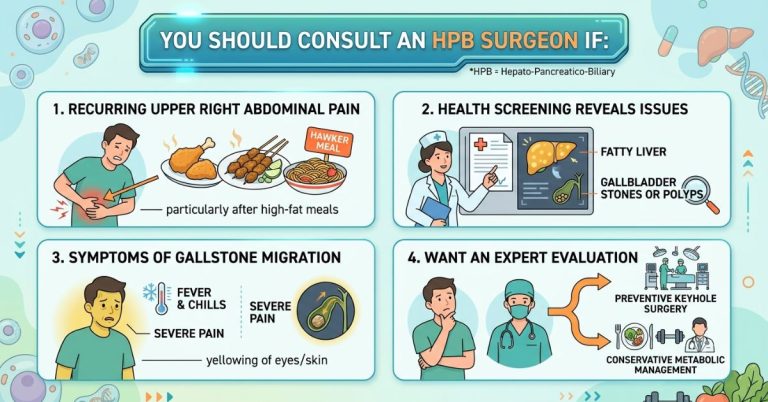
You should consult an HPB surgeon if:
- You experience recurring, intense pain in the upper right abdomen, particularly after high-fat hawker meals.
- Diagnostic health screening reports reveal both fatty liver and gallbladder stones or polyps.
- You develop symptoms of gallstone migration: severe pain accompanied by fever, chills, or jaundice (yellowing of eyes/skin).
- You want an expert evaluation on whether your gallstones require preventive keyhole surgery or conservative metabolic management.
Why See A HPB Specialist?
- Holistic Organ System Care: Because the liver and gallbladder are deeply interconnected, an HPB specialist manages both the underlying hepatic conditions and surgical gallbladder requirements.
- Complication Prevention: Timely intervention prevents small gallstones from slipping into the common bile duct, avoiding acute cholangitis or life-threatening gallstone pancreatitis.
- Minimally Invasive Techniques: Modern HPB surgical procedures utilize tiny keyhole incisions or robotic platforms, ensuring minimal post-operative pain and rapid recovery.
Looking For A Top HPB Specialist In Singapore? Consider Dr Lee Lip Seng (LS Lee Surgery)
When seeking comprehensive surgical care for liver and gallbladder conditions in Singapore, consulting a dedicated HPB surgeon with extensive clinical leadership is paramount.
Dr Lee Lip Seng, a Senior Consultant Hepatopancreatobiliary (HPB) Surgeon at LS Lee Surgery, has over 20 years of surgical experience. Dr Lee specialises in Minimally Invasive Surgery (Laparoscopic and Robotic Surgery) for gallbladder stones, gallbladder polyps, liver tumors, and pancreatic conditions.
Comprehensive HPB Treatments Offered By Dr Lee:
- Laparoscopic Cholecystectomy (Keyhole Gallbladder Surgery): Minimally invasive removal of the gallbladder through small incisions. Compared with open surgery, laparoscopic surgery generally results in less postoperative pain, smaller scars and faster recovery.
- Robotic Biliary & Gallbladder Surgery: Minimally invasive robotic techniques may be used selectively for complex gallbladder and bile-duct procedures, providing enhanced visualisation and precise instrument control during technically demanding surgery.
- Indocyanine Green (ICG) Fluorescence Imaging: An intraoperative imaging technology that can help surgeons visualise bile ducts, liver anatomy and other important structures in real time, providing an additional aid during selected HPB procedures.
- 3D Pre-Operative Anatomical Reconstruction: Patient-specific 3D reconstruction of liver and biliary anatomy can help surgeons understand complex anatomical relationships and plan selected HPB procedures more precisely before surgery.
Academic Qualifications
- MB BCh BAO (Ireland)
- MRCS (Edinburgh)
- MMed (Surgery)
- FRCS(Edinburgh)
- FAMS(General Surgery)
Articles Reviewed By Dr Lee Lip Seng
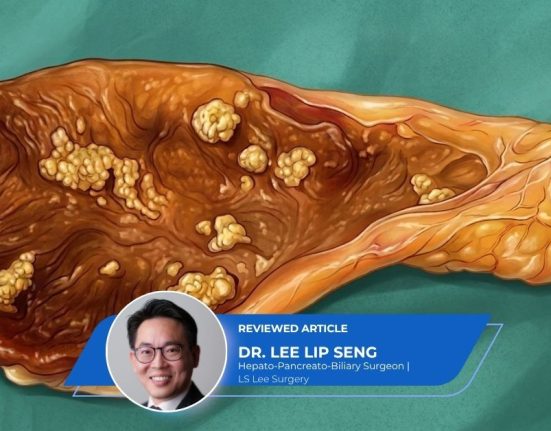

Robotic Surgery For Choledochal Cysts In Adult Patients
- March 26, 2026
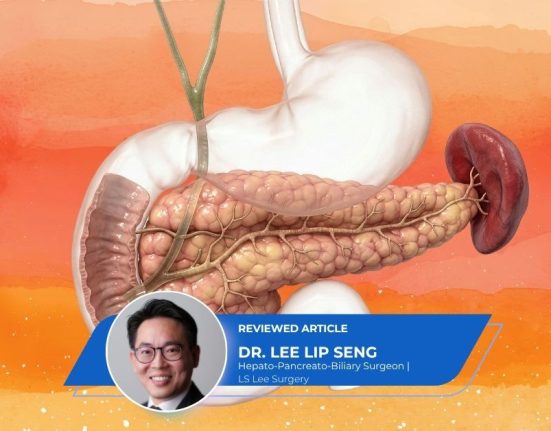
Types Of Pancreatic Cysts: Which Ones Are Dangerous?
- March 26, 2026

Dr Lee Lip Seng Explains Gallstone Treatment
Comment: The row below to be moved to article for healthcare professionals article
Find A Doctor
Verified Healthcare Professionals
We connect you with a network of qualified and experienced doctors who specialise in chronic health conditions, health screening, and longevity.
Trusted Information Source
We pride ourselves on providing accurate, up-to-date, and evidence-based information about each disease, its prevention, and treatment.
Privacy and Security
Your health information and personal data are paramount to us. We will protect your privacy throughout the booking process and beyond.
Convenience at Your Fingertips
Our user-friendly platform allows you to find and book appointments 24/7 from the comfort of your home.
Additional Resources
- 365Asia listing of Gallbladder Surgeons In Singapore.
- Guide To Gallstone Removal Surgery
Book An Appointment
Take a proactive step for your health and peace of mind today. If you need to see a HPB surgeon, our team is here to assist.
Financials
[findDoctor category="financial consultants" countries="Singapore" " limit="15"]
Frequently Asked Questions (FAQs) About Gallstones & Fatty Liver
1. Does treating fatty liver disease make gallstones disappear?
While managing fatty liver through healthy diet, exercise, and weight loss improves overall liver function and stops new stone formation, existing gallstones will generally not dissolve on their own. Once solid gallstones have formed inside the gallbladder, dietary changes can reduce the frequency of painful gallbladder contractions (biliary colic), but surgical removal remains the definitive cure if symptoms occur.
2. Is keyhole gallbladder removal safe if I also have fatty liver disease?
Yes. Laparoscopic cholecystectomy is a highly safe and routine keyhole procedure. However, having an experienced HPB surgeon evaluate your condition ensures that both liver health and biliary anatomy are thoroughly accounted for prior to surgery. Advanced techniques, such as ICG fluorescence imaging, provide clear visual mapping of the bile ducts even in the presence of surrounding tissue inflammation.
3. Will removing my gallbladder worsen my fatty liver or digestive system?
No. The liver continuously produces bile regardless of whether the gallbladder is present. After gallbladder removal, bile flows directly into the small intestine to aid digestion. Studies show that gallbladder removal does not cause or worsen fatty liver disease; rather, post-surgical care focuses on maintaining a balanced diet to support long-term metabolic and liver health.
4. Can weight loss drugs (like Ozempic or Wegovy) cause gallstones to form?
Yes, rapid weight loss—whether achieved through bariatric surgery, extreme calorie restriction, or modern GLP-1 receptor agonist medications (such as Ozempic or Wegovy)—is a well-established risk factor for gallstones. When you lose weight rapidly, the body metabolises fat quickly, causing the liver to secrete extra cholesterol into bile. Additionally, rapid reduction in food intake reduces gallbladder contractions, allowing concentrated bile to sit stagnant and form cholesterol stones. If you are starting a rapid weight-loss regimen in Singapore, consulting an HPB specialist for preventive advice or baseline ultrasound screening is recommended.
5. How do I know if my post-meal pain is caused by gallstones or a simple stomach ulcer?
While both conditions cause upper abdominal discomfort after eating, their timing and characteristics differ. Gastritis or ulcer pain typically presents as a burning or gnawing sensation in the central upper abdomen (epigastrium) that often improves temporarily after taking antacids or eating light food. In contrast, gallstone pain (biliary colic) usually presents as a intense, deep ache in the upper right quadrant that often radiates to the right shoulder or back. It typically starts 30 to 60 minutes after consuming heavy or fatty meals (like fried hawker foods or coconut gravies) and does not respond to antacids. An abdominal ultrasound performed by a specialist is the most definitive way to differentiate between the two.
Additional Resources
What’s the Difference Between Keyhole vs Open Gallbladder Surgery? | LS Lee Surgery
Common Liver and Gallbladder Conditions Behind Jaundice in Adults | LS Lee Surgery
- Non-alcoholic Fatty Liver Disease and Gallstones: A Systematic Review | National Library Of Medicine