


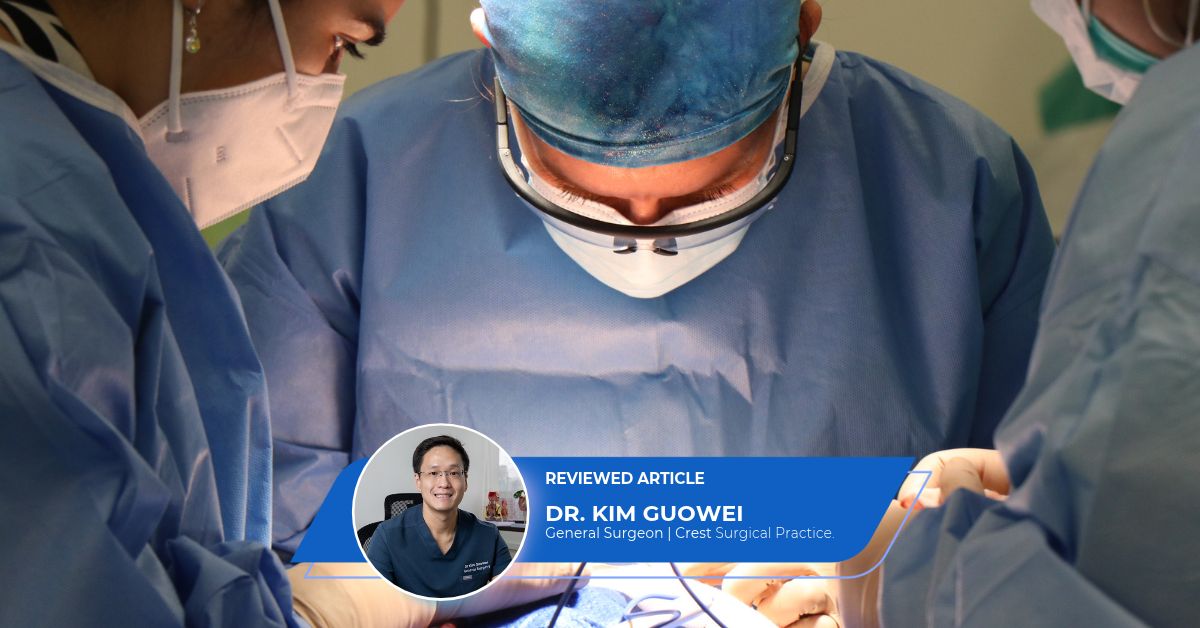
Oesophageal cancer affects the tube that carries food from the throat to the stomach. When surgery is recommended, patients may hear the term oesophagectomy and understandably have questions about what the operation involves, how food will pass through the digestive system afterwards and whether minimally invasive or robotic surgery is an option.
Oesophageal surgery is a major operation. Understanding its purpose, the different surgical approaches and the recovery process can help patients prepare for discussions with their healthcare team.
Back To: Oesophageal & Stomach Conditions Main Page
What Is An Oesophagectomy?
An oesophagectomy is an operation to remove part of the oesophagus. It may be recommended for selected patients with oesophageal cancer when the tumour can be removed and surgery forms part of an appropriate treatment plan.
The extent of the operation depends on the tumour’s location and spread. Nearby lymph nodes may also be removed and examined because they can contain cancer cells.
After the affected section of the oesophagus is removed, the surgeon needs to restore a route for food to travel from the mouth to the stomach or the remaining digestive tract.
In many cases, the stomach is reshaped and brought up to connect with the remaining oesophagus. In selected circumstances, another part of the digestive tract may be used for reconstruction.
The exact procedure depends on the patient’s anatomy, the location of the tumour and the surgical plan.
Does Everyone With Oesophageal Cancer Need Surgery?
No. Treatment depends on the cancer’s stage, type, location and other individual factors.
Some very early cancers may be suitable for endoscopic removal, in which abnormal tissue is removed through an endoscope passed through the mouth. Other cancers may require surgery, sometimes in combination with chemotherapy or radiotherapy.
For locally advanced cancers, treatment before surgery may be recommended to address cancer cells beyond the visible tumour. In some circumstances, chemoradiotherapy without surgery may be appropriate, depending on the cancer type and the patient’s clinical situation.
When cancer has spread to distant organs, treatment often focuses on systemic therapy and symptom management rather than oesophagectomy, although decisions vary with the circumstances.
Staging investigations and discussion among relevant specialists help determine the most appropriate treatment plan. The National Cancer Institute’s overview of oesophageal cancer treatment provides further information about the range of available approaches.
What Are The Different Approaches To Oesophageal Cancer Surgery?
Open Surgery
Open surgery involves larger incisions to access the oesophagus and surrounding structures. Depending on the operation, access may be required through the abdomen, chest or neck.
It may be appropriate when the tumour or other clinical factors make a minimally invasive approach unsuitable.
Laparoscopic And Thoracoscopic Surgery
Laparoscopic surgery uses small incisions and a camera to operate in the abdomen. Thoracoscopic surgery uses similar techniques to access the chest.
Some oesophagectomies combine these approaches. The operation can still be extensive even when the incisions are small, because removing the affected oesophagus, managing lymph nodes and reconstructing the digestive tract require careful surgical work.
Robotic-Assisted Surgery
Robotic-assisted surgery uses instruments controlled by the surgeon from a console. A camera provides a magnified, three-dimensional view, and the instruments allow controlled movements in confined spaces.
For selected patients, a robotic approach may be considered for parts of an oesophagectomy. Whether it is appropriate depends on the tumour, the operation required, the patient’s health and the surgeon’s assessment.
Robotic surgery does not mean that the robot operates independently. Nor does the use of a robotic system guarantee fewer complications, faster recovery or better cancer outcomes. Patients should ask why the approach is being recommended for their specific circumstances.
What Happens Before Surgery?
Before an oesophagectomy, doctors assess the cancer and the patient’s ability to tolerate the operation.
Investigations may include endoscopy and biopsy, CT scans, positron emission tomography (PET) scans or endoscopic ultrasound, depending on the case. These tests help establish the tumour’s location and extent and assess whether surgery is appropriate.
The healthcare team may also evaluate heart and lung function, nutritional status, existing medical conditions and general fitness.
Some patients receive chemotherapy or chemoradiotherapy before surgery. The sequence depends on the type and stage of cancer and the recommendations of the multidisciplinary team.
Patients should ask how the treatment plan is expected to work, how long it may take and what side effects or practical preparations they should anticipate.
What Happens During Recovery?
Recovery after oesophagectomy varies. It depends on the extent of surgery, the patient’s overall health, the treatment received before surgery and whether complications occur.
The initial hospital stay allows the team to monitor breathing, pain, wound healing, fluid balance and the reconstructed digestive tract. Patients may need temporary nutritional support while they gradually resume eating.
After discharge, follow-up appointments help assess recovery, nutrition and the need for additional treatment.
Eating After Oesophagectomy
Because the digestive tract has been reconstructed, patients may need to adapt their eating habits. The stomach may have a reduced capacity to store food, and meals may pass through the digestive system differently.
Recommendations can include eating smaller, more frequent meals, chewing food thoroughly and remaining upright after eating. Some patients experience reflux, early fullness, weight loss or difficulty maintaining adequate nutrition.
A dietitian can help patients identify suitable foods, monitor weight and maintain sufficient energy and protein intake. Individual recommendations should be based on recovery and tolerance rather than a single standard diet.
Possible Complications
Oesophagectomy is a major operation and carries risks. These may include bleeding, infection, respiratory complications, blood clots, leakage at the surgical connection, swallowing difficulties and nutritional problems.
Some complications may require additional treatment or a longer hospital stay. The specific risks depend on the patient’s health and the type of operation.
Patients should ask their surgeon which complications are most relevant to their case, how these risks are monitored and what support is available during recovery.
Questions To Ask Your Oesophageal Cancer Surgeon
Before deciding on surgery, consider asking:
- What is the stage and type of my oesophageal cancer?
- Is surgery recommended, and is treatment needed before the operation?
- What part of the oesophagus will be removed?
- Will nearby lymph nodes be removed?
- Could an open, laparoscopic or robotic-assisted approach be appropriate?
- What are the main risks of the proposed operation?
- How will eating and digestion change afterwards?
- How long might recovery take, and what support will I need at home?
- Will I need additional treatment or long-term nutritional monitoring?
Making An Informed Decision About Oesophageal Cancer Surgery
Oesophagectomy can form part of treatment for selected oesophageal cancers, but the decision to operate and the choice of surgical approach depend on the individual case.
Health365 Preferred Doctor Your Can Consider
Dr Kim Guowei (Crest Surgical Practice) performs upper gastrointestinal and robotic surgery, including oesophageal cancer surgery. Patients seeking to understand their options may review their diagnosis, staging results and proposed treatment plan with a specialist.
Further information about Dr Kim’s clinical background is available through his Health365 doctor profile. A consultation can help patients understand the purpose of the proposed operation, its risks and alternatives, and the likely implications for recovery.
Contact MedicalTravel.asiaFrequently Asked Questions
Robotic-assisted surgery may be an option for selected patients undergoing oesophagectomy for oesophageal cancer. Suitability depends on the tumour’s location and extent, the patient’s health, the operation required, and the availability and access to expertise of patients to robotic oesophagectomy. Recent studies have shown an advantage of robotic oesophagectomy over laparoscopic or open approaches, conferring faster recovery, less complications and better cancer outcomes, making it a promising option in the treatment of oesophageal cancer.
Recovery varies according to the extent of surgery, the patient’s general health and whether complications occur. Patients typically need an initial hospital stay followed by ongoing recovery at home, with follow-up to monitor nutrition, eating difficulties and other concerns. The treating team can provide a more individualised estimate based on the planned operation.
Many patients can resume eating after recovery, but their eating patterns may change. Some need smaller, more frequent meals and may experience early fullness, reflux or weight loss. Nutritional monitoring and advice from a dietitian can help patients adapt to changes following surgery. The experience varies from person to person.
This medical content has been reviewed by Dr Kim Guowei, a highly skilled upper gastrointestinal, bariatric and robotic surgeon known for his expertise in robotics and advanced endoscopic techniques. He offers comprehensive care for complex digestive disorders, from traditional open surgery to minimally invasive procedures.
Back To: Oesophageal & Stomach Conditions Main Page
Related Content:
- Health365 Guide To Oesophageal Cancer
- You Are At Increased Risk For Oesophageal Cancer If You Get Flushed From Alcohol Consumption
All content on this site is informative only and is not intended to be a substitute for professional medical advice, diagnosis, or treatment, and should never be relied upon for specific medical advice. If you are experiencing a medical emergency, call 995 immediately or go to the nearest Accident & Emergency department.
health365.sg is a member of 365Asia.