


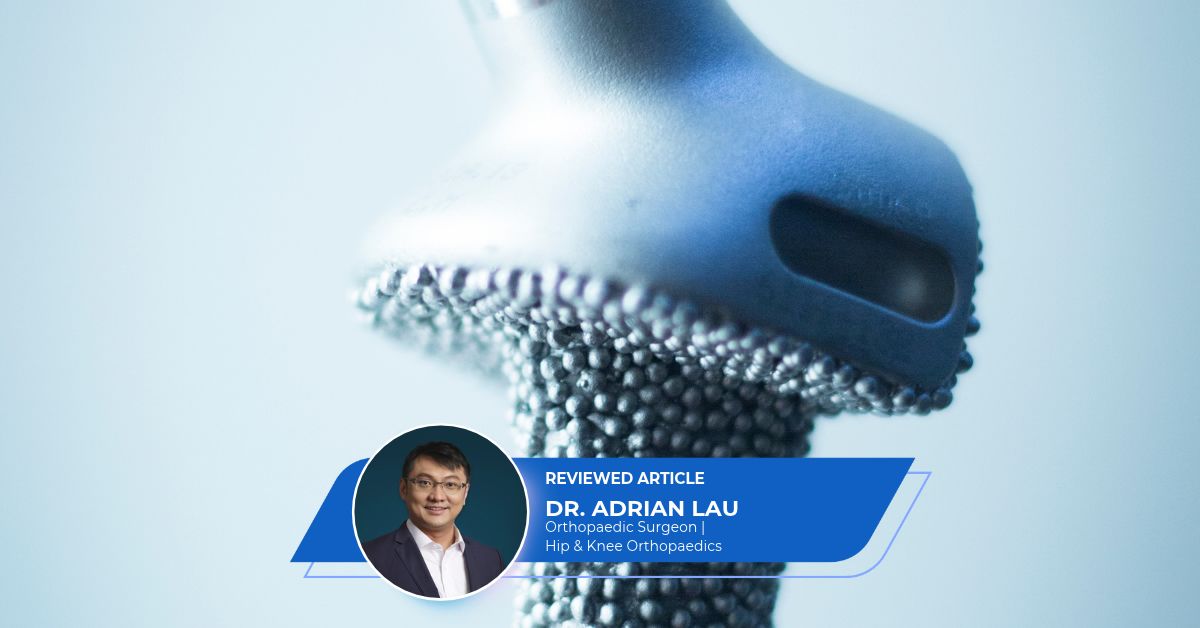
What Is A Hip Implant?
A hip implant is a specialised medical device used during hip replacement surgery to replace a damaged or worn-out ball-and-socket joint. When conditions like advanced hip osteoarthritis or avascular necrosis destroy the natural joint cartilage, an artificial hip restores smooth, pain-free movement.
A standard total hip replacement consists of four main components:
- The Femoral Stem: A metal shaft inserted into the hollow center of the thigh bone (femur) for stability.
- The Femoral Head: A polished ball attached to the top of the stem, replacing the natural ball of the thigh bone.
- The Acetabular Cup: A metal shell secured into the hip socket (acetabulum) in the pelvis.
- The Bearing Liner: An insert fitted inside the metal cup that acts as the new smooth lining for the ball to glide against.
The combination of materials chosen for the ball (femoral head) and the liner (bearing surface) determines the durability, flexibility, and long-term performance of your artificial hip.
Breakdown Of Modern Hip Implant Materials
1. Ceramic (Ceramic-on-Polyethylene)
Modern medical-grade ceramic (such as biolox delta ceramic) is an extremely hard, smooth, and biocompatible material engineered specifically for high-durability joint replacements.
- Pros: Exceptionally low friction and wear rate; highly resistant to scratching; chemically inert with no risk of metal allergy or corrosion.
- Cons: Higher material cost; extremely small historical risk of squeaking or component fracture (though refined manufacturing has made ceramic breakage practically non-existent today).
- Best Suited For: Young, active individuals and active older adults who want an implant engineered to last 20 to 30 years.
2. Highly Cross-Linked Polyethylene (Advanced Plastic)
Modern medical plastic is vastly superior to the plastics used in the 1990s. Through a chemical process called “cross-linking,” the material is reinforced to dramatically reduce wear debris and prevent early degradation.
- Pros: Excellent shock absorption; highly forgiving in positioning; provides a soft, natural joint glide when paired with a ceramic ball.
- Cons: Gradually wears over decades, though at a rate up to 90% slower than older generation plastics.
- Best Suited For: Almost all primary total hip replacement patients when paired with a ceramic ball.
3. Metal (Titanium & Cobalt-Chrome Alloys)
Metal alloys like titanium are primarily used for the structural parts of the implant—namely the femoral stem and the acetabular cup shell—because titanium fuses exceptionally well with natural human bone (osseointegration).
- Metal-on-Plastic: A traditional combination featuring a cobalt-chrome metal ball inside a plastic liner. It is reliable and cost-effective, but modern ceramic-on-plastics seemed to have better data in some registries.
- Metal-on-Metal (MoM): An older design where both the ball and liner were metal. Note: Metal-on-metal implants are rarely used in modern primary hip replacements today due to concerns over metal debris, tissue inflammation, and metal ion release (metallosis).
Hip Implant Bearing Combinations At A Glance
How Do Surgeons Choose The Right Implant For Your Body?
An orthopaedic specialist considers several personal health factors when choosing the right implant for you:
- Age & Activity Level: Younger, highly active patients require ultra-low-wear ceramic materials to avoid needing early revision surgery decades later.
- Bone Quality: Patients with strong bone structure suit uncemented titanium stems that allow natural bone to grow into the metal. Patients with advanced osteoporosis may benefit from a cemented stem for immediate structural fixity (a “cemented“ implant refers to how the artificial joint – specifically the metal stem inserted into the thigh bone – is fixed into place using fast-setting medical bone cement).
- Anatomy & Joint Stability: Larger ball sizes (32mm or 36mm) increase range of motion and drastically reduce the physical risk of joint dislocation.
Frequently Asked Questions
Yes. Modern medical implants will usually trigger sensitive airport metal detectors. However, security personnel are accustomed to joint replacements, and a simple handheld scanner or brief check is all that is required. An implant card is also usually provided upon request post surgery, and you can show the implant card to the immigration officer.
True implant allergies are rare. However, patients with known severe nickel or cobalt sensitivities should inform their surgeon so that nickel-free titanium or pure ceramic components can be selected.
An uncemented stem has a textured titanium surface that allows your natural bone to grow into the metal over 6 to 12 weeks, making it ideal for patients with good bone quality. A cemented stem uses specialised acrylic bone cement to lock the implant into place immediately, which is often preferred for older patients or individuals with significant osteoporosis who need instant structural stability.
Schedule An Appointment With A Surgeon With Expertise In Hip Implants
If you would like to consult an expert hip surgeon on your implant options, contact us via the button below for assistance to schedule an appointment.
Contact MedicalTravel.asia
This medical content has been reviewed by Dr Adrian Lau, a double-fellowship-trained Specialist Orthopaedic Surgeon with extensive expertise in complex hip and knee replacements, joint revision surgery, and sports-related lower limb injuries. He performs primary & complex hip and knee replacements, partial knee replacements, direct anterior approach hip replacements, revision arthroplasty, arthroscopic knee surgery, and treats periprosthetic fractures.
Back To: Health365 Comprehensive Guide To Hip Osteoarthritis
All content on this site is informative only and is not intended to be a substitute for professional medical advice, diagnosis, or treatment, and should never be relied upon for specific medical advice. If you are experiencing a medical emergency, call 995 immediately or go to the nearest Accident & Emergency department.
health365.sg is a member of 365Asia.