


A diagnosis of stomach cancer can raise difficult questions about treatment, particularly when surgery is recommended. Patients may encounter terms such as gastrectomy, laparoscopic surgery and robotic-assisted surgery without knowing how they differ.
Robotic-assisted surgery is an option for selected patients requiring stomach cancer surgery. Understanding how it works, what the operation involves and what recovery may entail can help patients prepare for a discussion with their surgeon.
Back To: Stomach Cancer Main Page
What Is Robotic Surgery For Stomach Cancer?
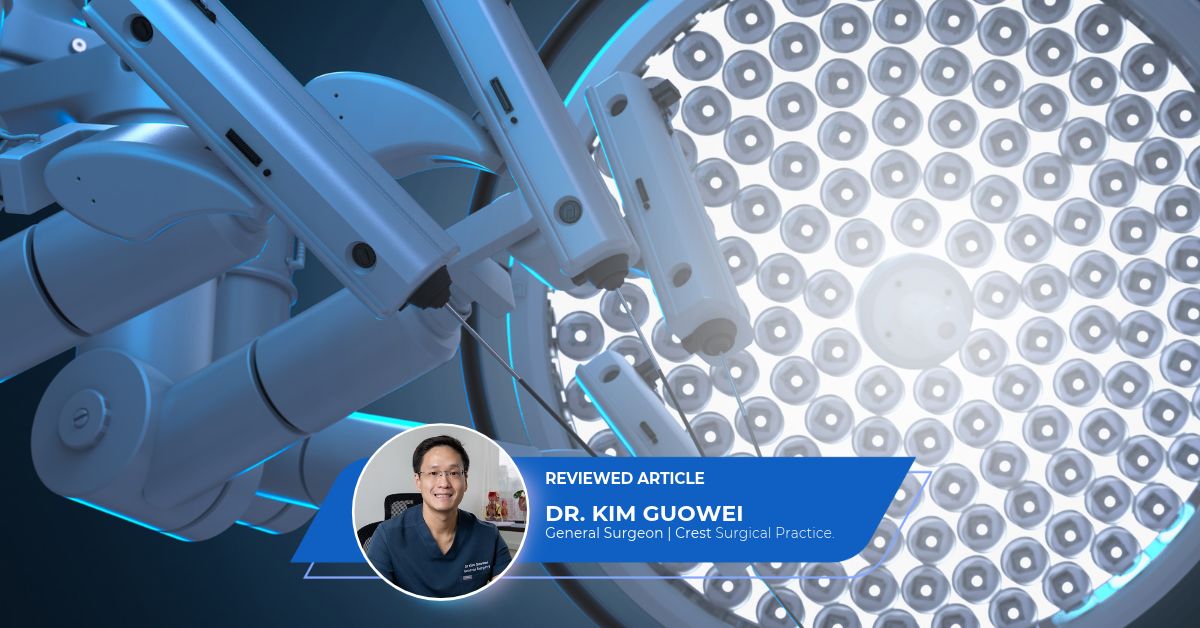
Robotic-assisted surgery is a form of minimally invasive surgery in which a surgeon controls specialised instruments using a console. A camera provides a magnified, three-dimensional view of the operating area, while the instruments allow controlled movements within the patient’s body.
The robot does not make treatment decisions or perform the operation autonomously. The surgeon remains responsible for the procedure.
In stomach cancer treatment, robotic-assisted surgery may be used to perform a gastrectomy — an operation to remove part or all of the stomach — and to remove relevant lymph nodes for cancer treatment and pathological examination.
The exact procedure depends on the tumour’s location, extent and other clinical factors.
What Types Of Stomach Cancer Surgery Are There?
Partial Gastrectomy
A partial gastrectomy involves removing the portion of the stomach containing the tumour, together with an appropriate margin of surrounding tissue and relevant lymph nodes.
It may be considered when the cancer’s location and extent allow the affected area to be removed adequately while retaining part of the stomach.
Total Gastrectomy
A total gastrectomy involves removing the entire stomach. The oesophagus is then connected to the small intestine so that food can pass through the digestive tract.
This may be necessary when the tumour’s location or extent means that removing only part of the stomach would not be appropriate.
Lymph Node Removal
Stomach cancer surgery commonly includes the removal of nearby lymph nodes. These are examined to determine whether cancer has spread beyond the stomach.
The extent of lymph node removal is an important part of the cancer operation. The choice of surgical technique should not compromise the operation needed to treat the disease.
Who May Be Suitable For Robotic Gastrectomy?
Robotic-assisted surgery may be considered for selected patients whose stomach cancer requires surgical removal.
The assessment takes several factors into account:
- Cancer stage: Whether the tumour is confined to the stomach or has spread to nearby lymph nodes or other structures.
- Tumour location: Whether the cancer is near the junction between the stomach and oesophagus, in the middle of the stomach or closer to its lower end.
- Extent of surgery: Whether a partial or total gastrectomy is required and what lymph node removal is necessary.
- General health: The patient’s fitness for a major operation, including existing medical conditions and nutritional status.
- Technical considerations: Whether the proposed minimally invasive approach is appropriate for the particular tumour and operation.
Not every patient is suitable for robotic surgery. Open surgery or a laparoscopic approach may be more appropriate in some cases.
The most important consideration is whether the selected operation can adequately address the cancer while taking account of the patient’s individual circumstances.
How Does Robotic Surgery Compare With Laparoscopic And Open Surgery?
Laparoscopic surgery uses a camera and long instruments inserted through small incisions. Robotic-assisted surgery also uses small incisions but adds a surgeon-controlled robotic platform and specialised instruments. These specialised instruments give advantages in stable, magnified, 3-dimension visualisation, as well as fine controlled movements that surpasses laparoscopic surgery in terms of dexterity, stability and precision. These advantages are especially important in complex/complicated and technically demanding surgeries.
Open surgery uses a larger incision to provide direct access to the operating area.
The potential advantages of minimally invasive approaches may include smaller incisions and differences in postoperative pain or recovery. However, the actual benefits depend on the operation, the patient’s health and the circumstances in which surgery is performed.
Robotic surgery also involves specialised equipment, additional costs in some settings and its own technical considerations. While, it should not automatically be regarded as superior to laparoscopic or open surgery, studies have shown improved cancer related outcomes and safety with robotic gastrectomy.
Patients should ask their surgeon why a particular approach is recommended for their cancer and whether other approaches would be reasonable alternatives.
What Happens Before The Operation?
Preparation generally includes reviewing the diagnosis, staging investigations and the proposed surgical plan.
The healthcare team may assess blood test results, nutritional status, other medical conditions and the patient’s fitness for anaesthesia. Additional investigations may be required depending on the individual case.
For some patients, chemotherapy or another cancer treatment may be recommended before surgery. In other cases, surgery may be planned first. This decision depends on the cancer’s stage and the recommendations of the treating multidisciplinary team.
Patients should clarify which medicines they need to adjust, when to stop eating and drinking before surgery, and whether they need nutritional support or other preparation.
What Is Recovery Like After Stomach Cancer Surgery?
Recovery varies according to the extent of surgery, the patient’s health and whether complications occur.
During the initial hospital stay, the healthcare team monitors pain, wound healing, mobility, bowel function and the patient’s ability to tolerate food and fluids. The timing of discharge depends on clinical progress and the support needed at home.
Eating And Digestion After Gastrectomy
The stomach stores food and helps regulate its passage into the small intestine. Removing part or all of it changes how the digestive system handles meals.
Patients may need to eat smaller, more frequent meals and adjust food choices according to their tolerance. Some may experience early fullness, weight loss, reflux-like symptoms or changes in bowel habits.
After a total gastrectomy, vitamin and mineral deficiencies can occur, and long-term nutritional monitoring and supplements may be needed. A dietitian can help develop a suitable eating plan.
Follow-Up And Further Treatment
The removed tissue is examined to establish the final pathological stage and whether the cancer has been completely removed. These findings help determine whether additional treatment is appropriate.
Follow-up may include consultations, nutritional assessment, blood tests and other investigations according to the treatment plan.
Questions To Ask Before Robotic Stomach Cancer Surgery
Patients may wish to discuss the following with their surgeon:
- What operation do I need, and why?
- Is a partial or total gastrectomy likely to be required?
- Will nearby lymph nodes be removed?
- Why is robotic surgery being considered in my case?
- What are the risks and possible complications?
- How might surgery affect my eating habits and nutritional needs?
- Will I need chemotherapy or other treatment before or after surgery?
- What follow-up will be required?
Understanding Your Surgical Options
Robotic-assisted surgery is one of several possible approaches to stomach cancer surgery. Its suitability depends on the cancer and the operation required, rather than the technology alone.
Health365 Preferred Doctor Your Can Consider
Dr Kim Guowei (Crest Surgical Practice) performs upper gastrointestinal and robotic surgery, including surgery for stomach cancer. His health365 Preferred Doctor page provides information about his training and clinical background.
Patients considering surgery may wish to arrange a specialist consultation to review their diagnosis, discuss the proposed operation and understand the potential benefits, risks and alternatives.
Contact MedicalTravel.asiaFrequently Asked Questions
No. Suitability depends on the cancer’s stage, tumour location, extent of surgery required, the patient’s general health and the surgeon’s assessment. Some patients may be suitable for robotic-assisted surgery, while laparoscopic or open surgery may be more appropriate for others.
Both approaches use small incisions and a camera. Robotic-assisted surgery allows the surgeon to control specialised instruments from a console, conferring advantages in dexterity and precision, while using a magnified three-dimensional view. Laparoscopic surgery uses instruments controlled directly by the surgeon. The appropriate approach depends on the operation required and the patient’s circumstances; robotic surgery does not automatically provide better outcomes, though studies have shown improved cancer outcomes and safety for robotic gastrectomy.
Eating and digestion can change after a partial or total gastrectomy. Patients may need smaller, more frequent meals and nutritional monitoring. After total gastrectomy, vitamin and mineral deficiencies may occur, and long-term supplementation may be necessary. A dietitian and the treating team can provide individual advice based on the operation and recovery.

This medical content has been reviewed by Dr Kim Guowei, a highly skilled upper gastrointestinal, bariatric and robotic surgeon known for his expertise in robotics and advanced endoscopic techniques. He offers comprehensive care for complex digestive disorders, from traditional open surgery to minimally invasive procedures.
Back To: Stomach Cancer Main Page
Related Content:
All content on this site is informative only and is not intended to be a substitute for professional medical advice, diagnosis, or treatment, and should never be relied upon for specific medical advice. If you are experiencing a medical emergency, call 995 immediately or go to the nearest Accident & Emergency department.
health365.sg is a member of 365Asia.